












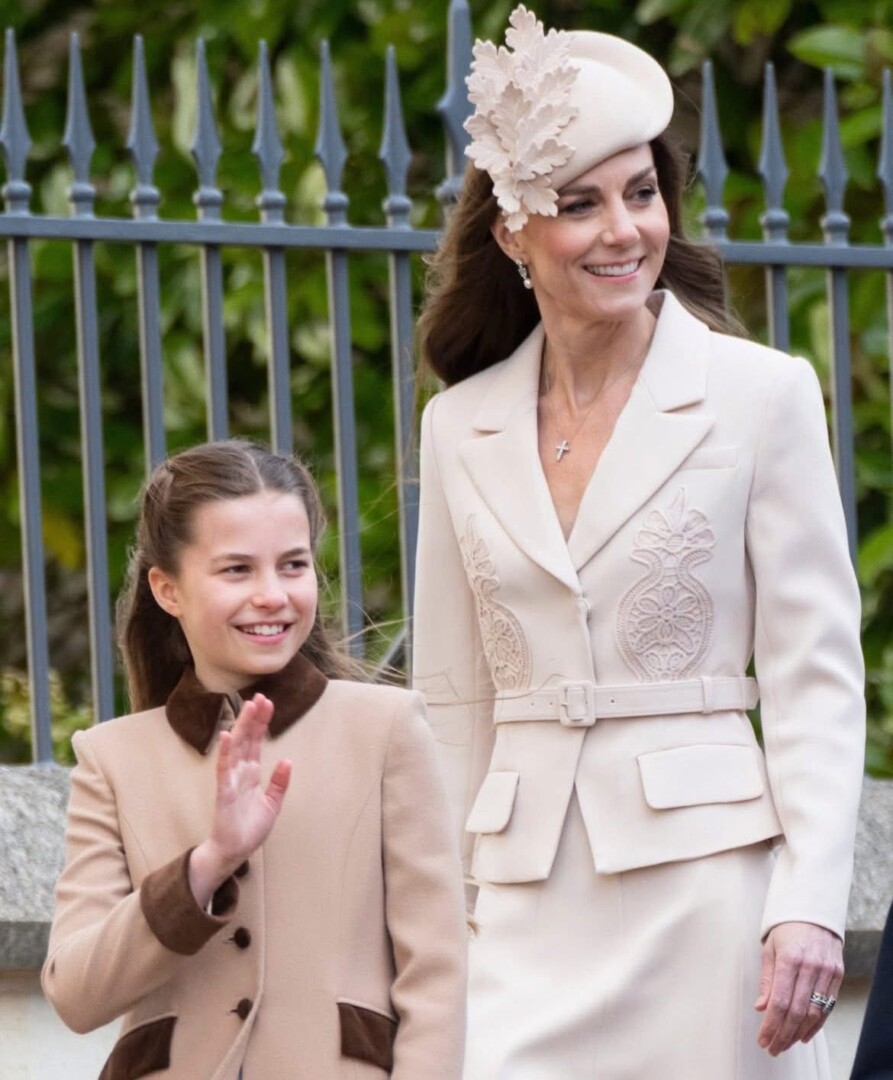
In 2026, on a beautiful and clear, slightly windy Easter Sunday, Princess Kate delighted royal fans appearing with her family at the Easter service for the first time in three years.
What struck eagle-eyed fans in Romania, however, was that the Princess of Wales’ outfit was embellished with what looked to be Romanian embroidery.
La blouse roumaine and Lasetă – Romanian point lace, said the princess ‘ Easter outfit was decorated with Romanian point lace applications: “A beautiful inspiration from the Princess of Wales, who participated today at the Easter Service wearing a gorgeous suit that seems to have point lace applications.”, the post said.
It was the first time the Prince and Princess of Wales have attended the traditional Easter Sunday since 2023. The past two years they have chosen to spend time with their family privately.
What is Romanian point lace?
The Romanian lace is a traditional lace technique made by hand, with a needle or crochet, which has been passed down from generation to generation in different areas of the country.
Unlike other types of lace, the lace has a more airy, but also resistant structure, often made of cotton or linen threads. This decorative art was not only an aesthetic element, but also a symbol of the skill and patience of the women who made it, being considered a true form of cultural heritage.
In England, it’s typically called Hungarian Point Lace and was developed sometime in the 1930’s when flat braid or tape lace was joined with the delicate needlepoint lace stitches.
It actually appears to have originated in Transylvania which was once a part of Hungary and later part of Romania. Romanian nuns took the technique with them to Egypt and taught it to daughters of European expatriate families there.
RPL is a firm tape or braid lace – a group of laces that use an outline braid or tape securing filler stitches of delicate needlepoint lace.
It frequently appears on the skirts, shirts, or sleeves where it completes the embroidery with geometric or floral motifs. Depending on the region, it can be finer and more discreet or more complex. In the folk costume, it had the role of highlighting certain areas of the body and adding volume and elegance to the clothing pieces.
In contemporary fashion, it has been reinterpreted and integrated into modern creations, from dresses to accessories. Designers use it to bring a romantic air to pieces, combining tradition with current trends.
