












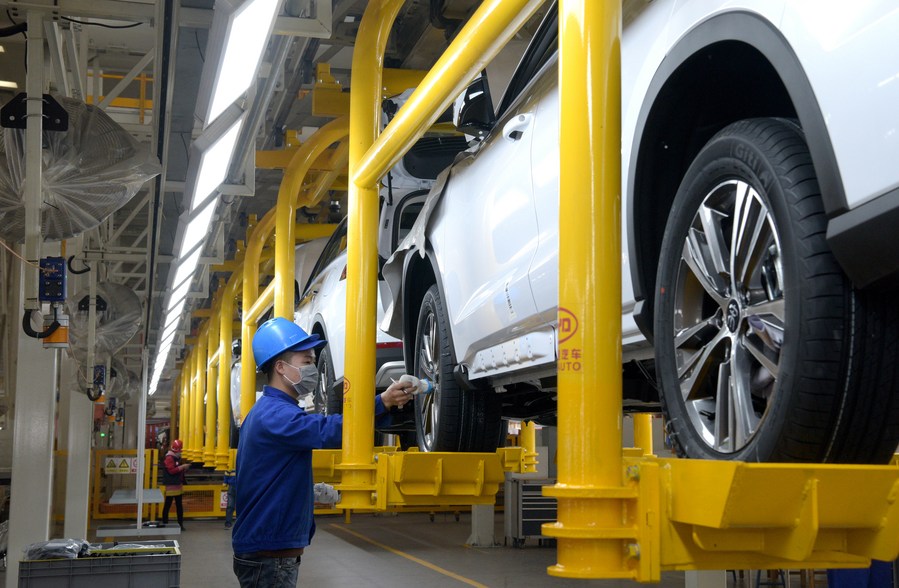
The European Commission imposed provisional import duties on electric cars from Chinese production that entered into force last week. Depending on the manufacturer, these surcharges range between 17.4 and 37.6 percent, in addition to the existing 10 percent import tariff, writes eToro analyst for Romania, Bogdan Maioreanu. T
hey were calculated based on estimates of how much state aid each firm received, while companies that cooperated with the probe saw the duties they were hit with cut. Based on these criteria, the European Commission has set individual duties on three Chinese EV brands – SAIC, BYD and Geely.
According to ACEA the sales in EU of battery-electric cars made in China have climbed from around 3% to over 20% in the past three years and Chinese brands account for around 8% of this market share. Over 438 thousand battery-electric cars were imported from China into the EU in 2023, valuing €9.7 billion while Europe exported 11,499 battery-electric cars to China, valuing €852.3 million. And this becomes an increasing problem.
Chinese brands enjoy a 35% cost advantage, affording flexibility (in Europe and elsewhere) to lower prices to offset tariffs, an analysis of consulting firm AlixPartners finds. This advantage is built on lower labour costs and higher vertical integration from raw materials to component suppliers to final assembly to selling to other automakers. Further smoothing the path for export is the quick ramp up of overseas shipping capacity, prompting Chinese automakers to secure their own transport capacity.
Western brands are already struggling to compete on the Chinese market. According to the latest estimates, in the first 5 months of this year, the Chinese brands increased sales by almost 24% year on year while the German brands lost almost 4% and the French ones more than 51%. If we look at the top 10 best selling models, only Tesla and Volkswagen are present.
This is why the automotive industry is split on the tariffs decision. German manufacturers, in particular, fear retaliatory measures from China that could inflict substantial damage on the European industry. France and Italy have pushed for tariffs on Chinese EVs — whose EU market share has skyrocketed — while Sweden, where Geely controls Volvo, has expressed reservations.
As if things weren’t bad enough, the sluggish transition to electromobility, high interest rates, and the ruthless price competition have already exacerbated the situation. Over the last three months, shares of the four major German automakers listed on the DAX have seen double-digit losses. Porsche AG has been hit hardest, with its stocks plummeting by 25%. Without rapid diplomatic progress, the German automotive industry faces an exceedingly challenging second half of the year. The automotive industry constitutes seven percent of the European GDP, whereby the share in Germany is at around 4.5%.
The struggle of EV adoption continues. In Romania, the sales of EV’s decreased almost 50% compared with the same month last year but hybrids increased by over 26%. But now we have the largest increase in diesel powered cars in the EU with over 44%. In the EU EVs registrations decreased 12%.
The current tariffs are most likely just a step in the fight to slow down the Chinese expansion on the European markets. China’s dominance is also evident at the Euro 2024: Five of the thirteen global sponsors come from China – including BYD, the world’s largest manufacturer of electric vehicles. From January to April 2024, 37 percent of Chinese electric vehicle exports went to the EU, with Belgium leading at 19 percent, followed by Spain at 5.3 percent, and Germany at only 3.5 percent. Europe is a highly important market for BYD and other Chinese players – thus, Beijing has a lot to lose.
Retail investors are interested in the long term perspectives of the EV sector. Tesla and Nio are the two most held stocks by Romanian investors and first and fifth globally on the trading and investing social platform eToro.
