




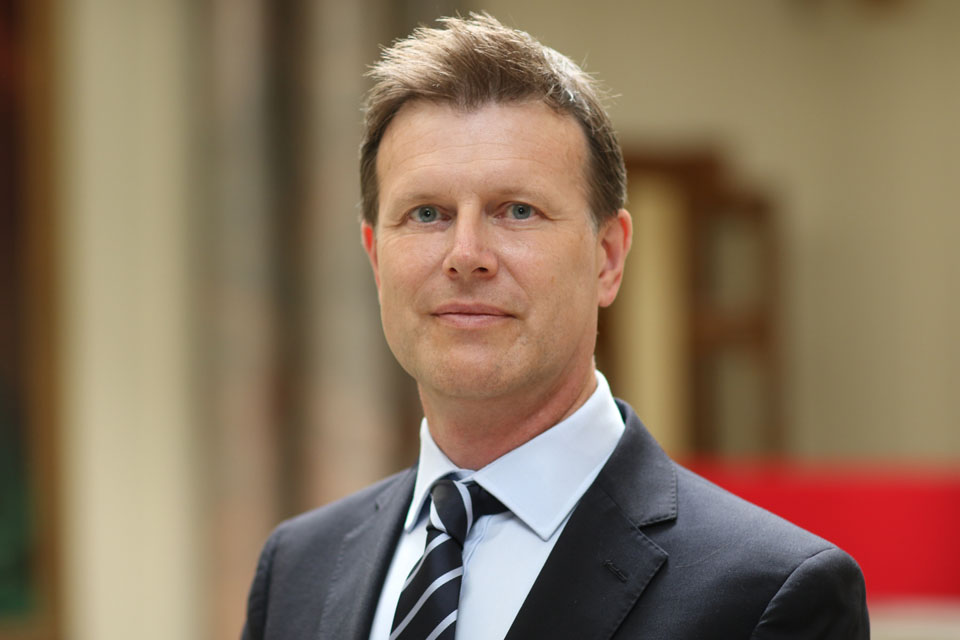
Britain’s new ambassador to Romania is pretty certain that European leaders discussed President Klaus Iohannis’ bid to become NATO’s next chief over dinner in Paris last night.
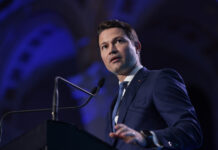
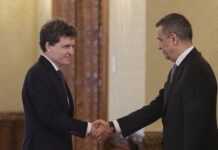
Giles Portman, who formally took up post on Jan. 21 after handing over his credentials to Mr. Iohannis calls the Romanian president “a European leader and statesman,” after he surprised everyone with his bold move and injected a note of excitement into the race.
Twenty mainly European leaders including Mr. Iohannis met in Paris in a hastily convened conference on Monday designed to speed up the supply of weapons and financial aid to Ukraine.
But Britain has already put its cards on the table and expressed support for Dutch Prime Minister Mark Rutte to be the 31-member military alliance’s next leader.
“He has enormous experience both in leadership as prime minister for 13 years… and in the defense and security sector,” the British diplomat said.
Current secretary-general Jens Stoltenberg is due to leave the post in October and his successor will be appointed this year at a crucial time for the alliance as the war in Ukraine goes well into its third year.
Britain has led the West’s efforts in Ukraine to fight off Russian aggression and is at the forefront of efforts to bring justice in the case of alleged war crimes: ” Be it the incessant bombing of civilian targets, or the abduction of children or sexual violence in conflict,” Mr. Portman said.
“It is really important we do whatever we can to try those cases correctly in court and bring perpetrators to justice,” he told Universul.net on Tuesday during a wide-ranging interview in his office.
He has spent most of his career representing Britain in the European Union, so it’s natural that his first post as a British ambassador is in Romania, a EU and NATO member.
In fact, from 2003-2006 he was the United Kingdom’s negotiator for EU enlargement, at a time when there was a lot of optimism for taking in new members when Romania was preparing to join the bloc. Romania joined in 2007.
Diplomatic work is not always pleasant, though there is the possibility of changing things, and it was a sense of justice that brought the 52-year-old diplomat to his current job.
“I remember seeing a documentary on BBC3 a few years ago where they said the UK was the no. 1 destination for trafficked Romanian girls and young women,” he said. “I was really shocked and I thought we absolutely share in the responsibility and also the shame of this… I thought I’d like to come and see if I could make a difference.”
Still, bilateral relations are strong and that counts.
“Relations are really warm and to be totally honest that is another reason why I wanted to come here. It makes a big difference working in a country where you have a nice relationship. You can get a lot more done and it’s a more rewarding experience.”
Here are the most important excerpts from the interview.
Tell us about EU Enlargement
Twenty years ago, I did the accession negotiations (Eds: He was Britain’s negotiator for EU enlargement from 2003 to 2006) for Romania. I was the UK negotiator in Brussels, finishing off the Big Bang enlargement (Eds: the Czech Republic, Poland, Hungary, Slovenia Slovakia, Lithuania, Estonia, Latvia, Malta and Cyprus joined in 2004), then doing Romania and Bulgaria and then when we last had the presidency in 2005, I was the chair of the enlargement committee. Then we launched negotiations with Croatia and Turkey….. We were the champions of enlargement. The way we pushed it forward…. The momentum for the (European) Council in those days; it was massive for the central European expansion. Then there was a bit for caution and skepticism over Romania and Bulgaria… But there was this overpowering feeling that we had to get them in because it was a historical obligation if you like to reunite Europe. Then it changed and the criteria got much, much harder for Croatia and Turkey. It used to be if you were pro-European, you pushed for enlargement and then it almost became you’re pro-European if you’re defending the standards and being more rigorous.
UK-Romania relations. How are they as you start your post?
I think the relationship is really warm and to be totally honest that is another reason why I wanted to come here. It makes a big difference working in a country where you have a nice relationship. You can get a lot more done and it’s a more rewarding experience. I think we are hugely like-minded on all the challenges in Europe and internationally at the moment. It;s this strange combination…. In some ways we feel really close because we are really like-minded… the diaspora (Eds: about one million Romanians live in the UK) and the love that King Charles III has for Romania brings us much closer. But we are also on opposite sides of quite a large continent and Romania feels quite beyond the vision of a lot of people in the UK. It falls to the Ambassador and the embassy to be the dynamo in the relationship. On a personal level and the relationship between the countries, it’s really positive.
Human trafficking is still a big problem in Romania and the UK is helping with this.Tell us more
It’s another reason I applied for the job. I remember seeing a documentary on BBC3 a few years ago where they said the UK was the no. 1 destination for trafficked Romanian girls and young women. It may not be no. 1 now but it’s definitely top three and I was really shocked and I thought we absolutely share in the responsibility and also the shame of this still going on in the 21st century. I thought I’d like to come and see if I could make a difference… We have two visitors in town right now from the Home Office and the Foreign Office, so it’s a joined-up approach in the UK_ also with police forces and a fantastic charitable sector and non-government sector and I spoke to a lot of people in the UK before I came out. We spoke to the government coordinator here yesterday and we are in close touch with the charities doing fantastic work here. We have a £1.2 million fund to fund projects mainly in the NGO sector and they have to be projects in Romania in the UK– projects to try and stop people being trafficked, to prevent it by raising awareness. They they have to be projects in the UK that can identify people who are in trouble and they have to be projects which enable people to return successfully because what we find is that people return they are still just as vulnerable and can be trafficked straight back again so there needs to be a plan to help them integrate, to train, to get a job, to do whatever they need to do to be protected in the future. So it’s a massive job right across the government and non-government sector. The police, church, charities can all play a role and it’s massively important. Personally, I find it shocking and utterly unacceptable that this happens at all, let alone on the scale we still see it happening.
Mr. Portman said that during a visit to the Romanian Parliament on Monday, MPs from all parties wanted to discuss human trafficking with him.
Are there any concerns that the war in Ukraine might spread?
We have to be realistic. Of course it is a concern but we have all the tools at our disposal to make sure it doesn’t happen. It’s a concern because (President Vladimir) Putin talks very openly about an expansionist view to what he considers the borders of Russia. There are multiple on-the-record examples of him and others in the Russian leadership threatening Baltic states, Denmark, the UK with nuclear annihilation. The threats are made, so you can’t ignore them. And the response has to be exactly what we are doing as allies in NATO to be very robust in terms of our own defense and in terms of helping Ukraine defend itself. I think the Russian leadership and Putin their statements are more and more detached from reality. It’s very hard to trust and negotiate with someone like that and I think you have to do it from a position of strength and that means helping Ukraine recover the rest of its territory and making Putin realize that the price for continuing in all senses is just too much. But first and foremost a strong military response but it’s also the other levers, the humanitarian support which Romania has been so generous in providing, the economic support to Ukraine again which Romania plays the leading role in terms of grain exports, but also putting pressure on Russia economically through sanctions and considering what we can do with Russian assets to fund Ukraine. Finally, I am very personally focused on the legal aspect of the war. I think is really important that we don’t forget the war crimes that appear to have taken place, be it the incessant bombing of civilian targets, or the abduction of children or sexual violence in conflict. It is really important we do whatever we can to try those cases correctly in court and bring perpetrators to justice.
French President Emmanuel Macron said the allies hadn’t ruled out sending troops to Ukraine
It’s certainly never been on the agenda, so I don’t think there is any change from our point of view, but what we absolutely have to do is make sure Ukraine is properly armed and I think the lesson of the last year is that first of all Ukraine has done amazingly well in regaining half of the territory it lost, but secondly this is quite an attritional war; we are not expecting a breakthrough probably this year….We do need to make sure Ukraine has the supplies to defend itself. (UK Prime Minister) Rishi Sunak when he was last in Ukraine announced additional support which takes our contribution to £12 billion. I think we were the first country to sign this bilateral security agreement; others following suit, France has, others are about to.
President Klaus Iohannis’ bold move to become the next NATO chief
Our position is pretty clear because the UK has publicly backed (Dutch Premier Mark) Rutte who we think has got enormous experience both in leadership as prime minister for 13 years is it, and in the defense and security sector. We’ve said that publicly and I think there is a lot of support for him. That doesn’t take anything away from our respect for President (Klaus) Iohannis as a European leader and statesman. I think that the point that he makes that all members of the alliance including the eastern flank need to feel included and part of the decision-making process is a point well made, that applies to all allies. But we’ve made clear that our support is for Rutte. We’ll see how it pans out. I assume there were discussions about this in Paris last night at the Macron dinner, and I don’t have any read outs, but I guess it was discussed.
Was it a surprise? (Maybe I’m not well-connected enough)
It was a surprise, yes. I was informed last week. I was suddenly told there was something I needed to be told and I didn’t know what it was going to be, so it was a surprise.
Who is Giles Portman?
From 2003 to 2006 he was the United Kingdom’s negotiator for EU enlargement, preparing Romania and Bulgaria’s entry. He also chaired EU negotiations for the start of accession talks with Croatia and Turkey. Croatia is now in the EU, Turkey isn’t.
He was also director for Europe, Director for EU Exit, and Deputy Head of Mission Turkey
From 2011 to 2019 he worked in the European External Action Service. From 2011 to 2015 he was an Adviser to the EU High Representative/Vice President. From 2015 to 2019 he led the East Stratcom Task Force, set up by EU Heads of State and Government to identify, analyse and respond to Russian disinformation.
In 2019 East Stratcom’s work was recognized through the award of the medal of honor “Diplomacy Star of Lithuania”, the highest distinction of the Lithuanian diplomatic service.
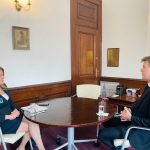
The long and short of it: highlights of Ambassador Portman’s first Romanian interview
