







Romania’s large migrant population in Italy contributes Italy contributes up to 2% of the country’s gross domestic product, and show “exemplary integration built not only on economic ties but also on social and cultural relations,” Italy’s outgoing ambassador said.
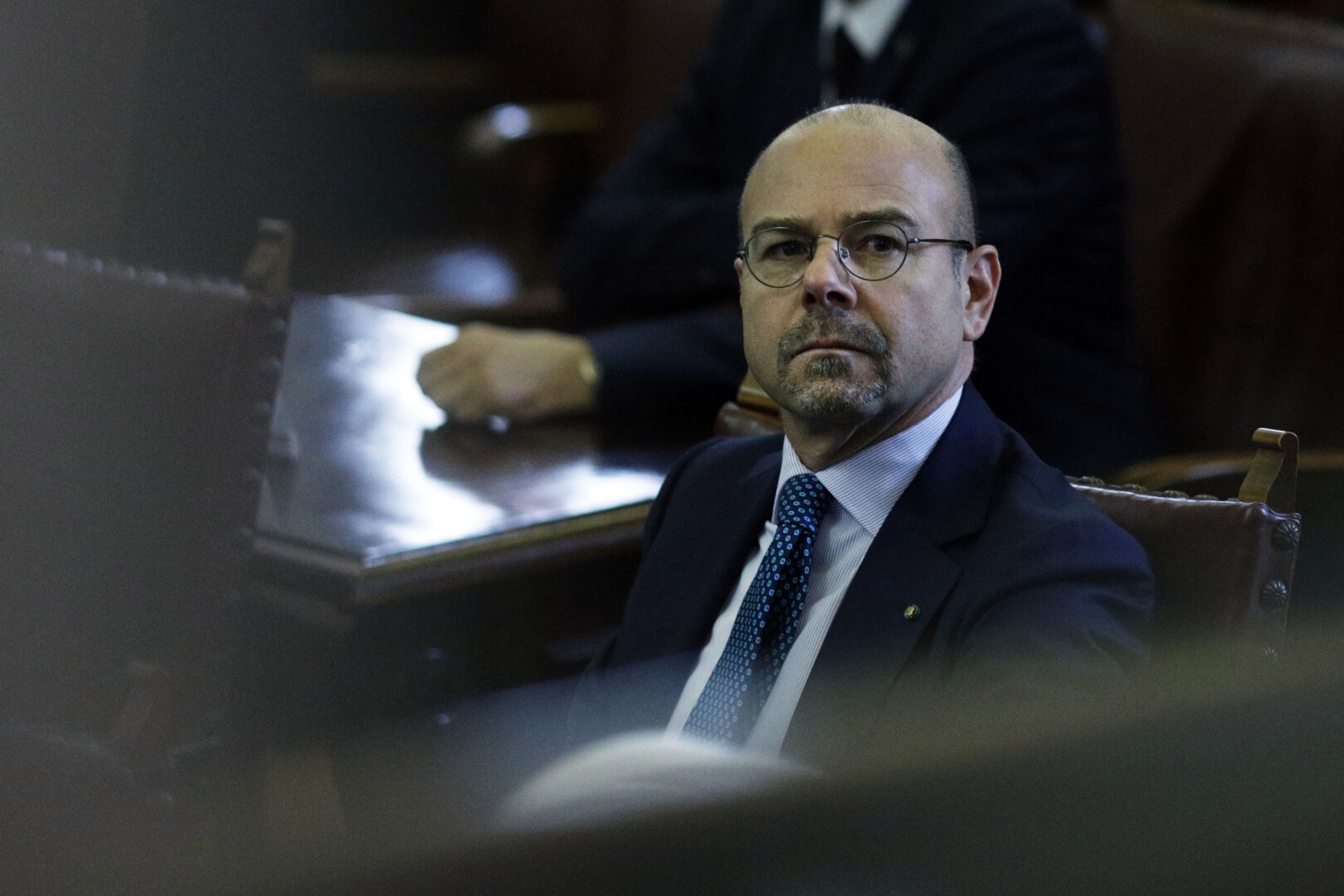
The 1.1 million-strong community has deepened ties between Italy and Romania, both NATO and EU members with Rome considering Romania “Italy’s most important partner in the eastern region,” said Ambassador H.E Alfredo Durante Mangoni in an interview with Universul.net carried out on Sept. 24 before the Moldovan elections where voters defeated an aggressive Russian disinformation campaign.
Romania and Italy are close partners, sharing historic, linguistic and cultural ties. Modern-day Romanians are the descendants of the old Roman conquerors and colonizers of the province of Dacia. After Romania joined the European Union in 2007, it was natural step for many Romanians to move to Italy for better employment opportunities and higher wages.
in wide-ranging interview with Universul.net, the Ambassador, who took up his post in Bucharest in 2021, praised Romania’s “increased quality of life” and Bucharest’s ‘vibrant and thrilling environment” as well as its varied landscape and cultural heritage.
He also touched on serious challenges facing Europe such as the ongoing hybrid war waged by Russia against Europe and highlighted ways Romania, which cancelled 2024 presidential elections over Kremlin digital meddling, was combating it and what practical steps could be taken to counter cognitive warfare seeking to undermine democracy and society.
“Romania represents an emblematic case of democratic vulnerability in the face of disinformation and hybrid threats. The 2024 presidential elections, annulled by the Constitutional Court due to evidence of external interference, highlighted both the fragility of the digital information space and the ability of coordinated transnational disinformation campaigns to influence the electoral process,” he said.
He praised Romanian authorities for adopting a series of concrete initiatives as well as “the commitment of some expressions of civil society…where a substantive dialogue takes place among institutions, civil society, academia and the media on how to counter interference and disinformation campaigns, involving international experts and prominent journalists.”
“The role of continuous training for operators should be strengthened, along with the use of open-source intelligence and advanced technological tools, as well as collaboration with independent media and fact-checkers, in order to improve detection and response capabilities against threats,” he added.
“From a political perspective, collaborative relations are flourishing, and Romania represents Italy’s most important partner in the eastern region. Over the years, the strategic partnership has been a priority for both nations.”
Here is a transcript of the Universul.net interview with H.E. Mr. Alfredo M. Durante Mangoni, Ambassador of Italy in Romania
When did you arrive in Romania, and what changes have you seen? Please tell us about your visits across Romania. How do you find the Romanian people and country?
I arrived in July 2021, and since then I have witnessed many changes in the country, especially regarding the increased quality of life and gradual developing of better infrastructures and accessibility. Another change I observed is the growing awakening that the city of Bucharest has had during these four years, making it now a vibrant and thrilling environment.
The stimuli coming from contemporary art, design and architecture transformed the city in a creative and eclectic place, buzzing with dynamism and definitely the place to be. Romania is a wonderful yet complex nation, and to my surprise, not fairly known abroad. However, because of its distinctive Latin nature, I have grown to notice the chemistry among people, the mutual understanding and cordiality between the two states, which share culture and depth.
I have found Romanian people distinguished by their openness, their energy and spirit and their genuine welcome and interest towards Italy, even by many who did not live, studied and experienced our nation. Romania is rich in human qualities and natural landscapes. I have visited many cities and villages representative of the history of the country and iconic places that carry the value of the tradition. I have seen the Dobruja region with the Danube delta, the Bukovina monasteries, the Transylvania region, the Carpathian mountains, Sarmizegetusa, fortified cities from the Saxon influence, hubs of the Habsburg tradition and witnessed the richness and variety of these places.
How are bilateral relations at the time of your departure, politically and commercially? What are the main trade components?
One of the pillars of the strategic partnership between Italy and Romania is our economic cooperation. Italy is, in fact, among Romania’s leading trade partners and investors: thousands of Italian-capital companies operate in Romania, in sectors ranging from manufacturing to agri-food, from banking and financial services to infrastructures. This has generated a widespread entrepreneurial network, fostering Romania’s GDP growth, job creation, and local development. Italian companies allow the local management to professional growth by involving them in key business choices.
The cooperation model has had two main phases: the first, focused on manufacturing and traditional supply chains (clothing, furniture, agri-food); the second, centered on consolidation and expansion. Today, it is necessary to aim for a third phase, in line with the European objectives of the green transition and digitalization, to develop innovative and sustainable sectors based on renewable energy, new technologies, circular economy, and scientific research.
The Romanian community in Italy contributes up to 2% of Italy’s GDP, boasting exemplary integration built not only on economic ties but also on social and cultural relations. The economic relationship between the two countries thrives thanks to the human capital of entrepreneurs, professionals, and workers who, moving between the two nations, bring with them knowledge and skills.
Italy has contributed in critical aspects of Romania development, such as energy – worth mentioning is the Ansaldo Nucleare company activity, in a pioneering position in the project and developing of the Cernavodă nuclear power plant -, infrastructures and steel production, and Italian investments in Romania continue to grow significantly. In this respect, it is worth mentioning the publication of the guide “Diplomacy in Growth: Destination Romania”, – available on the Embassy website – a comprehensive overview of business opportunities, aimed at supporting both companies already active in the country and operators interested in exploring the Romanian market, by providing useful tools to guide their investment decisions.
From a political perspective, collaborative relations are flourishing, and Romania represents Italy’s most important partner in the eastern region. Over the years, the strategic partnership has been a priority for both nations.In February 2024, an important inter-ministerial summit — the third, held 13 years after the previous one — took place in Rome, adopting a new Political Declaration on the consolidated Strategic Partnership, signed by the two Prime Ministers and accompanied by several memoranda of understanding, technical agreements, and letters of intent in various political areas.
Linked to this was the meeting of the Business forum Italy-Romania 2024, in which themes like energy, digitalization, agro-industry and infrastructure / metal-mechanical sector, as introduced by the two Ministers for Foreign Affairs, Tajani and Odobescu. In June 2024, the President of the Italian Republic, Sergio Mattarella, paid an official visit to Bucharest, marking the culmination of the relations between the two states, which have matured over the years.
There are a large number of Romanian immigrants who live and work in Italy? Does this strengthen bilateral relations? Are there problems due to the large numbers of migrants?
The Romanian community in Italy currently represents the largest foreign presence, with over 1.1 million citizens – professionals, workers, students, and entrepreneurs – who actively contribute to the growth of Italian economy while also strengthening the human and cultural bond with Romania.
The Romanian community in Italy boasts exemplary integration based not only on economic ties but also on social and cultural relations. The economic relationship between the two countries flourishes thanks to the human capital of entrepreneurs, professionals, and workers who, moving between the two nations, bring with them knowledge and skills.
Italians also show growing interest in Romania as a tourist destination, increasingly appreciated by our visitors: Bucharest, Cluj, Sibiu, as well as rural areas, mountain resorts, and seaside locations, are on the rise – a sign of cultural and human interest that goes far beyond the economy. At the same time, Italy today is one of the main tourist destinations for Romanians, but many Romanians also continue to choose Italy as a place for work, study, or business, proving that the attractiveness is mutual.
Equally noteworthy is the growth of university exchange programs and academic cooperation, which allow students and researchers to work across the two countries. This flow of skills and knowledge is perceived as a key element in strengthening bilateral relations, as it shapes young citizens with shared experiences and the ability to connect the two social and economic systems. Personal and cultural ties contribute to consolidating a positive mutual perception, while also fostering economic and strategic exchange.
As you leave, there are heightened tensions on NATO’s eastern flank. There was an incursion by 19 Russian drones onto Polish airspace earlier this month and a lone Russian drone incursion onto Romanian airspace last weekend. Russia and Belarus have staged wide-ranging ZAPD 2025 exercises. Lithuania is holding drills and said it would beef up defenses along its border with Russia and Belarus. Ahead of the drills, Poland closed its border with Belarus and deployed more than 30,000 troops, for military exercises. How do you, Your Excellency, see Romania’s role in the NATOs’ collective defense against Russian aggression (whether that is drones or cyberattacks/disinformation) sharing an almost 650-kilometer border with neighbor?
Within the NATO framework, particular attention is given to the Alliance’s eastern flank, where Romania plays a crucial role in European security in light of the growing strategic importance of the Black Sea region.
For Italy, the stability of this area is closely linked to the security of the wider Mediterranean and the Balkans: the joint commitment to maritime security and to strengthening NATO’s deterrence thus represents a natural field of collaboration. Italy and Romania also share common positions on major issues such as European cohesion in managing security crises, particularly in light of the conflict in Ukraine. On Italy’s part, there is a strong commitment to a strategic partnership that translates into concrete actions of political and military coordination. The aim is to strengthen the level of joint training of the armed forces and to enhance cooperation in the defense industry.
· Italy’s government has made countering the war of disinformation (or cognitive warfare) a strategic priority. Has Romania done enough to make its citizens aware that they are subject to disinformation that seeks to polarize citizens and undermine trust in authorities? Here I refer to last year’s cancelled presidential election plus the hybrid war which President Nicusor Dan recently said Romania had been a target of for at least 10 years and Romanian authorities have communicated more about the geostrategic situation. Do they need to continue this public awareness campaign and take other steps to protect Romania cybernetically etc?
Romania represents an emblematic case of democratic vulnerability in the face of disinformation and hybrid threats. The 2024 presidential elections, annulled by the Constitutional Court due to evidence of external interference, highlighted both the fragility of the digital information space and the ability of coordinated transnational disinformation campaigns to influence the electoral process.
To address this threat, the Romanian authorities have adopted a series of concrete initiatives. I also praise the commitment of some expressions of civil society (….) where a substantive dialogue takes place among institutions, civil society, academia and the media on how to counter interference and disinformation campaigns, involving international experts and prominent journalists. The role of continuous training for operators should be strengthened, along with the use of open-source intelligence and advanced technological tools, as well as collaboration with independent media and fact-checkers, in order to improve detection and response capabilities against threats.
I acknowledge the need to engage, also through public diplomacy, on media literacy and the promotion of critical thinking, as well as on mentorship programs for journalists. FIMI threats have become very complex to detect, since they operate not only through illegal content but also via psychological manipulation.
>
> The need for a multi-level approach and international cooperation is widely recognized, coordinating actions at the EU level and with strategic partners, in order to protect not only the national state but also the functioning of the Union as a whole. In this context, although significant steps have already been taken in raising awareness and protecting citizens, it is clear that awareness campaigns must continue, adapting to the growing sophistication of disinformation strategies and further reinforcing educational, technological, and collaborative measures.
How do Italy and Romania plan to continue to strengthen future cooperation in NATO, the EU, trade, cultural ties. Any plans you want to share with us?
Italy and Romania look to the future with the goal of further strengthening their close cooperation. At the international level, there is a clear commitment to collaborate in the fields of defense and security, sharing strategies and joint projects to address global challenges together. Trade exchanges and mutual investments are particularly valued in strategic sectors such as energy, infrastructure, and digital innovation, which will certainly continue to grow and consolidate further.
At the same time, cultural and human ties, supported by the presence of the Romanian community in Italy, will continue to reinforce collaboration between the two peoples. With this spirit of closeness and shared purpose, Italy and Romania can look with confidence to a future of greater integration, stability, and reciprocity.
