












There’s friction between the EU’s intentions about sustainability and its competition with China and India in securing raw materials, Universul.net learned in a recent interview with a UN official
Last month, Bucharest hosted two major events focused on sustainability and corporate responsibility.
European Commission President Ursula von der Leyen and John Elkington, often called the “godfather of sustainability”, were the big names who were in the Romanian capital for the events.
Discussions focused on how the future has already arrived, how sustainability will no longer be an option for any company, and how we can work together —whatever the mindset or ideological stance—to find solutions that work for everyone.
In Romania, these concerns are slowly emerging, though they’re still in their early stages. The fact that eight out of ten Romanians believe there are too few companies genuinely engaging in sustainability shows that the public agrees with this view.
Recent journalistic investigations and academic studies have exposed stories of abuse and modern slavery involving non-European immigrants working in Romania, a disheartening trend. For many local businesses, profit is still the sole focus.
Universul.net recently discussed the topic of corporate responsibility with Mary Martin, Director of the UN Business and Human Security Initiative, on the sidelines of the Ratiu Dialogues on democracy in the town of Turda.
Martin is a leading thinker who has advocated for the reduction of the gap between large corporations and local communities, stressing that businesses play a much larger role in the areas they operate than they often realize.
She is also the author of the book Corporate Peace: How Global Business Shapes a Hostile World, based on interviews with business leaders from around the world—from Mexico and Colombia to Syria, Iraq, and West Africa—seeking to understand whether corporations can fill the gaps necessary to ensure the safety and well-being of citizens.
When asked what motivates companies to shift away from “business as usual” and embrace new models aligned with this emerging paradigm, Mary Martin told us:
„The role of Gen Z, started with Millennials, is really interesting. The main reason these big companies gave me was because they want to attract a new generation of good employees; and for Gen Z graduates of Business schools and marketing degrees – they want to work for companies that behave well. They don’t want to be associated with the bad guys. In political terms this is more soft power than hard power. Nonetheless it’s a very potent reason for which CEOs and senior management change.”
Half a century ago, Milton Friedman—often regarded as “the most influential economist of the second half of the 20th century” and the 1976 Nobel prize winner for his research on consumption analysis, monetary history and theory and the complexity of stabilization policy —stated that ”the social responsibility of business is to increase its profit” and that spending money on social causes is essentially spending someone else’s money, namely stock holders, customer and employees, for a general social interest. Today, however, the landscape seems to be shifting in a new direction.
Martin explained that, for the last two or three years, major corporations have introduced a new role. Alongside the CEO (Chief Executive Officer), COO (Chief Operating Officer), and CFO (Chief Financial Officer), there is now a CIO (Chief Impact Officer) who is responsible for understanding and managing the impact businesses have on local communities, the environment, and people.
„I think Covid pandemic made a difference in this respect,” Martin added. „Because everybody was scrambling to manage problems that traditionally were not the business responsibility. But if you were a large company, Cemex, for instance, a Mexican-originated but a huge global concrete producer — they use water. But people also needed water to keep the hygiene standards during the pandemic, so what did… they saw that their role was to make sure that the water supplies they normally had went to communities. And this is just one example. So all things health, security, employment issues, the awareness of their impact — good or potentially harm if they didn’t pay attention — came on to corporate agendas because of the pandemic, and they haven’t gone away afterwards.”
The doctrine Milton Friedman formulated so bluntly half a century ago profoundly shaped business thinking in the United States and, later, across the world. ”Businessmen who talk this way are unwitting puppets of the intellectual forces that have been undermining the basis of a free society these past decades”, Friedman declared, criticizing those who spoke about corporate responsibility. The result was a vast, insurmountable gap between decision-makers and those in vulnerable positions.
Martin explains that the connection between business and human rights only became a topic of conversation in 2011, when the UN introduced the Guiding Principles on Business and Human Rights.
“There is still a terrific gap between the websites and the speeches of the CEOs, who go to Davos, to the World Economic Forum, they talk this talk, their websites full of words like sustainability, and social responsibility, and we believe in diversity and inclusion and yet there’s still a gap between that high level of the companies and what happens on the ground,” she told Universul.net.
“The book I wrote, Corporate Peace, was very much an attempt to show how I think companies can be – and often are – very good at addressing those problems on the ground, local issues, because they are there. They are on the ground. But there is still this disconnect in the corporate chain between the corporate strategy and the ground. So how can we, if you like, have a bottom-up approach as well as a top-down?”
Martin laments the way some companies perceive social responsibility: ”If we have enough profit this year, we’ll build a soccer field or a women’s shelter,” without truly understanding the realities of the communities they serve or the outcomes of such actions, which are often insufficient at best and, at worst, detrimental.
„With the UN, what we’ve been doing in my research project, the Business and Human Security Initiative, for the last six years, has been to try and provide guidance, a sort of operational framework whereby businesses, companies and investors can dialogue, form partnerships with local communities, with stakeholders that are impacted by their operations and investments, getting away from the kind of traditional thing of bargaining over human rights.”
Yet she also understands the civil society’s reluctance to engage in discussions with businesses, rooted in a long-standing belief that companies are inherently problematic.
„It happens in academia, too. When I first started this work, I was in the Department of International Development and colleagues said to me, why on earth would you be talking to companies? It was almost like I was polluting my academic credentials. And I think one has to get over that. I mean, not denying that companies do bad things, do stupid things. You’re always going to get contests because everybody’s interests are so different but can you have a conversation? Can you have a dialogue between business, government, communities, NGOs that understand the threats but also the common interests. This would change the conversation and this is what I’m really interested in.”
Companies are responding to pressure, Martin believes, and at least in Europe, and legislation is becoming increasingly strict regarding impact, relationships with suppliers, communities, and so on. However, there has not been significant support for direct relationships between decision-makers and those affected by their decisions.
„They rush out and buy data, which is just AI gathered, and they think that tells them everything they need in order to mitigate risks that they created. But it actually doesn’t tell them the real story because it’s too crude. I think we need mechanisms, processes; companies need processes, governments need processes, international organizations need processes to really allow the voice of people who are impacted by changes be articulated in a way that translates — as it were in the metaphorical sense — into how a company operates.”
Martin cites the example of the mining giant Rio Tinto, which, as part of an iron ore extraction operation in Australia, destroyed two sacred Aboriginal sites, leading to the resignation of three top executives. While this occurred in 2021, the company is still in open conflict with the people of Serbia, who vehemently oppose the opening of a lithium mine in the western part of the country. It’s worth noting that citizens are not only opposing the company but also the government, which is keen to back Rio Tinto up .
Although European legislation has caught up in somes areas, regions outside the European Union remain exposed to significant risks.
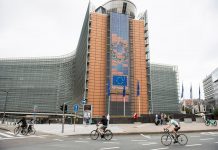
„What you see in Africa and Latin America at the moment is a kind of tug of war – tug of love. The European Union has put in place all this legislation to make companies conduct due diligence, to think about their impacts. But at the same time it wants to beat China or India in securing critical raw materials — whether it’s copper in Chile or lithium in Democratic Republic of Congo. So thinking back to how this impacts our world order it’s not clear who’s going to win that race. Are the ethics going to win out? I think even the European Union, which wants to be values-based and have an ethical approach… Well, my fear is that, unless the responsibility comes from the companies themselves in the mindset of the leaders, the legislation will cave in and they’ll end up saying we need the copper, we need the bauxite, we need the lithium more than human rights matter. Human rights must be protected but we’ll see how the future is out.”
In the United States, diversity, equity, and inclusion programs face threats from conservative activists and lawmakers, prompting many large companies to retract their promotion of these values from their agendas out of fear of legal consequences. However, Mary Martin remains optimistic; she believes we are not moving backward. Legislation, employees, consumers, and citizens alike are becoming increasingly aware of the responsibilities that companies must uphold.
