










In an uncertain geopolitical and economic environment, the US Federal Reserve’s decision to keep the interest rate unchanged provides stability.
The markets were not pricing a rate cut but were expecting to see the Fed’s economic outlook and understand when the next rate cut would come. The Fed lowered its US GDP outlook for the year, raising its inflation expectation and unemployment rate.
Despite the Fed’s expectations for higher inflation (ending the year at 3%, higher than the current level), it maintained its stance toward two rate cuts by year-end, writes eToro analyst for Romania, Bogdan Maioreanu.
The news that US benchmark interest rates remain high (currently at 4.25-4.5%) is not welcome for indebted nations everywhere, including Romania, as their debt payments get more expensive when creditors have a high interest, low-risk option to lend money to the US. Similarly, it becomes more difficult for emerging markets to attract foreign investments.
The Fed signaled a step in the right direction by acknowledging that economic uncertainty has “diminished,” potentially opening the door to rate cuts if inflation remains in check. Despite characterizing it as diminished, they mentioned that uncertainty “remains elevated”.
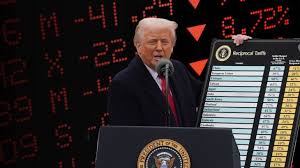
Trump tariffs remain an element of the unknown. Fed’s chair, Jerome Powell, said it takes time for tariffs to work through the goods’ chain of distribution, noting many goods being sold by retailers were imported months before tariffs were imposed. “So we’re beginning to see some effects, and we do expect to see more of them over the coming months,” he said. “We do also see price increases in some of the relevant categories, like personal computers and audio visual equipment, and things like that, attributable to tariff increases.”
Jerome Powell emphasized that a cost shock is on the horizon, as producers, manufacturers, and retailers continue to assess who will bear the burden of the tariffs imposed to date. However, President Donald Trump is still considering a new round of aggressive import duties that could take effect as soon as next month, which will further complicate this equation.
Powell said that everyone he knows expects a significant rise in inflation in the coming months due to tariffs, since someone must ultimately absorb these costs, whether it’s the manufacturer, exporter, importer, or retailer. “Ultimately, the cost of the tariff has to be paid, and some of it will fall on the end consumer”, he said. Powell considers that the Fed will make smarter and better decisions if it just waits a couple of months or however long it takes to get a sense of what is really going to be the pass-through of inflation from the higher import taxes.
Current market expectations are pricing in the first rate cut for September. However, if the June and July inflation measures remain tepid – and especially if the labor market starts to show signs of weakness – that could have investors wondering if the Fed may consider a cut at its July 29-30 meeting.
Investors were not pricing in a rate cut, nor were they expecting the Fed to veer from its wait-and-see approach. The Fed delivered on those fronts, clinging to a “solid” labor market and economy to support their approach. Relaxing their view on economic uncertainty may show an openness to rate cuts in the second half of the year, provided that other macro-related factors remain stable. The Fed doesn’t seem to be in a hurry to cut rates, but appears open to doing so under the right conditions.
The Fed’s decisions, which can impact the markets, are also important for the Romanian retail investors as, according to the latest eToro Retail Investor Beat survey, 36% of them have exposure to the US in their investment portfolios. This percentage increased in the second quarter of 2025 from 29% in the same quarter last year. Also, 40% of the Romanian investors consider that in the next 5 years or more, the US is the region that will generate the strongest returns for their investment portfolios.
The problem of Romania’s budget deficit: the economic risks and challenges in 2025
