(Yes, we certainly do.)
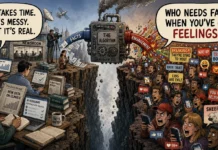
In the not-so-distant past, our information ecosystem was dominated by a select group of gatekeepers — major newspapers, television networks, and respected institutions — that offered us the rough draft of history. This centralized model, prevalent throughout most of the 20th century through the early 2010s, provided society with a semblance of a shared narrative. While perhaps elitist, it yielded coherence and a collective understanding of world events.
That era is over. The advent of the internet and the rise of social media ushered in a more democratic but also fragmented and wildly chaotic media landscape. The fact that anyone with an internet connection can publish content has led to a proliferation of voices and perspectives. Sounds good, right?
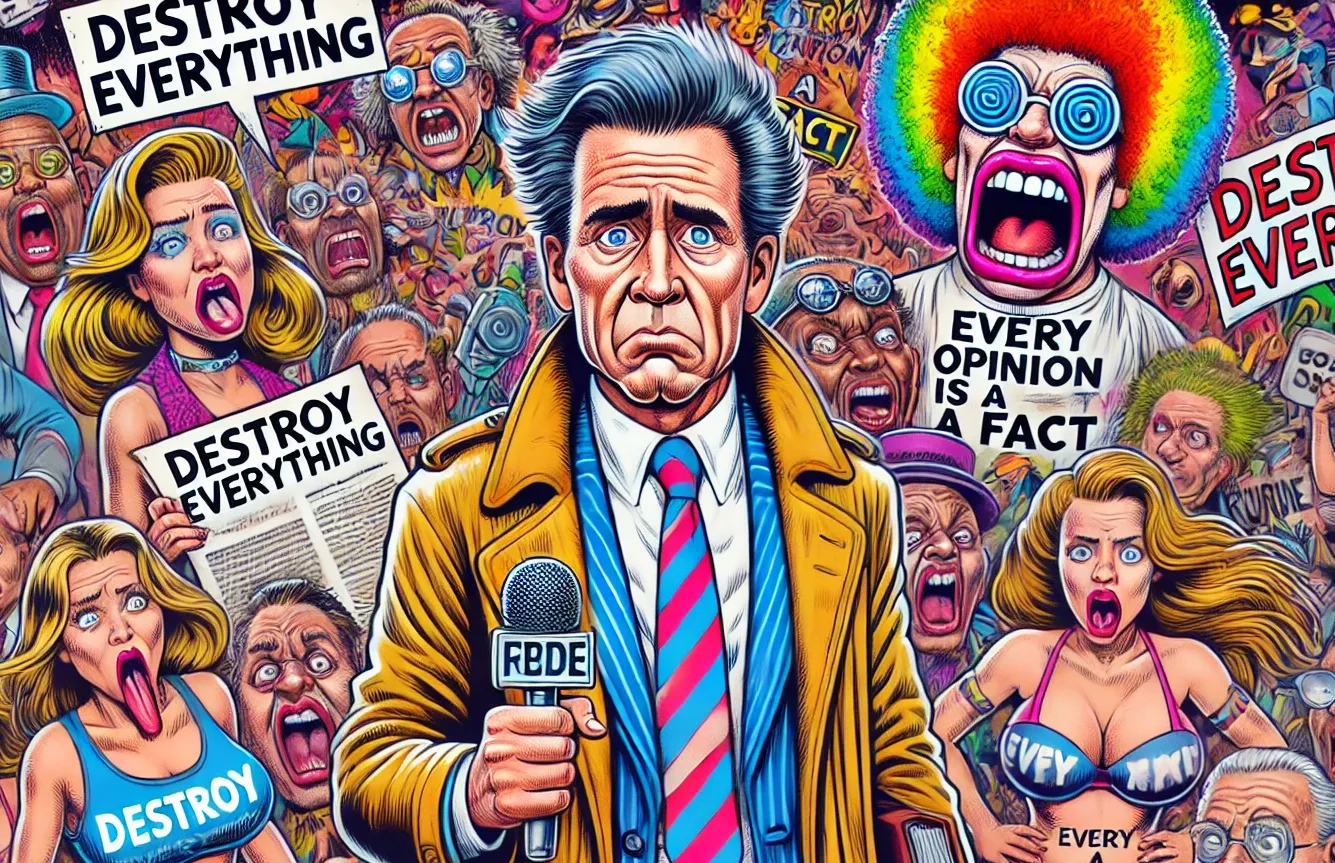
While this democratization has its merits, it yielded a cacophony where misinformation and even aggressively malicious disinformation absolutely thrives, in which the concept of a unified truth is elusive. Bad faith players – think Russian uber-villain Vladimir Putin – are exploiting this landscape to convince people in the West to burn down their own house.
The role of journalism in this new environment is under scrutiny. The younger generation, immersed in a digital ecosystem teeming with stimuli — from social media feeds to streaming platforms — often perceives news brands as just another voice. This indifference challenges journalism’s relevance and raises critical questions about its future.
The traditional gatekeeping model depended on high barriers to entry. Establishing a newspaper or television station required substantial capital, infrastructure, and in some countries regulatory approval. These constraints limited the number of players and allowed for the enforcement of journalistic standards and the cultivation of public trust.
Essentially, it enabled a certainly oligarchy – educated people, mostly of similar backgrounds and schooling – to gently nudge the publics in the democratic world toward a shared understanding. Was this elitist? Perhaps. Was it brainwashing? No, we wouldn’t go that far. Was it helpful? Quite possibly. It certainly yielded some societal cohesion.
With the digital revolution, this paradigm collapsed. The cost of entry vanished, enabling a multitude of content creators to enter the fray. Social media platforms, far from acting as gatekeepers, became gatewatchers, allowing information to flow freely but without vetting. Algorithms now dictate what people see, prioritizing content that is designed to keep you scrolling for just one more thing—often sensationalism over substance and engagement over accuracy. So what if the content is lies or meant to agitate you?
In the not-so-distant past, our information ecosystem was dominated by a select group of gatekeepers — major newspapers, television networks, and respected institutions — that offered us the rough draft of history. This centralized model, prevalent throughout most of the 20th century through the early 2010s, provided society with a semblance of a shared narrative. While perhaps elitist, it yielded coherence and a collective understanding of world events.
That era is over. The advent of the internet and the rise of social media ushered in a more democratic but also fragmented and wildly chaotic media landscape. The fact that anyone with an internet connection can publish content has led to a proliferation of voices and perspectives. Sounds good, right?
While this democratization has its merits, it yielded a cacophony where misinformation and even aggressively malicious disinformation absolutely thrives, in which the concept of a unified truth is elusive. Bad faith players – think Russian uber-villain Vladimir Putin – are exploiting this landscape to convince people in the West to burn down their own house.
The role of journalism in this new environment is under scrutiny. The younger generation, immersed in a digital ecosystem teeming with stimuli — from social media feeds to streaming platforms — often perceives news brands as just another voice. This indifference challenges journalism’s relevance and raises critical questions about its future.
The traditional gatekeeping model depended on high barriers to entry. Establishing a newspaper or television station required substantial capital, infrastructure, and in some countries regulatory approval. These constraints limited the number of players and allowed for the enforcement of journalistic standards and the cultivation of public trust.
Essentially, it enabled a certainly oligarchy – educated people, mostly of similar backgrounds and schooling – to gently nudge the publics in the democratic world toward a shared understanding. Was this elitist? Perhaps. Was it brainwashing? No, we wouldn’t go that far. Was it helpful? Quite possibly. It certainly yielded some societal cohesion.
With the digital revolution, this paradigm collapsed. The cost of entry vanished, enabling a multitude of content creators to enter the fray. Social media platforms, far from acting as gatekeepers, became gatewatchers, allowing information to flow freely but without vetting. Algorithms now dictate what people see, prioritizing content that is designed to keep you scrolling for just one more thing—often sensationalism over substance and engagement over accuracy. So what if the content is lies or meant to agitate you?
Some aspects of the adaptation are obvious, yet bear repeating: News organizations need to leverage the platforms and formats that resonate with contemporary audiences – multimedia storytelling, interactive graphics, and engaging social media strategies. Flexible monetization strategies and innovative business models are essential too, from micropayments for individual articles to bundled subscriptions across multiple outlets. But there are several other avenues to pursue, at a societal level – if our societies wish to avoid the terrible schism we foresee.
First, media literacy is vital. A better informed public, equipped to navigate disinformation and critically assess sources, would reestablish the market for professional journalism in a way that would aid human progress.
For that to happen, education systems must prioritize critical thinking, logic, and discernment, empowering citizens to make informed decisions in a fragmented media environment. This is not being done. Our youngsters are basically being told that a Pulitzer-prizewinning global investigation into the modern slave traffic and the stock tips of an influencer with no domain expertise but plenty of followers are worth the same. In the name of non-elitism, no one is prodding our youth to pay some attention to the former.
Rebuilding trust is equally important. Transparency, acknowledgment of errors, and a commitment to impartiality can help news organizations regain credibility. This is a particular challenge when audiences see the media as elites and part of the problem. It is not enough to tell the audiences what we think they need to know. Engaging with such audiences through open dialogues and community involvement is needed. We cannot dismiss them as deplorable.
Third, societies that care should invest in publicly funded journalism. Almost every country in Europe maintains a BBC-like public broadcaster dedicated to high-level, fair-minded journalism – independent of the government and trying, at least, to steer clear of political bias. This should be considered in the United States as well, as the invisible hand of the free market is proving callously indifferent to the information needs and education of our citizens.
We fully realize that many will ask who appointed anyone as gatekeepers or as the guardians of democracy. Our answer is this: When you are flying into a storm, you want your pilot to be trained, smart, and serious. You don’t expect the pilot to ask the passengers to vote on whether you all should keep going or turn back. When navigating our increasingly complex world, rational people probably know they want those same qualities in their guide. There’s a word for that guide, and the word is journalism.
Shawn McIntosh is Chair of the M.A. in Multiplatform Journalism Program at the American University of Armenia, and has lectured in journalism at Columbia University and the Massachusetts College of Liberal Arts.
A Christmas Tale With a moral for the tyrants of today