













After shock and spectacle, a costly campaign leaves core goals unmet and credibility strained, but Iran’s oppression machine has at least been degraded
Within the space of a day, President Trump’s genocidal threat to wipe out Iran’s “entire civilization” gave way to a two-week ceasefire that probably ends the war. In Israel and the United States, both moving toward elections, a fierce reckoning will unfold over what this war achieved, what it cost, and what it revealed.
A full accounting must await the results of talks due to begin in Pakistan on Friday. But judging by statements from Trump and other U.S. officials, these are something of a formality, and the war ends in exchange for Iran’s reopening the Strait of Hormuz and perhaps handing over its enriched uranium – essentially achievable before the war.
Judging outcomes depends on what the goals were – and we can expect both Trump and Benjamin Netanyahu to adjust these retroactively to spin their gambit, which placed the entire world on edge, seem successful. We should look past that to examine it honestly.
The main goal stated by Trump at the at the outset was that Iran’s nuclear program be halted and reversed. For now, Iran retains its enriched uranium stockpile, albeit probably buried deep under the rubble of its destroyed facilities. Even if helps find and hand that over, it has made no promises to stop the effort or allow intrusive oversight. So on the central question that supposedly sparked the war, it has yet to deliver a decisive shift.
Israel had wider goals, which American officials seemed to sometimes echo and often ignore. It wanted Iran to be relieved of the long-range missile capability used to target Israel with the biggest ballistic attacks in history. And it especially is fed up with the web of militias stretching from Lebanon and Yemen to Iraq and the Palestinian which Iran can activate at will – to attack Israel, block shipping lanes and entrench instability across multiple states. Unlike with the nuclear program, Iran is not even willing to discuss these issues, and here, too, there is no evidence that the war has moved its position by an inch.
If the regime cannot be forced to accept changes in its behavior, what is left, short of its downfall, is degradation of its abilities. Here the ledger looks more successful, if mixed.
The early phase delivered dramatic blows: Supreme Leader Ali Khamenei was killed in the early minutes of the operation, and so, in the following days and weeks, were a dizzying array of very senior political and military figures. Iran’s facilities – missile launchers, research sites, operational headquarters, checkpoints, much of its entire naval fleet – were destroyed, and thousands of armed men killed. Here’s the Pentagon rundown on that:
A normal regime might be cowed after such a thrashing, but these are fanatical jihadists, and all of this can be rebuilt. Moreover, Iran was still firing missiles at Israel for a few hours even after the ceasefire was announced. So this amounts, at best, to what Israeli officials call a “mowing of the grass.” Selling it as a huge victory is basically spin.
After the similar but more limited 12-day war last June, the effect on Iran’s lawn was vastly exaggerated. Trump insisted the nuclear program had been “totally obliterated” and that any journalist who questioned this was “doing a really bad job,” and Netanyahu offered characteristically articulate nonsense, declaring that Israel “set back for generations” not just the nuclear threat but the one from ballistic missiles. Neither has attempted to explain the contradiction between those claims and the pretext for the renewed war.
In the background, of course, there was always the hope that the regime would mercifully just fall. Indeed, Trump said on the first day that the people of Iran would be able to take their country back, and Netanyahu made similar statements. Normally, external regime change efforts are a bad idea – interference is hard to defend legally and unlikely to succeed. But in this case, with the regime damaging the region for decades and having just killed tens of thousands of its own people to stamp out the protest movement in January, the ambition seemed justified, as long as there is a realistic plan for it to work
There had been some hope that given the extent of the regime’s decapitation in the early days, that would occur. It would have required armed forces on the ground, and since the United States was never going to occupy Iran, this would have required the arranging of a plan with elements in the Iranian security apparatus to seize power once the leaders of the theocracy are gone. This, plainly, had either not been prearranged or simply did not work. And the window that opened in the first days began to close as the regime adapted and projected continuity.
Meanwhile, the war’s costs are not inconsequential. There is significant loss of civilian life in (Iran and Lebanon) – most devastatingly the erroneous U.S. attack on an Iranian school that killed over 100 children on the first day – and also dozens of civilians (mostly in Israel) and solders (mostly Americans) killed on the attackers’ side. Also, huge costs in materiel.
Devastatingly, Iran demonstrated that it can hold the world to ransom by blocking the Strait of Hormuz, through which a fifth of the world’s crude supply travels. Not only did oil prices spike, but the inflationary effects via petroleum-based and other products, the supply chain disruptions, and the systemic trust breakdown are dire and could have long-term consequences even once the Strait reopens, as it presumably will.
Moreover, it looks like Iran is still somehow hoping to charge ransom per ship in some way that is internationally recognized – and which, of course, must categorically not be allowed: the Strait does not go through Iranian territory, but rather Iran simply has territorial waters on its northern shore. That Iran even toys with this idea reflects the regime’s belief that it has emerged with more leverage, not less.
All this leaves the regime’s many critics hoping for a renewal of the protests, in the weeks and months after the war, with a different outcome this time. Perhaps the degradation of its military, and in particular the Revolutionary Guards and its intelligence operation, as well as the Basij, the oppression police, might tilt the balance in favor of the opposition. The opposite may also emerge as true: that the opposition will be totally demoralized by the fact that American threw everything it could reasonably throw at the regime, to no avail.
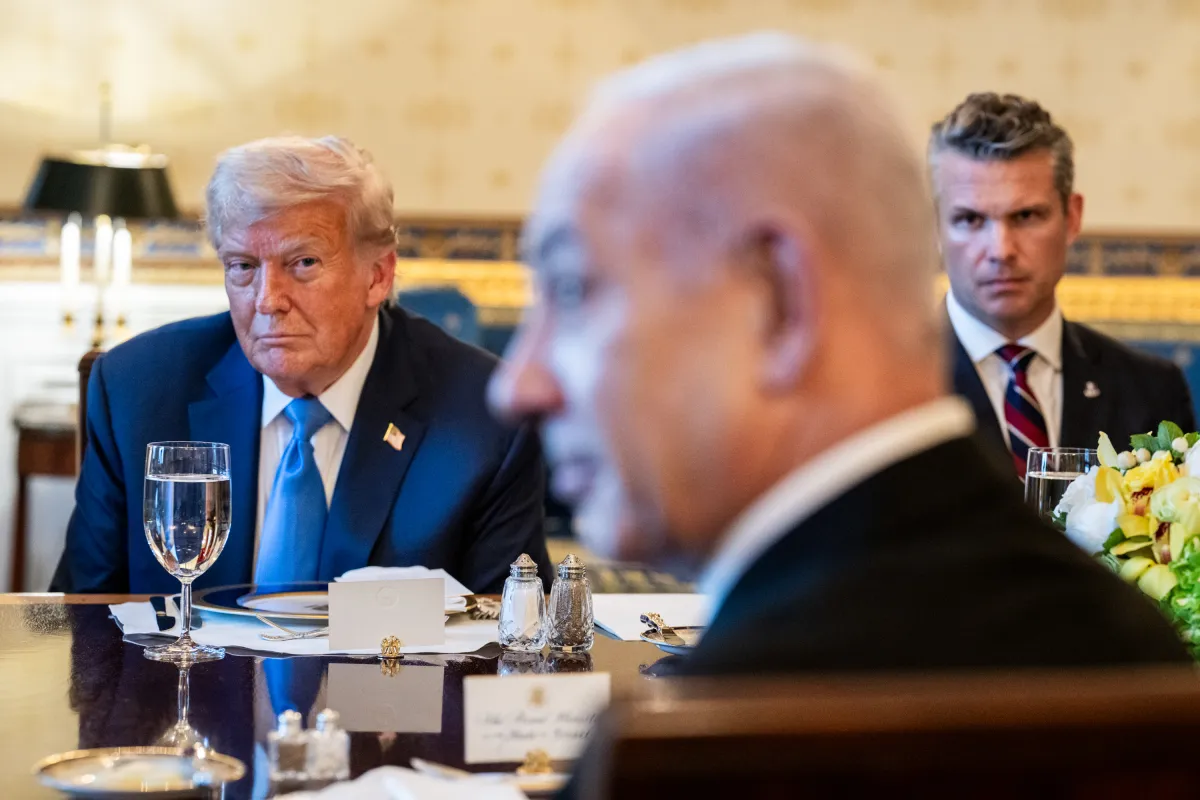
For the United States and Israel, it is absolutely unclear whether this is a strategic net gain – or loss. As the war was unpopular in the United States, scapegoats may be needed. One candidate could may be Secretary of “War” Pete Hegseth, the war’s cheerleader-in-chief. Another is Netanyahu, who is being accused by many, including in the MAGA movement, of misleading the capricious and superficial Trump that the regime will easily collapse.
Americans might be troubled by what the war revealed yet again about their impetuous political leadership and its standing in the world. The NATO nations refused to join the war, causing Trump to threaten a pullout of the United States from the alliance that has helped keep global peace for almost 80 years; this caused enough angst to send Secretary-General Mark Rutte on an emergency mission to Washington today.
And however the geopolitical dust settles, there may be lasting impact to Trump’s social media post this week, in which he wrote this: “A whole civilization will die tonight, never to be brought back again. I don’t want that to happen, but it probably will.” Anyone who thinks that words should carry weight might conclude that what will be remembered of this war is that the U.S. president was a person capable of publishing that.

