










Moldovans on Sunday cast their ballots in a presidential election that could prove pivotal for the country’s European future, amid accusations of Russian interference.
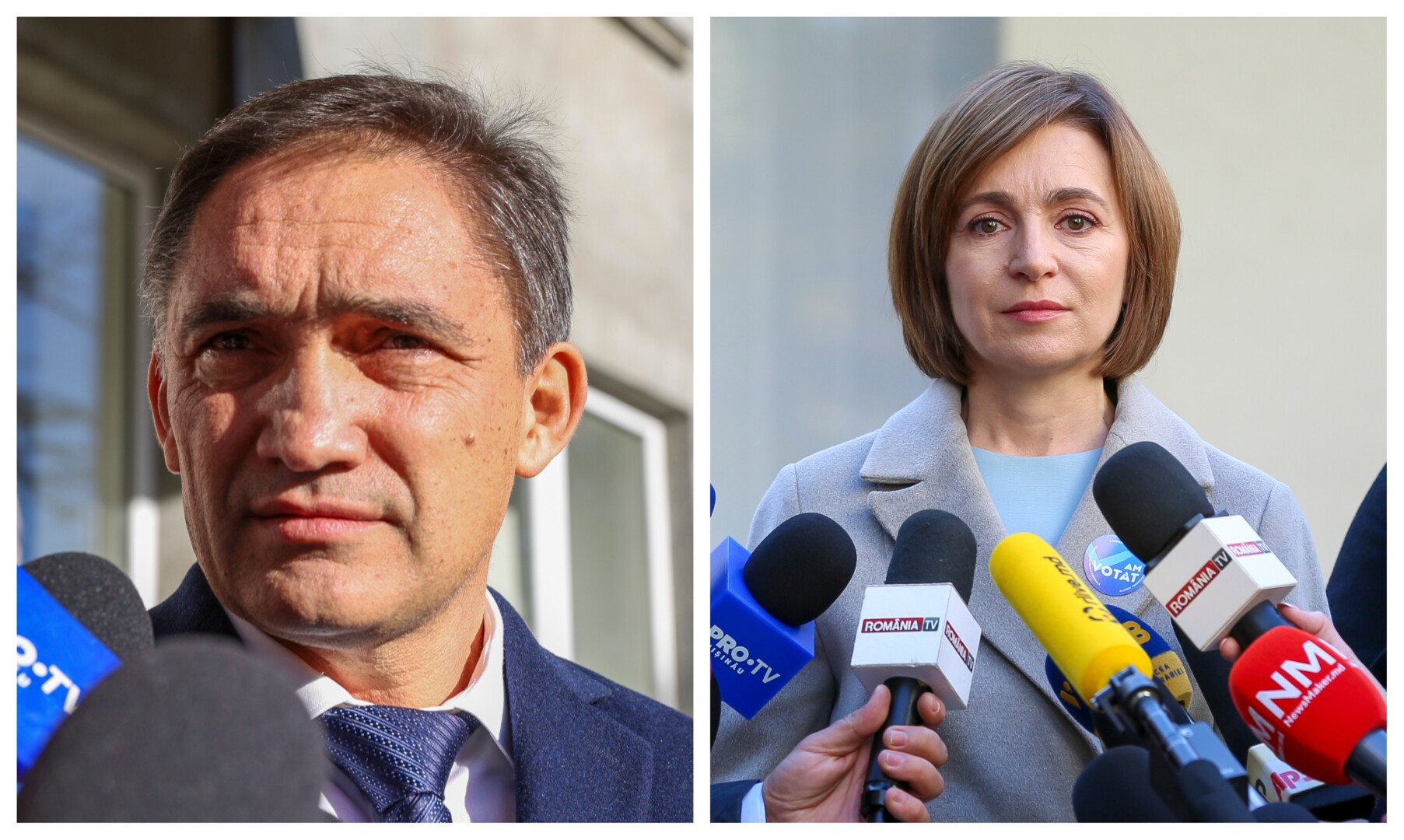
Early results were critically close with Socialist challenger Alexandr Stoianoglo in the lead over pro-western incumbent with 50.47%, and Maia Sandu on 49.53%, but the gap was expected to close as votes from the Moldovan diaspora come in.
Ms. Sandu has intensified efforts to break away from Moscow’s influence, faced the Kremlin-friendly political newcomer, Mr. Stoianoglo from the Socialist party, in the second round of voting on Sunday.
Polling stations closed locally at 9 p.m. (1900 GMT), and about 54% of eligible voters had cast ballots, according to the Central Electoral Commission.
Moldovans abroad also turned out in record numbers, with more than 315,000 casting ballots by the time local polls closed.
A poll released by research company iData indicated a tight race that leans toward a narrow Sandu victory, an outcome that might rely on Moldovans voting abroad. The president is in charge of foreign policy and national security and has a four-year term.
The election in the East European nation of under 3 million people came two weeks after a key referendum in which a tiny majority voted in favor of pursuing membership of the EU.
After casting her ballot in the capital of Chișinău, Ms Sandu said: “Today, more than ever, we must be united, keep our peace, keep our vote, keep our independence.”
“Thieves want to buy our vote, thieves want to buy our country but the power of the people is infinitely greater,” she told reporters.
Since the breakup of the Soviet Union, Moldova has gravitated between pro-western and pro-Russian orbits. But under Ms Sandu, a former World Bank adviser, the ountry has accelerated its push to escape Moscow’s orbit as its war in neighboring Ukraine continues.
Sandu’s team has accused a large-scale vote-buying scheme orchestrated by Russian-backed fugitive oligarch Ilan Shor during the first round and the EU aspirations referendum on 20 October.
Officials believe that Moscow invested approximately $100m before the first vote and had reportedly smuggled in some of the funds by “money mules” detained by police at the main airport while carrying bundles of €10,000 in cash.
Ms Sandu’s national security adviser, Stanislav Secrieru, wrote on X that they were “seeing massive interference by Russia in our electoral process … an effort with high potential to distort the outcome.”
The Kremlin has denied interfering in the vote.
“We resolutely reject any accusations that we are somehow interfering in this. We are not doing this,” Kremlin spokesperson Dmitry Peskov said.
Moldova’s pro-EU leader in tight presidential runoff as Russia denies meddling
