












Romanian Health Minister Alexandru Rafila on Thursday called for an increase in medical research in Romania and elsewhere in the region to help Eastern Europe’s healthcare system catch up with Western Europe.
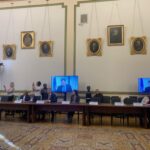
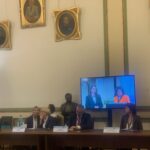
“The gaps (between Eastern and Western Europe) are very often measured in the performance in research activities and especially …clinical research …which needs to be put into practice,” he told participants at “Medical education and research in research policies in Romania”, held at the University of Medicine and Pharmacy (UMF) “Carol Davila”.
He called for future research projects to be put into practice. “The Health Ministry is concerned with the development …in the field of research and…clinical trials and amending legislation regarding clinical trials and, last but not least, developing partnerships that will make progress possible”, he said.
Romania has an innovation hub in which Romanian medicine and pharmacy universities have become partners with pharmaceutical companies.
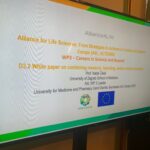
“Medical education and research in research policies in Romania”, was held within the Alliance4Life Bridging the Research and Innovation Gaps in Life Sciences (A4L_BRIDGE) project, aimed to analyze the difficulties related to the interconnection of research, teaching and medical practice in university institutions in the field of health.
The Research and Medical Education session was moderated by University Professor Iuliana Ceausu. Public Health Adviser University Professor Diana Paun, one of the officials who opened the event, moderated a session on integrating research and education in hospitals.
Education Minister Ligia Deca who also opened the conference, said her ministry had taken steps to “ support and encourage young people to choose to continue their studies” in Romania and pursue a career in research.
She said scholarships for doctoral students had increased, in the last year to 3,200 lei ( about 650 euros) a month.
“ We will soon launch the third edition of the call for scholarships for master’s and doctoral university internships, for postdoctoral and research internships abroad,” she said.
Scholarships are about 1,200 euros per month depending on which country the student studies, she told participants.
She said the relationship between the academic sector, research and practitioners needed to be strengthened.
“The relations between education and medical research must be among our priorities (…) All European citizens have the right to education and health. We support the multiplying of research activities and international collaborations. Programs in the new research area can lead to innovations in treatments, diagnostics, and medical technology.”
“ Romania actively participates in addressing global challenges through research, aligning itself with European missions and partnerships where it has the potential to contribute with innovative solutions, “ Mrs. Deca said.
The Education Ministry supports the efforts of universities to participate in programs which allow Romanian universities in alliances with European universities to access research funds, modernize the universities’ infrastructure and digitization process.
“I expect medical students to be among the first to accept that modern technologies and artificial intelligence can improve and even transform medicine. UMF ‘Carol Davila’ understood that it is necessary to adapt education to meet new market requirements. (…) Universities have a role to play in creating knowledge that is essential to meet contemporary global challenges, and public health. Technological advancement is a catalyst for innovation,” she added.

EU prosecutors probe €20 million contracts Romanian health minister made during pandemic
