










Polish President Karol Nawrocki has vetoed legislation that would have enabled Poland to access nearly €44 billion in European Union defense loans.
Why? He argued that while he agreed that Poland must strengthen its military, it should do so “on its own terms.”
This radical decision escalates an ongoing conflict between the nationalist president and the centrist government of Prime Minister Donald Tusk over how to fund Poland’s military modernization.
PM Tusk condemned the veto, accusing Nawrocki of failing to behave “like a patriot.”
Government officials insist that the presidential block will only restrict the use of EU loans under the proposal rather than completely derail Poland’s broader defense investment plans.
Poland was allocated €43.7 billion under the EU’s new SAFE (Security Action for Europe) program. That is significant: the largest share granted to any member state. The scheme provides long-term, low-interest loans intended to strengthen defense capabilities across the bloc amid growing concern about the possibility of conflict with Russia.
Parliament approved legislation in late February that would have unlocked the funding for 139 defense-related projects across Poland.
But Nawrocki, had long signaled he might veto the bill. The president, an ally of the opposition Law and Justice (PiS) party, instead favors an alternative financing proposal that the government and many analysts consider risky.
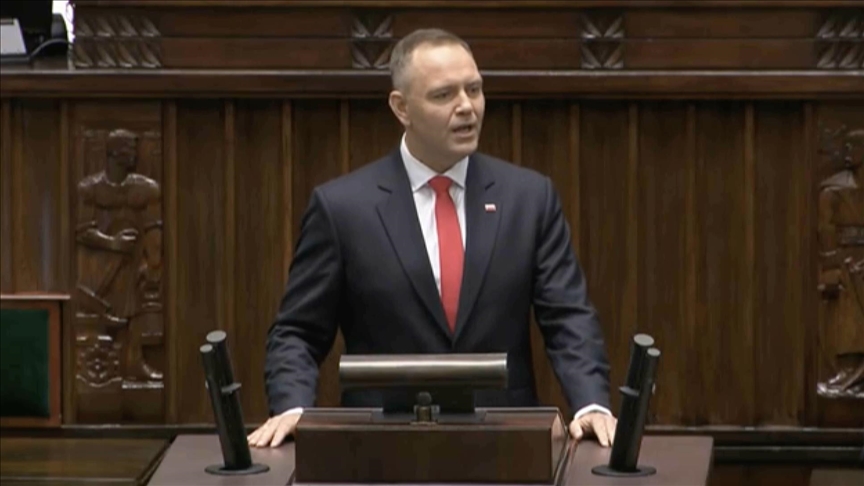
In a televised address on Thursday, Nawrocki defended the veto by arguing that the EU loan program will burden future generations with debt while giving Brussels excessive influence over Poland’s defense policy.
“I will never approve a law that is harmful to our sovereignty or to our economic and military independence,” he said, reiterating earlier concerns that the EU could impose conditions on the funding.
The government has rejected those claims, maintaining that the SAFE program offers a reliable and secure way to finance urgently needed military investments.
Nawrocki nevertheless insisted Poland must continue expanding its armed forces while preserving full national control over defense decisions.
“Poland must arm itself. Poland must build a strong army. Poland must be one of the pillars of security in Europe and NATO,” he said. “But Poland must do so on its own terms.”
Tusk’s cabinet scheduled an emergency meeting on Friday to discuss how to respond to the veto. The prime minister had previously indicated the government had prepared a “Plan B” should the president block the legislation.
Zbigniew Bogucki, head of the presidential office, is expected to participate in the discussions.
Defense Minister Władysław Kosiniak-Kamysz called the veto a “bad and dangerous decision”, but said the government would attempt to implement elements of the SAFE program through other legal mechanisms.
The decision also means that Poland’s police, Border Guard and State Protection Service will lose access to more than 7 billion zlotys (€1.6 billion) in planned funding, according to the interior ministry.
Nawrocki is urging lawmakers to adopt his alternative proposal, dubbed “Polish SAFE 0%.” The plan would rely on profits generated by the National Bank of Poland, including gains linked to increases in the value of the country’s gold and foreign exchange reserves.
“Polish SAFE 0% means zero dependence and 100% sovereignty,” Nawrocki said, arguing the strategy would allow Poland to build a strong military “without indebting Poland for generations.”
Tusk’s allies argue the proposal is impractical and could delay urgently needed defense procurements. Analysts have also warned that relying on a gold sale-and-repurchase strategy could prove risky if market conditions change, potentially depriving the state budget of future revenue.
Foreign Minister Radosław Sikorski dismissed the idea as “speculation on the price of gold,” saying the EU’s SAFE program provides a far more stable source of financing for defense spending.
Since taking office last August, Nawrocki has vetoed 28 government bills.
That surpasses the record of his PiS-backed predecessor Andrzej Duda, who issued 19 vetoes during his entire decade in office.
