


In the countries that the Kremlin targets to influence public debate and electoral processes, Russian intelligence agents and Russian propaganda primarily exploit the realities they find on the ground.
And the realities are generous wherever Moscow operates. Whether it’s Western states or Eastern countries, there are always problems that governments are either slow to address, or fail to solve, or simply ignore them, push them under the rug.
Everywhere, at the grassroots, citizens, regardless of their social status, have various dissatisfactions, feel frustrations, and today, as never before in the history of humanity, thanks to advanced communication technology, they can voice them quickly, diversely and extremely effectively.
There are large or small, old or new, deep or still only superficial cracks that exist in all these societies – from Romania to France, from the Czech Republic to Germany, etc. – an inventory has been made an then pushed by Moscow, which invests enormous sums of money and a wealth of subversive know-how in such operations that they are expert in.
I am not coming up with anything new here – Romanian authorities have highlighted based on a report with solid expertise behind it – when I say that in order to turn a country upside down, Russia doesn’t need to invent problems locally, but merely needs to invest massively and systematically innovate in terms of exacerbating people’s grievances and channel them.
What has been missing from the picture so far – given that these problems already exist, and Russia has an interest in them, was an authentic and public recognition by European states of the fact that they are being targeted by Russia, namely that Russia is waging a coherent hybrid war also known as ‘cognitive warfare’ against them. And something else was missing: a genuine, assertive and, most importantly, a coordinated response delivered to Russia.
Of late, the atmosphere has been changing. Western and eastern capitals hit by Moscow seem more and more inclined to abandon their previous or even naïve attitude up until now and finally come with a response.
The most strident symptom in this regard at an official level – after years of exaggerated, modest and, and at some point, a simply incomprehensible attitude towards Moscow, are that Western leaders are increasingly visibly assuming an uninhibited, even clear black-and-white discourse about the hybrid war.
New policies have never preceded position statements, it has always been the other way around. So it is to be expected that the natural consequence of the stance will be followed by action.
“Let me put it in a sentence that may be a bit shocking at first glance… We are not at war, but we are no longer at peace either,” the German chancellor, Friedrich Merz said on Tuesday. Shortly before, a former head of British counterintelligence, MI5, pointed out that “we are already at war with Russia. It’s a different kind of war, but the hostility, cyberattacks, physical attacks and intelligence activity are intense.”
And even Bucharest, through the voice of the Romanian president, acknowledged this month, that “Romania has been under Russia’s hybrid war for 10 years”.
Of course, there are numerous examples to back up his statement.
But it is also significant that countries that have traditionally been more reserved, at a high level, in their public discourse on Russia, have changed their tune, an interesting and welcome switch, towards a more categorical, disruptive discourse. And Romania is probably the most spectacular case of this.
In recent months, there has been more clarity and assertiveness towards the war in Ukraine, both from the Romanian foreign ministry and the president himself. This change in messaging, has seen a delightful revival at the relevant institutional level – in diplomacy, the Prosecutor General’s Office and the Presidency. They have all taxed Russia for undermining the November 2024 elections.
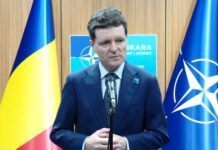
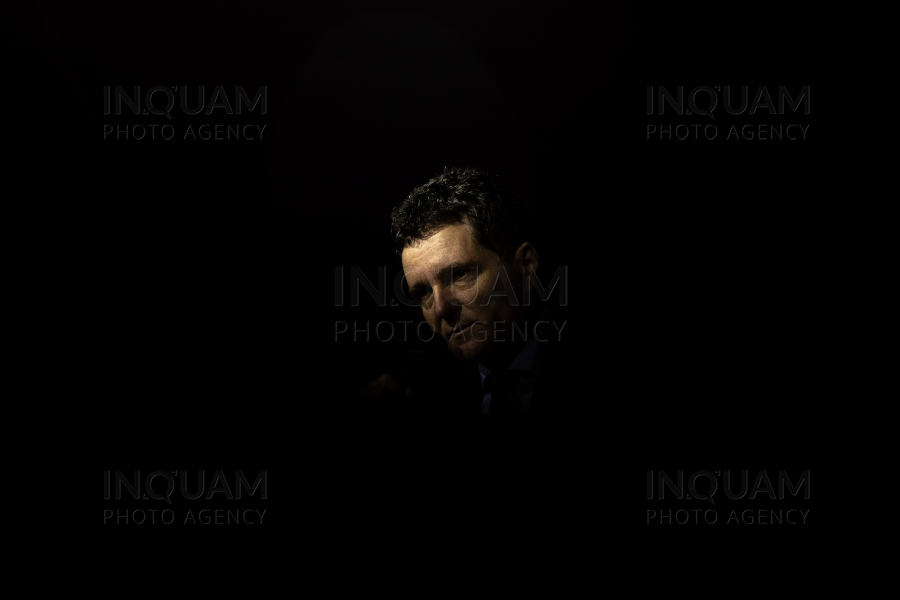
In this regard, we reached a peak on Tuesday, through the statement of President Nicușor Dan, who underlined Russian interference, and underlined the fact that Bucharest has evidence. The head of state also pointed out he approved of the report made by the Prosecutor General two weeks ago. At the same time, President Nicușor Dan announced that he will present the General Prosecutor’s file to allies, at the meeting in Copenhagen. Details – HERE
This statement where the president makes a clear position is one of the most consistent, if not the most consistent, of the Romanian state on the subject of Russian interference in Romania. It is an assumed statement and assumed by the “number 1” in the state.
At the same time, considering both the tone and the substance of what Nicușor Dan said, common sense and reason suggest that Bucharest is about to publish more facts; it is finally about to act properly, also at the political level, not just nly on the “technical” line of information gathering.
Add to this a statement the head pf the state made saying he will ensure that the future head of the SRI (Eds: Romania’s domestic intelligence agency) will make it a priority to combat Russian influence. Details – HERE.
The international context it seems is as favorable as possible, with many partner states already showing enough signs that they are willing to push back in a coordinated way to block Putin’s hybrid offensive.
Getting involved in countering Russian operations is somehow based on the Moldovan model. That model that may not be perfect either, but, as evidenced by the result of Sunday’s elections, it is still a real success.
In the Republic of Moldova, the political authorities have spoken openly for years about Russia’s hybrid attacks. The law enforcement institutions have monitored and dismantled the networks used by Russia for years. The judiciary has prosecuted, tried and convicted prominent local figures in the service of the Kremlin. The audiovisual authorities have limited the exposure of Russian propaganda (although there is room for improvement), and the electoral authorities have restricted Moscow’s capacities to exploit access to the ballot boxes.
The Republic of Moldova benefited, of course, from the assistance of strategic partners in this complex process, but much of the burden fell on Chisinau’s shoulders.
The support given to the Republic of Moldova by international partners is precious not only from the perspective of the electoral success of the pro-European party, but also from the perspective of the knowledge accumulated on the ground regarding the way Moscow operates and the potential to counter disinformation and interference.
A replica of this, with the necessary improvements of the ‘recipe’ already used across the Prut (Eds: the River Prut forms the border between Romania and Moldova) and exploiting the lessons learned on the “front”, is a real gun that the EU can threaten Putin with.
Romania should make the effort to be at the forefront of the expansion of the front in the hybrid war that concerns it directly. It is one that is by no means reduced to Romania and the Republic of Moldova.
Until proven otherwise, on Tuesday, President Dan seems to have given a promising signal in this regard.
Putin’s reality beat Putin’s fiction. How Moldovans heroically resisted Russia’s hybrid war
