




NATO SUMMIT REPORT
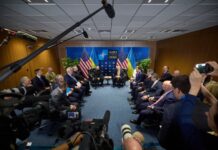
Here’s what Trump said at the NATO conference today about the regime in Iran: “They’re a bunch of scum. They’re scum. So we don’t like them. I don’t like them. And they’re evil people. They’re crazy and they can’t have nuclear weapons. They’re bad people. They’ve killed hundreds of thousands of innocent people. They’ve been trouble for 47 years. These are evil, sick people. They’re cancer. You’ve got to cut out cancer early.”
So, two things apply. First, this is a disgraceful way for the president of the United States to speak; we’re so used to Trumpy nonsense that we forget that no democratic leader has ever publicly spoken this way. Second, it’s basically true. I suppose somewhere in that tension lies the secret to Trump’s success.
Trump also said the Memorandum of Understanding signed with the aforementioned “scum” is “over … As far as I’m concerned, it’s just a waste of time dealing with them.” But he also said his nepo-negotiators, businessmen Jared Kushner and Steve Witkoff, might want to continue trying for a while. So it ain’t over until it’s over. That attitude, too, may be a secret to Trump’s success.
What’s certainly clear is that we are in a volatile moment.
Over the last 24 hours, scores of American strikes on Iranian military targets followed Iranian attacks on commercial shipping in the Strait of Hormuz. Oil prices spiked once more, and Iran is doubling down on charging fees for passage through Hormuz – the gateway for a fifth of the world’s oil and liquified natural gas (and more).
As I argued on NewsNation, paraphrasing the military theorist Carl von Clausewitz, what we are witnessing, despite things blowing up, may be negotiations by other means. Then again, the MOU really might be over, because the Iranians, enamored with their reputation as master negotiators, have hubristically overplayed their hand. Pride may indeed come before the fall.
Is this a terrible thing? Well, I have argued on these and other pages, and in every broadcast outlet that will have me, that the MOU was an American capitulation that resulted from a mysteriously extreme level of incompetence, even for Trump. The sequence of events was roughly as follows:
The Iranian regime killed many thousands of protestors in early January, creating a global outcry and prompting Trump to assemble an armada and tell Iran’s people that “help is on its way.” Iranians supposedly had also bragged to US negotiators that they were days from a nuclear bomb.
Netanyahu persuaded Trump to jointly attack and assassinate the regime leadership, based on incredibly acurate Israeli intel. On Feb. 28, the day of the attack, Trump told the Iranian people that when it was over they’d have their “country back,” and 47 years of a cruel theocracy would end. The US and Israel had hoped to end not only the Iranian nuclear program but also its ballistic missile program and its proxy militia network, including Hezbollah, Hamas and the Houthis, that has spread death and havoc around the region for decades.
The Iranians immediately blocked the Strait of Hormuz, as everyone (except for apparently Trump) knew they would. The US seemed to have no answer to this. Oil spiked, market’s reeled, and Trump panicked; the war was unpopular, having not been explained to the American people properly (and being led by widely recognized charlatans) — and November’s US midterm elections are approaching.
This led to the MOU, which makes no demands of Iran other than the restoration of free traffic and promises not to pursue a nuclear weapons program (which Trump had claimed was “obliterated” already by US strikes last June). It also allows for a $300 billion bribe (reparations, in the Iranian parlance) and a potentially total unfreezing of assets and removal of sanctions. Trump and his puppets claimed victory; every pundit in the world called it a defeat that would strengthen and entrench the regime (even though much of its pre-war leadership was killed) and demoralize the democratic Iranian opposition.
This week, the Iranian Ambassador to China insisted that Iran would, at the end of the 60-day negotiation period set out by the MOU, charge fees for passage through the strait. That is a violation of international maritime law that would set a dangerous global precedent and mean Iran benefitted from the war.
Chiefly, though, all this makes Trump look absolutely ridiculous. And while he may fear the wrath of US voters, my reading is that he fears looking weak and pathetic even more. His political identity is not exactly about winning, as people say; it is rather about convincing fools that he’s convinced he’s winning. I think he notices now that no one is convinced; not even Pete Hegseth, and that is very bad.
So the universe is out of balance. How can balance be restored? My prediction in recent days has been that there will be no deal based on the MOU, because that would cement a monumental American defeat. Neither does it make sense for Trump to resume an unpopular war before the midterms (not that sense is driving things, I know). I have leaned toward an extension of the negotiation period, buying time, until after the vote. Then, Trump has more freedom of action.
Does that mean a return to bombings? Maybe. Perhaps partly. But not necessarily. When might appeal more is a resumption of the blockade on Iran, and this time having it be as close as possible to total: not just by sea, as before, but air and land. Will the Pakistanis violate it with a land corridor? Do the Chinese want to set up airlifts? Let them. The effect would be crippling, and the regime would collapse in infighting or popular revolt within months.
This would mean global economic pain for months. It may create emergencies around jet fuel and fertilizers. Many feel it will lead to longer-term miseries (like my friend the economist James Gutman, who argued as much on our podcast Critical Conditions). But all this may still be the least bad option at this point.
And this time, NATO and other allies will have to be on side. I understand NATO’s reluctance to go along with any scheme cooked up by Trump and Netanyahu, especially since it turned out to be ill-planned (other than the opening strike). But Iran’s actions in Hormuz are a declaration of economic war on the world, and it cannot be allowed to stand.
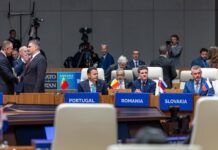
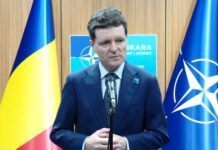
So it was interesting to see NATO chief Mark Rutte offering Trump support for the latest strikes. Indeed, all this is occurring at the NATO meeting, and Rutte was by Trump’s side as he heaped his invective on Iran’s leadership.
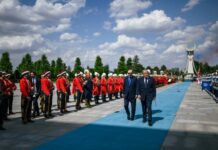
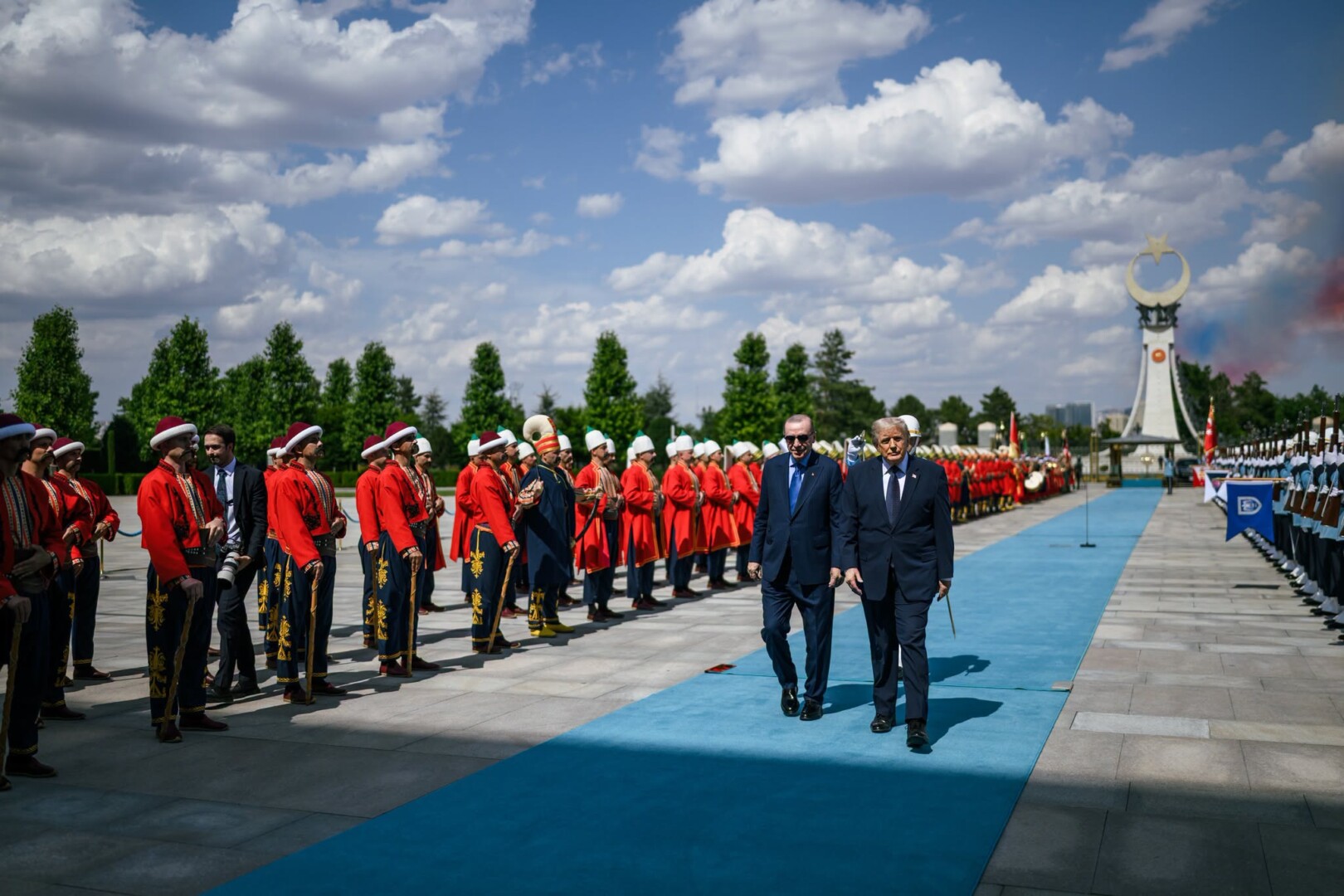
The other big development at the NATO summit involved Trump suggested he is open to restoring Turkey’s access to the F-35 stealth fighter. That should not happen. Turkey was expelled from the F-35 program in 2019 after purchasing Russia’s S-400 air defense system, creating an unacceptable risk that Moscow could learn how to detect or counter NATO’s most advanced aircraft. That concern has not gone away.
But the security issue is only part of the story. Under Recep Tayyip Erdogan, Turkey has become one of NATO’s most authoritarian members. Independent media have been crushed, judges and civil servants purged, opposition politicians harassed, and constitutional checks hollowed out. Reporters Without Borders now ranks Turkey 163rd out of 180 countries for press freedom—an extraordinary position for a NATO ally.
Nor has Ankara behaved like a reliable partner. It delayed NATO expansion, purchased Russian weapons despite repeated US warnings, repeatedly provoked Greece and Cyprus, intervened in Syria in ways that conflicted with Western interests, and backed Azerbaijan’s offensive that emptied Nagorno-Karabakh of more than 100,000 Armenians.
Meanwhile, Erdogan’s government has embraced increasingly radical anti-Israel rhetoric. Foreign Minister Hakan Fidan has called Israel “a burden that humanity can no longer bear,” while Interior Minister Mustafa Ciftci has spoken of one day serving as “governor of Jerusalem,” reflecting an increasingly neo-Ottoman worldview.
Supporters argue that Turkey is strategically indispensable. Precisely because it occupies such a vital position, Washington should demand higher standards—not reward democratic backsliding, alignment with Russia, and increasingly hostile behavior toward fellow allies.
The F-35 is more than a fighter jet. It is America’s most sensitive military technology and a symbol of strategic trust. Erdogan’s Turkey has repeatedly demonstrated that it has not earned that trust, and Congress should block any attempt to restore Turkey’s access while those concerns remain unresolved.
