













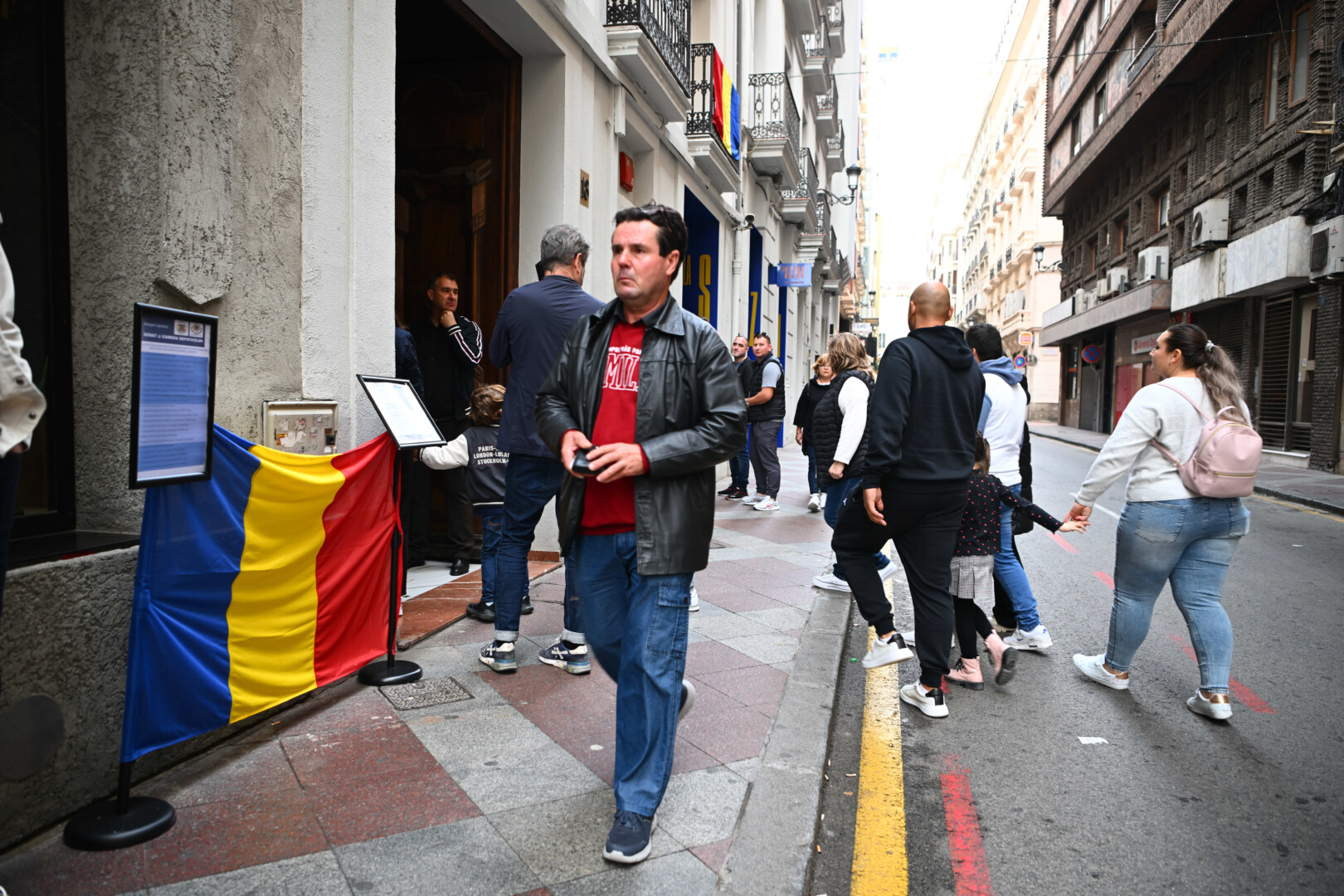
Despite the fact they are not eager to return, many are investing in Romania, a report that interviewed migrants from different European countries found
Six out of ten Romanians in the diaspora (61%) have already invested in Romania, through various methods – financial support for relatives and real estate,
Despite remaining attached to Romania through investment and family ties, 70% of Romanians living abroad rule out returning to the country in the next 12 months, according to the results of an opinion poll, released Tuesday, Agerpres.ro reported.
The “Diaspora Sentiment 2026” research, conducted by Mkor, looks at attitudes among groups from different countries.
It found that each diaspora community invests differently: 71% of German migrants invest, and 44% gives direct financial support to their families (44%).
Immigrants from the United Kingdom have the most advanced economic profile – 29% occupy leadership/entrepreneurship roles, 62% have higher education, and 46% earn over 3000 euros/month.
Of Romanians living abroad, 61% have invested in Romania through real estate or family support, but, at the same time, 70% said they rule out returning to the country for the next 12 months.
At a general level, the socio-professional profile of Romanians living abroad indicates an obvious structural stability, where 44% are employed and 23% work as managers or entrepreneurs.
“The atypical structure generates clear opportunities for the economic attraction strategies of companies and institutions in Romania. For the business environment, this segment represents a solution to the staff shortage, requiring the implementation of internship programs and student relocation packages,” the report said.
At the same time, Romanian financial institutions can capture the audience through specific integration tools. Facilities such as cross-border bank accounts with zero fees and savings packages become essential to retain these consumers and turn demographic potential into an engine of economic growth,” the study concluded.
There are an estimated 3.1 million Romanians legally living in the European Union, according to Eurostat while the entire diaspora is estimated at between 4-10 million.
Each market requires a distinct financial strategy, so Italy has heritage protection in the foreground, Germany – predictability; Spain – nostalgic consumption, and the United Kingdom – financial return.
At the same time, the Republic of Moldova is a hub of young human capital for Romania, namely 49% Generation Z (average age 31 years), of which 38% inactive (+17% vs. average), ideal for attracting through cross-border bank accounts and internship programs.
“Diaspora Sentiment 2026” interviewed a sample of 2,000 respondents, aged between 18 and 65 years old who’d been living for at least seven months a year outside Romania.
Romanians in the diaspora need to learn from Turkey’s bitter lesson before the presidential vote
