













Thirty-five years after communism ended, Romanians are finally beginning to find out the extent they were spied on for signs of dissent by Nicolae Ceausescu’s Securitate secret police.
The feared Securitate placed one quarter million people under surveillance in the 1980s and opened 45,000 new cases alone in 1989, the year when Ceausescu was ousted and executed.
The figures released on Tuesday show the growing obsession of the regime of keeping tabs on its citizens for any sign of discontent with the communist regime or the Ceausescu couple.
It is widely known that Ceausescu kept tabs on his citizens through an army of informants, some of whom were as young as nine—but figures have not been forthcoming, less so who did the spying.
Despite the widespread spying, Romania has never had a transparent reckoning with its past, and very few people have acknowledged spying on their neighbors, colleagues or even family members.
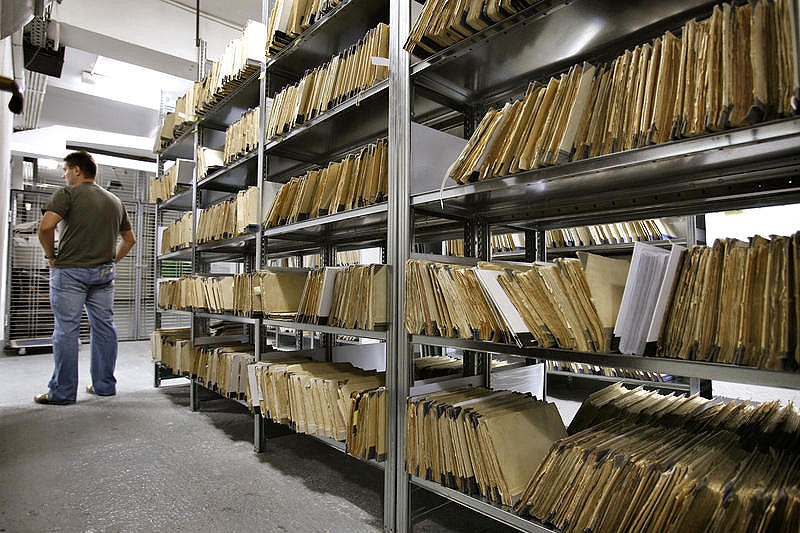
Romania created the Council for Studying the Securitate Archives (CNSAS) in the late 1990s when it began to implement democratic reforms ahead of joining NATO (2004) and the European Union (2007). Since then, people can apply to see their files.
The new information published Tuesday, which incredibly comes more than three decades after the Securitate was disbanded, reveals that one-fifth of the new files were complex surveillance operations which included intercepting mail, bugging their phones and physically following them on the street the National Council for Studying the Securitate Archives (CNSAS).
Securitate officers used material from 6,000 surveillance operations to recruit the people they spied on. They also spied on 7,300 people they suspected of terrorism. Most were from Muslim countries.
“Unfortunately, it is impossible to establish a clear number of Romanians followed by the Securitate. Some files were destroyed or disappeared in December 1989,” CNSAS said in a statement.
The Securitate placed 15,000 people who tried to flee the country under surveillance but also 350,000 Romanian citizens who had moved abroad, either legally or illegally.
”Interestingly, only 80,000 surveillance operations were stopped after action was taken (the person was warned, arrested etc). In 30,000 cases, the data obtained was considered too trivial to take action (job dissatisfaction, food rationing) Some 10,000 surveillance files were closed because suspicions were not confirmed or people under surveillance left the country,” the statement said.
