














SaRomania ended 2025 with a budget deficit of 7.65%, after a sky-high peak of 9.3%, in 2024.
Romania is a country where the current government is forced by circumstances to ask the population – public servants and the business environment – for new sacrifices in order to reduce the deficit – the target for 2026 being around 6%.
It would be a major achievement to reach that figure but even if the objective were met, Romania will still have a huge budget deficit, as 6% is double the level agreed by the European Union.
As such, even after 2026, the government in Bucharest, whatever its composition, will have to balance spending with revenues. Not for the sake of foreigners and Brussels, but for the pure national interest, because an out-of-control deficit means the deep gangrene of the national economy and the increase of the foreign debt (at the limit, even the risk of no longer finding creditors).
In fact, even if for 2025 the Ilie Bolojan government has managed to reduce the damage to the heavy legacy left by the Marcel Ciolacu government, in the background the problem is amplified by the increase in the country’s loans.
The even more perverse part is that even the measures meant to bring Romania’s deficit closer to the healthy target of 3% mean a complicated tightrope: careful not to harm the prospect of economic growth, through the burden placed on the private sector, careful not to affect social peace and political stability, when necessary cuts are made in public spending.
The current domestic political context, the current social tensions, domestically and in the current geopolitical context, only add more clarity regarding the difficulties involved in the fight against the deficit.
This is precisely the reality in which we are immersed, and the message received by the Bolojan government from the European Commission has an even acuter relevance: Romania really risks losing 231 million euros, because magistrates have not approved the pension reforms required to unlock the PNRR funding.
Two hundred and thirty-one million euros is a huge sum even for the richest and most stable economy in the world.
One hundred or several hundred millions of euros is a loss that would make even the richest individuals in the world mad – tech moguls in the US, such as Elon Musk (and not only), who have fortunes of hundreds of billions of dollars (Musk is even approaching a trillion), mobilize the American state against the European Commission to avoid being fined for abuses or with their turnover diminished due to regulations.
In this context, the disgraceful behavior of the local magistrates clique which is blocking the reform of the magistrates’ special pensions stands out even more.
Retirement at 65 instead of 48 and setting pensions at 70% of their net salary, measures the government passed, would on the one hand mean Romania would be eligible to receive 231 million euros, and on the other hand it would take off the pressure long term on the budget.
At the same time, it would do justice to the millions of Romanian taxpayers who don;t have the right to retire when they’re under 50 and it will still leave magistrates in a good material situation after they retiree on pensions ill receive over 2,000 euros.
It is incredible that such common sense measures are bitterly challenged by a handful of people and blocked in a mafia-like way by the same handful of people. It is all the more incredible that this handful of people are doing this in the current bad economic and fiscal context that Romania is going through.
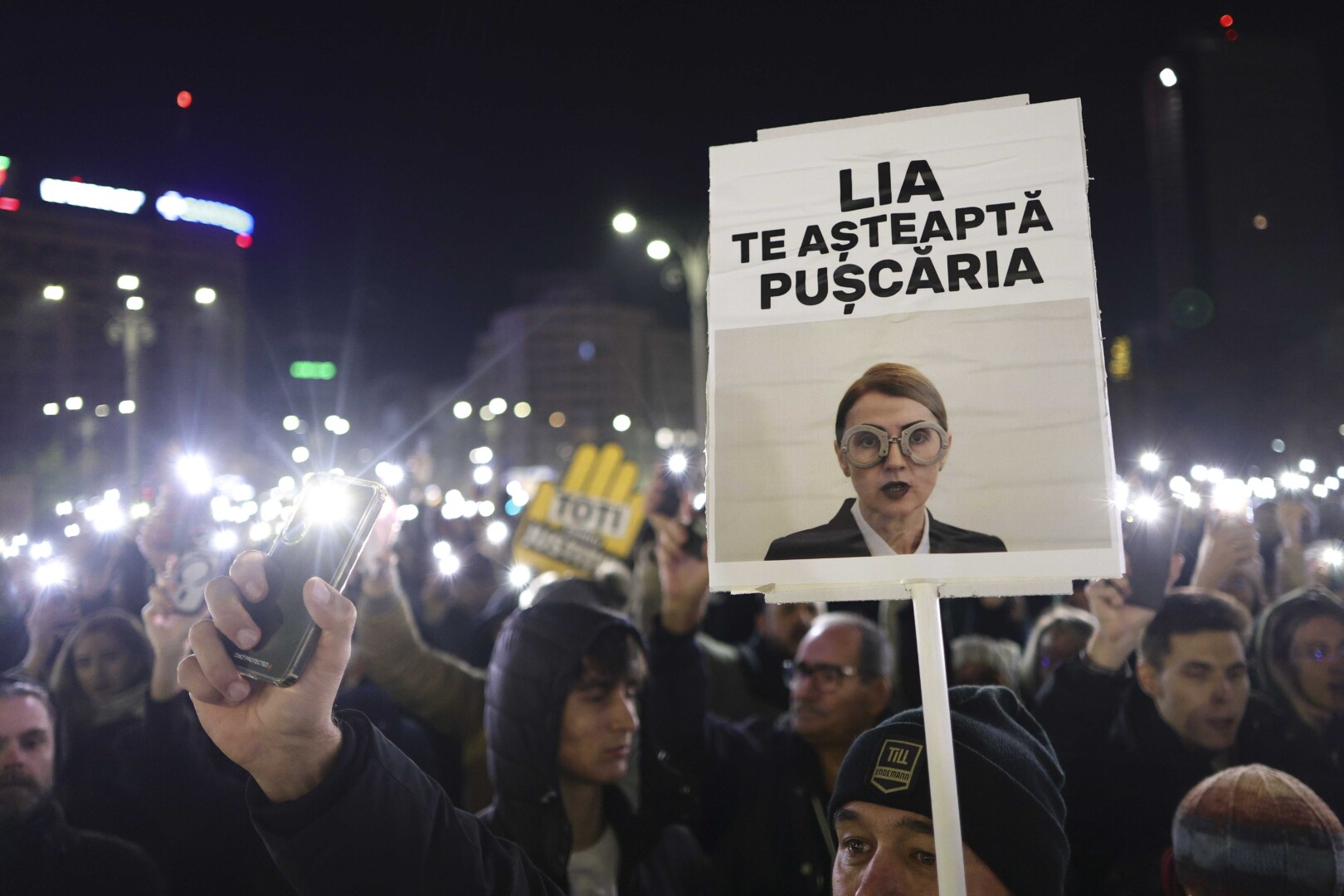
The audacity of High Court chief judge, Lia Savonea is unimaginable, screeching at the government, at taxpayers’ expense, after the Prime Minister informed the Constitutional Court the general public that the European Commission would not disburse the 231 million euros.
And it would be even more abnormal that society as a whole – individuals and legal entities – could ever accept the diktat of a contemptuous clique with a blatant disregard for public money and the people that make it_ the taxpayers.
The situation has acquired the proportions of a cataclysmic absurdity, even if we look beyond the economic and financial aspects, if we look beyond the immoral spending on magistrates’ pensions and the budget deficit, more like a deficit in a semi-failed state.
While Savonea and the clique in the judiciary are giving the government lessons in the rule of law, but salivating over their own material interests, the standard and quality of justice have fallen: from one week to the next, courts pass sentences that are mind-boggling. Rulings that exonerate convicted mafiosi, let off or give a slap on the wrist to criminals or that block the recovery of money that resulted from crimes.
I have said it before and I will probably say it again: at this moment, in the public imagination, there is not a single profession that is apparently more inefficient and below par than the magistrates. Certainly, there are honest, hardworking, capable professionals in the profession, but the big picture is that of a deeply flawed system.
Moreover, revelations in recent months, regarding serious problems in justice, publicly reported precisely by people in the judiciary, instead of witnessing initiatives aimed at least correcting what has been reported, we are witnessing steps to whitewash those who are supposed to be at fault and intimidate the brave (few in number, it’s true) that drew attention to the problems.
And, all in all, we are witnessing a cheerful assurance of continuity from those at the top of the judicial system: they are fighting for the preservation of their immoral rights and are oblivious to the risk that Romania will lose 231 million euros from the PNRR. They are determined that they will receive their huge and undeserved pensions. Meanwhile, the Romanian state will have to take away from the most hardworking and most honest people on whom the modest economic growth of the entire country depends.
