

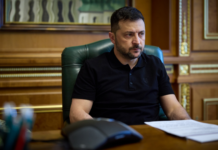




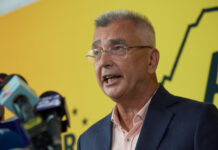
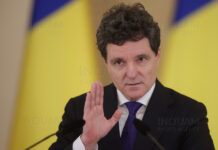

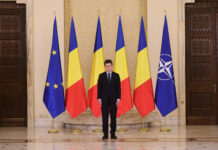



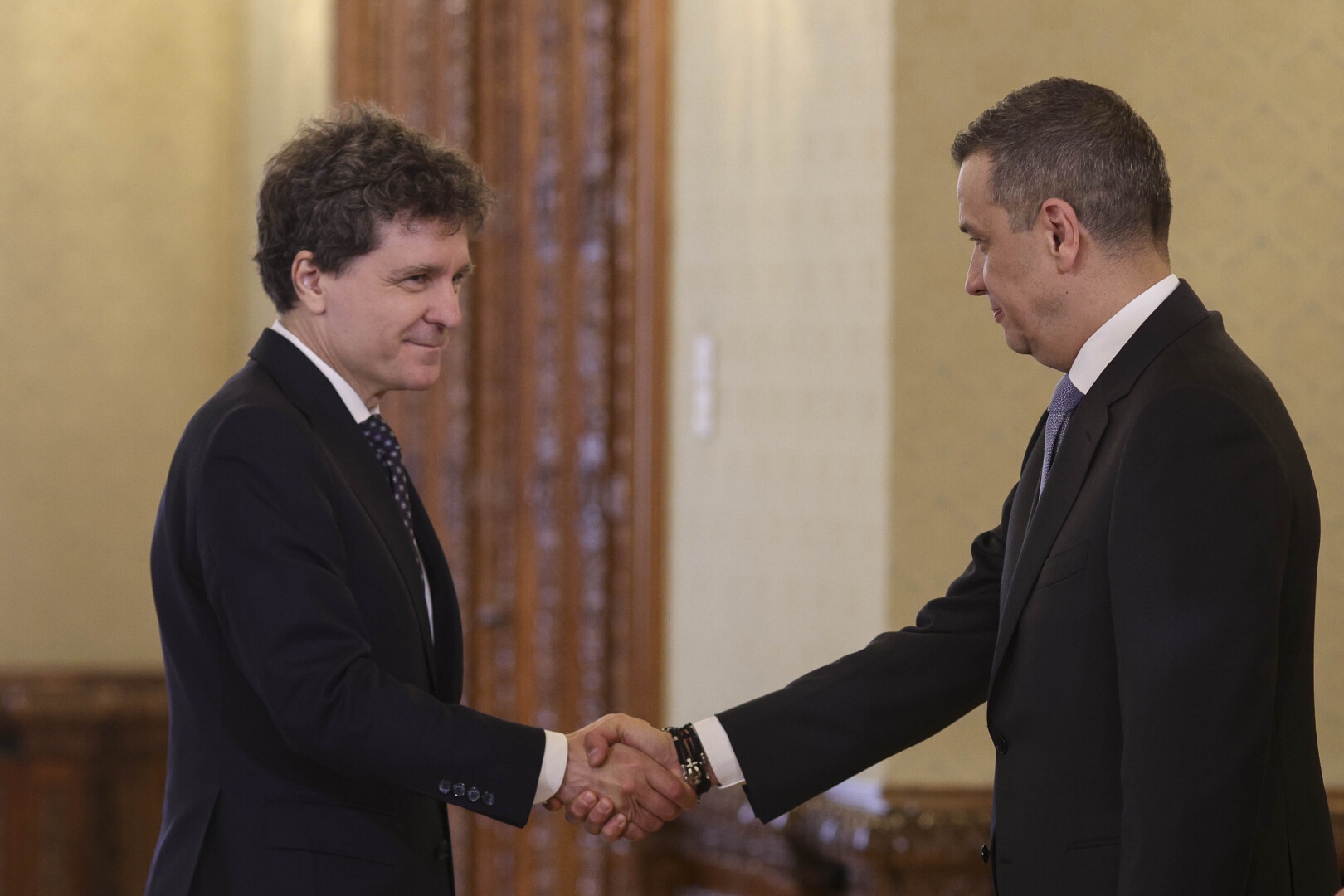
After Monday’s consultations at Cotroceni Palace between the president and leaders of the former coalition, no progress was made toward forming a government. Instead, early elections became more likely.
PSD leader Sorin Grindeanu and Kelemen Hunor who heads the ethnic Hungarian UDMR party gave us enough details to lead to this conclusion.
Grindeanu said clearly that no conclusion had been reached, and then launched fresh accusations against former governing partners, potentially jeopardizing any future dialogue. And Hunor came up with an eccentric formula, of several governments with a limited term over the next two years.
It is understandable that the UDMR wants to avoid early elections, not necessarily it would get less votes in a new election, but because the nationalist AUR party is rising in the polls. As such, any solution, however absurd, would be preferable from UDMR”s perspective than to help AUR get more seats.
However, Monday’s meeting was worrying as it is now no longer certain whether Romania can access European money from the PNRR.
This is because after the consultations, Sorin Grindeanu announced that the PSD is in opposition, and does not feel obliged to support the government even to pass laws on which accessing EU money depends because the PSD won’t vote for something proposed by interim Liberal prime minister, Ilie Bolojan who was ousted in the May 5 no-confidence motion.
So PSD’s promises, even on a matter as important as absorbing a few billion euros from the EU, have the half the life of a bee.
From April to July, the Social Democrats said they would support the respective projects “regardless of whether the party is in government or in opposition” but that suddenly changed.
The head of state said nothing.
This in itself is a sign of how bad everything went on Monday at Cotroceni. Instead, Dan spoke through intermediaries, in this case his adviser, Eugen Tomac.
His comments deserve attention: “I think it is time to get out of the limits imposed by the parties”.
In other words, Nicușor Dan finds himself, almost in mid-July, at the same point where he was in mid-May: he wants PNL and USR to govern alongside PSD as if nothing had happened on May 5 when Bolojan was ousted in a no-confidence vote.
An AUR leader, Dan Dungaciu, briefly and clearly formulated the situation in which PNL and USR find themselves in their relationship to the PSD and AUR and the perspective of early elections: “Whoever blinks first dies”.
Therefore, when, after two and a half months of crisis, the Romanian president doesn’t have a solution, and is not capable of unblocking things to avoid the possibility of snap elections.
President Nicușor Dan argued against holding early parliamentary elections, saying the balance in Parliament would remain unchanged and the process would take too long.
He is both right and wrong.
He is right that early elections are unlikely to produce a majority for any single party or compatible coalition, such as PSD-AUR or PNL-USR-UDMR. But he is wrong to claim that nothing would change: if PSD fell from first to third place, that shift alone would reopen negotiations by altering the balance of power among the parties.
A smaller PSD can be negotiated with differently from the way it is today. The fact that Dan ignores these nuances increases suspicions of his closeness to the PSD.
There is the question of time. The head of state is right: early elections aren’t held overnight, and can take 3-4 months. But on the other hand, he is mistaken, because the current crisis has been going on for 2 ½ months without him having really tried to solve it. And, as Monday’s consultations showed, this crisis will drag on.
Nicușor Dan has already lost a lot of time without delivering a solution. it. Logic says that it is infinitely preferable to waste time when you still have a way out.
In addition to that, early elections have legitimacy, while the non-transparent combinations that Nicușor Dan wants are less legitimate.
I am aware of the fact that, regarding the early elections, Nicușor Dan may have reservations generated by the fact that he promised this would not be the solution to the crisis.
But I am also aware of the fact that Nicușor Dan made lots of promises that he did not keep.
I will not insist now on those related to the justice system (from its reform to participation in Supreme Council of Magistrates’ meetings), or on the publication of the report on the canceled presidential elections, or on the appointment of ambassadors, or on the appointment/replacement of civilian heads of the secret services.
But I would remind you of the following promises he made: ending the political crisis in a “reasonable” time; ruling out AUR’s support for the formation of the government; mediation instead of bias (he favors the PSD). And especially the announcement he made at the end of April, and later reiterated, that there is consensus between the parties on supporting projects related to the PNRR (since Monday, that consensus has ceased to exist).
Whatever one thinks about whether snap elections are the right way to break the deadlock, one thing is clear after Monday’s consultations: early elections have never seemed more likely.
Most likely, Nicușor Dan is now more aware than ever—and perhaps more alarmed—by how close that prospect has become. The same is true of Sorin Grindeanu.
The paradox is that the road to early elections was paved by the way Dan and Grindeanu acted– before and after ousting the Bolojan government.
