









On a single day (Thursday), the number of deaths of American troops doubled, with the crash of a tanker plane in Iraq (the situation could have been even worse if the second damaged aircraft had not landed safely).
After two weeks of intensive U.S.-Israeli bombing, the conventional threat to the U.S. military, regardless of which bases in the Middle East they are, is increasing; and along with it, the asymmetric threat to American civilians is increasing, at home and abroad (recently the FBI warned California police about the risk of Iranian attacks on the West Coast).
At the same time, the political, economic and diplomatic damage the US has inflicted on itself by unleashing this war hangs even more heavily in the balance.
For if Trump and Netanyahu control the Iranian sky, it’s a different story about what is happening on land and sea.
Soon, President Donald Trump will have to decide whether or not to involve ground forces in this “trip” (Can you believe it? This is what he called this destructive war!).
Neither the unblocking of the Strait of Hormuz for ships carrying oil, gas and other goods, nor the recovery of hundreds of kilograms of uranium for Iran’s nuclear program seem to be tangible objectives in the absence of the White House assuming the greatest political risk: sending ground troops.
Even if he were to throw such forces into battle, Trump is far from receiving guarantees that his objectives will be achieved.
If these two goals are not achieved, Trump’s war can be declared irretrievably lost.
The war desired by the American president, which started on February 28, will profoundly impact America’s image even if it stops tomorrow.
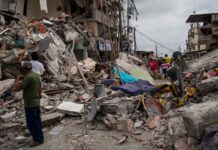
For the toll of innocent victims, in Iran and in Lebanon, is climbing into the thousands. And in small Lebanon, there are already almost a million refugees. The metastasis caused by Trump is in full swing.
At the same time, as things stand, the Iranian regime’s savage repression against the local population will only increase in intensity, a deeply bitter reality given Trump’s encouragement of the last two months, which gave Iranians unprecedented hope. But the fate of Iranians treated brutally by their own regime, is already the least concern of the US president. In fact, there is almost no such concern in the Oval Office anymore.
Externally, the way Iran reacted to the US-Israeli attacks, turns the military crisis into a diplomatic one for the US.
With each day of conflict, U.S. allies are increasingly incentivized to sabotage any way they can the conflict.
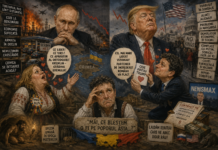
To get rid of his skin, Trump decided to skin Ukraine and Europe, temporarily lifting sanctions that did not allow Putin to sleep peacefully. For a few days, Russia has been making billions of dollars from fuel sales, and in the coming months Russia’s billions will multiply. And these billions will fuel the Russian war machine in Ukraine.
This decision has of course attracted criticism from Ukraine, but it has also raised a wave of criticism, in not uncertain terms from the European Union and German chancellor.
After two weeks of war, it is clear that America is no longer only sacrificing its own interests in Iran, but also brutally sacrificing the interests of Europe, and Trump’s temptation will from now on be to compensate at least part of his losses by increasing those of others.
At the same time, France had its first military casualty in an attack on its forces, although France is not part of Donald and Bibi’s “trip”. Paris now has to deal with the Iranian threat in the Middle East, economic or military, and has become a legitimate target for Tehran.
The signal should already be clear for the Europeans: they must resort to any means_ economic, diplomatic and political_ to exert pressure on the US and get Trump to withdraw his troops.
For even if their militaries do not participate in attacks alongside US-Israeli troops, Europeans will be drawn deeper and deeper into Trump’s war (both by Trump and by the criminal regime in Tehran).
The continuation of this conflict will only fuel the potential for an economic and energy crisis in Europe, the potential for loss of lives among European soldiers (even if they aren’t participating in the conflict), as well as the potential for casualties among European civilians, through possible terrorist attacks, both on the continent and in other regions.
In addition, due to the war, Europe’s strategic interest in strengthening Ukraine and weakening Russia is about to suffer damage in a way no one was prepared for.
Slowly, Trump’s fight with Iran has no choice but to turn into a significantly more uninhibited fight between Europe and Trumpism.
If this wasn’t clear until now, except at a theoretical level, after February 28, it became self-evident.
The chances of overcoming any crisis depend on the ability to address its causes: Trump and Trumpism, in the case of the war in Iran, respectively Putin and Putinism, in the case of the war in Ukraine.
On the Russian-Ukrainian issue, Europeans, with the exception of Orban’s Hungary and Fico’s Slovakia, understood the essence relatively quickly. For their own good, they now have no choice but to apply the same manual to the new war.
For us, Europeans, America was, is and must remain our most precious friend. Its president, on the other hand, must be treated in the capacity that he himself has configured for himself – the most dangerous enemy of this precious friendship.
Iran is today the point from which Europe must begin the long-delayed sanitation of the transatlantic strategic partnership.
