










President Donald Trump seems to have initiated his first serious attempt to define a way out of a war that risks ruining his presidency, crushing the Republican Party’s hopes of at least retaining the Senate, pulverizing the economic model of the US allies in the Gulf and deflecting a global recession.
On Monday a few hours before an ultimatum expired (one he had made himself on Saturday) the US leader began to talk about negotiations with Iran; saying he would really find some nice people in Tehran to make an agreement with.
The recent past, however, has taught us that every time he finds himself caught in an impasse, Trump tends to package something as good news, without having a product that fits the packaging.
Skepticism is a good ally in such moments, and in this case, it is well founded. This isn’t about the fact that negotiations are impossible between belligerents – there is always room for such a thing, no conflict definitively slams their door.
Even if we take the case of Ukraine, it is well known that negotiations have existed throughout the four years of conflict, starting in the first months, but while they have had varied intensities and a bumpy pace, they have not led to any results. And that’s after four years!
Back to Iran, it would be worth looking at why Trump mooted the idea of talks to understand why his reasons are for the moment, precarious,
- First, what came first: the chicken or the egg? In other words, who asked for negotiations? The Americans say the Iranians, and the Iranians say the Americans.
In reality, both sides need to calm things down, some sooner, some later in different doses.
As things stand, politically and economically, the Trump administration seems to have several reasons to get out of the conflict. In contrast, the Tehran regime needs to manage the end of the war, rather than a quick exit.
For Washington, it is more risky to continue the war, while for Tehran the greater risk comes from a premature peace, because, as in the case of Putin, for a criminal regime, a premature peace can be seen to be a betrayal.
As long as it carries on the war, the Iranian regime is relatively safe from serious domestic challenges to its political survival. The external challenges proved bloody for it top figures but not for the power structures.
Trump tries to present the exit from the war as a desire shared equally by Washington and Tehran, but this is a marketing smoke bomb, as the reality is significantly different.
- The idea of negotiations was launched by Trump after he had given an ultimatum which was not very credible: to create a blackout in Iran by bombing its power plants.
It was an unbelievable ultimatum, because it would have created more pain for the Iranian population than for the regime itself; it would have made Trump look dangerously similar to Putin, who is doing exactly this in Ukraine (although without real success). It would have amplified the shock wave that has been hitting the Gulf states for more than three weeks, as the Iranians have warned that they will hit the Gulf states even more asymmetrically, including vital water desalination plants (and why wouldn’t it?); further alienated the US’s Western allies, who treated Trump’s ultimatum with indifference.
The ultimatum Trump gave was at a time when the energy markets were in a tailspin, Israel was suffering heavy blows, and the Iranians sent a ballistic missile close to the heart of the Israeli nuclear program in Dimona.
- Trump’s idea of negotiations came at a time when the American leader had to either bomb or give it up.
It is clear now that he strongly wanted to give up, for some reason which seeme to be why he came up with the convenient story of negotiations.
- The idea of negotiations came at a time when two sides allied with the US had to be satisfied, at least relatively and for the moment, but with divergent interests: Israel, on the one hand, and the Gulf monarchies, on the other.
Israel wants to continue the conflict for at least a few weeks (as it announced over the weekend). The Gulf states want to stop everything as quickly as possible. By postponing the ultimatum sent to Iran by at least five days, Trump is reconciling (relatively) both Israel and the Gulf.
Netanyahu gets at least five more days of warlike debauchery, while the sheikhs, although they do not get the calm they want at least see the specter of Iranian retaliation on their populations and economies diminishing.
- With regard to the negotiations mentioned by Trump, the analysis must take into account two elements.
Either they are a bluff – because of the constraints to which Trump is subjected to seek a way out either from a caricatural ultimatum or the war itself.
Either they are a bluff and because of Trump’s desire to buy more time, given that the US military could consider expanding operations, through ground incursions. It seems that it has already started to deploy troops in this regard (several thousand soldiers), but they are still on the way from Asia and America and need time to reach their destination.
Either they are a bluff – but this time because of the acceleration of the Iranian response in recent days on Israel.
Or they may not be a bluff – equally possible, from two perspectives: the US needs a calming down (after the ultimatum was pushed back and negotiations were announced, oil prices fell). The US said it has identified relevant interlocutors in Tehran, but if this is the case, two new dimensions emerge.
The first is that there are relevant interlocutors in Tehran – but in the absence of additional details from Washington, doubts persist, because the actors who seem relevant in Tehran do not appear to be doves of peace (for the reasons above).
The second us that these so-called interlocutors don’t exist, instead, Trump’s negotiators could have been seduced and misled by other actors in Tehran.
This option can’t be ruled out as in Tehran there may be elements of the regime, eager for discussions, but they may be relatively marginal figures without backup; while Trump’s emissaries for Iran and the Middle East, son-in-law Kushner and friend Witkoff, aren’t known for their competence. And if this is the case, the risk of misinterpreting the signals from Tehran and/or the risk of having misidentified the relevant actors in Tehran are extremely high.
- Finally, even if everything turns out like in the fairy tales, and the negotiations mentioned by Trump really do begin, major obstacles remain.
The biggest is the maximalist conditions will not spare these negotiations just as they did not spare the negotiations for the end of the war in Ukraine.
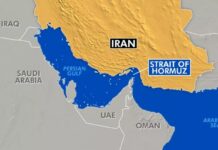
Both sides are obliged to hold quite tightly to maximalist demands: the total destruction of Iran’s nuclear program (for the US and Israel), the destruction of the regime (for Israel), long-term guarantees for the Gulf states that they will no longer be Iran’s targets, guarantees for the rest of the world that the Strait of Hormuz will be free of movement, respectively, from Iran’s perspective, the non-renunciation of the nuclear program and the non-change of the regime (two existential elements for the surviving elements in Tehran).
As far as he is concerned, Donald Trump has a special set of expectations from any negotiations: to be able to produce a narrative that is politically convenient in form, even if not solid in substance.
Put together, this does not seem to encourage a solid, relevant and long-lasting peace, but various forms of continuation of the conflict started on February 28; if not a new phase of escalation in which all parties involved see (once again) a new path towards an imaginary de-escalation.
A clean way out of this war does not exist, and the level of dirt that each side may find acceptable remains a mystery.
