












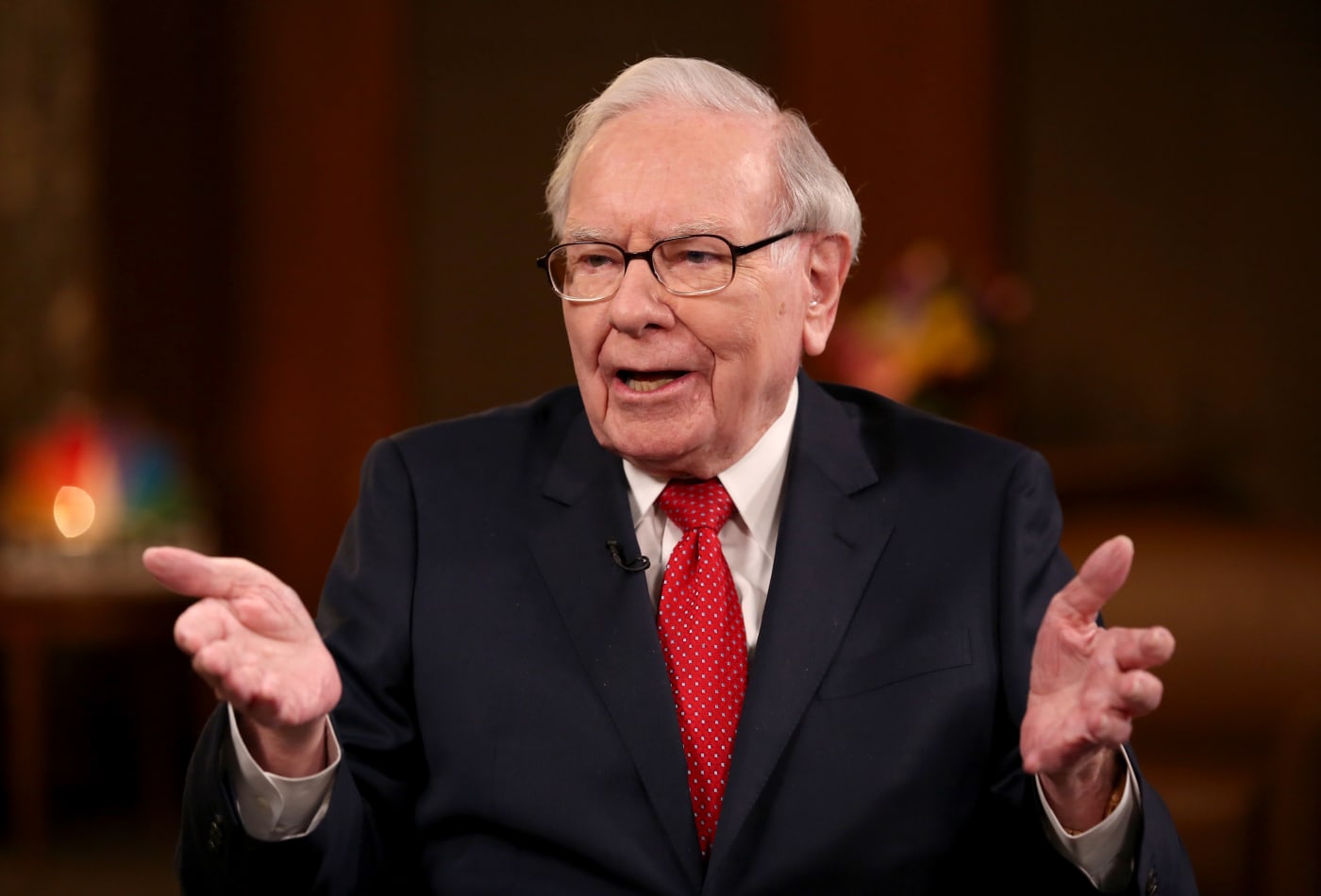
It is the end of an era: after six decades, Warren Buffett, aged 94, announced that he will step down as CEO of Berkshire Hathaway. The annual meeting of the company is more than just a shareholder event – it’s a rare opportunity to gain insights into the thinking of one of the most influential investors of all time, writes eToro analyst for Romania, Bogdan Maioreanu.
At the meeting, Warren Buffett addressed current market conditions, noting that short-term volatility is far from unusual. He reminded the audience that Berkshire Hathaway’s stock had dropped by 50% on at least three occasions because markets were panicking. Buffett explained:
“It’s not because of the business, it’s because of the market. If Berkshire went down 50% next week, I would feel fine. I would regard that as a great opportunity.”
With Berkshire’s cash pile hitting a record $ 347.7 billion, many are wondering why that capital isn’t being actively deployed. Buffett acknowledged the challenge: “We don’t invest just to invest. We’ve made a lot of money by being patient and not feeling we have to be fully invested all the time.” This patient mindset is foundational to Buffett’s philosophy. As he once wrote in a past shareholder letter: “Opportunities come infrequently. When it rains gold, put out the bucket, not the thimble.”
In fact, in the markets, there are a lot of sayings, one of them being “sell in May and go away”. But is it true? Between 1998 and 2025, the S&P 500 index shows some seasonality evidence. Remaining invested during the November-April period generated a median performance of around 6.6%, well above the 2.4% recorded in the May-October period. In 77% of cases, the winter half-year outperformed the summer half-year. However, seasonality is not automatic. In years such as 2009 or 2020, staying out of the market between May and October would have meant missing out on important recovery phases. A more nuanced truth, therefore, emerges: seasonality exists, but it cannot replace an understanding of the macroeconomic context and market dynamics. Especially in uncertain times.
While this year’s Berkshire meeting will be remembered for Buffett’s retirement announcement, what matters even more is what remains – his legacy. Over sixty years of shareholder letters reveal investment principles that remain as relevant today. One of them is that discipline and patience are key advantages. Buffett’s ability to wait for the right opportunities is one of his greatest strengths. When nothing is attractive enough, he’s happy to sit on the sidelines.
Buffett often reminds us that stocks are ownership stakes in businesses. If you don’t want to own the entire company, with all its responsibilities and challenges, it may not belong in your portfolio. Another principle is that instead of guessing short-term market movements, investors should concentrate on estimating a company’s intrinsic value. Also, long-term success depends heavily on capable leadership. Buffett prefers to invest in businesses where he trusts the existing management team to make sound decisions.
Perhaps the most valuable lesson from this year’s meeting is this: markets will shift, cycles will repeat, technologies will come and go – but the core principles of long-term investing remain. A deep understanding of the business, realistic valuation, confidence in competent leadership, and patience are timeless tools for enduring success.
Investors are learning fast. When confronted with market volatility, most Romanian investors follow their investment plans. According to the latest eToro Retail Investor Beat survey, 42% declared that they stay on course, 30% are rebalancing their portfolio, 14% take advantage of declining prices to buy more, while only 10% are selling investments.
Romanian nationalist lawmaker tells journalists: “I can’t wait to see you gone”
