


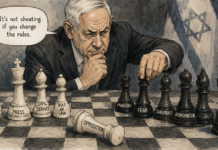



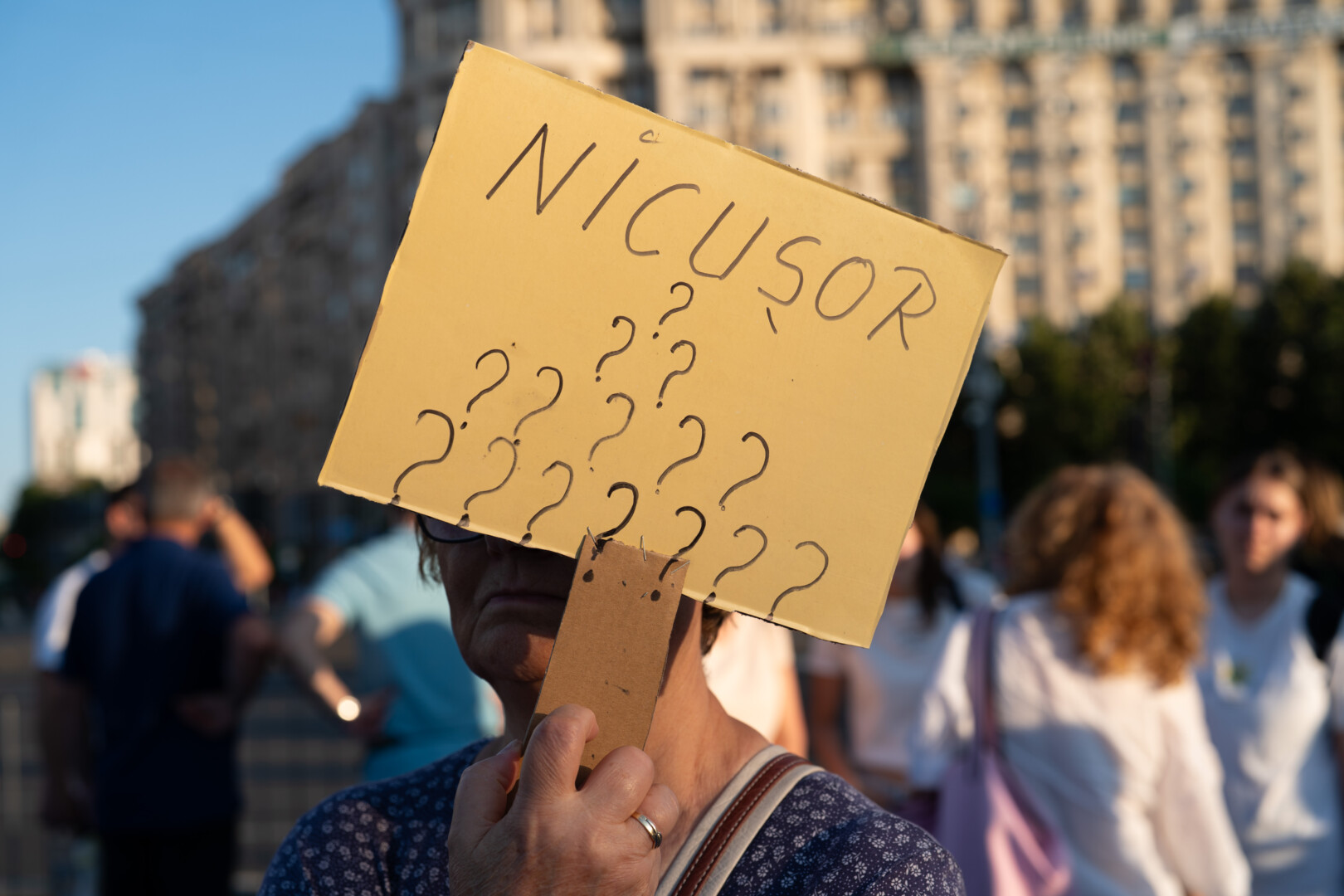
- A furious public communication campaign, meant to accredit the false idea that one person, the ousted Prime Minister Ilie Bolojan, is responsible for the political crisis and the formation of a new government.
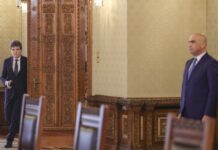
- An extreme delay by the head of state (timing announced on Tuesday, a gesture of cynicism and irresponsibility) of the appointment of a prime minister, with the risk of extending the political crisis until the autumn and also creating a fresh political crisis in the winter. President Nicușor Dan’s odd ability to disconnect from real life and the mood of an important segment of society, matched by his undoubted ability to remain attached to the algorithm, makes it easier for the president to extend the political crisis, with no regrets. But this momentary success, hardly compatible with any acceptable definition of success, will turn against him at some point – Nicușor Dan can be sure of this even if he doesn’t understand it.
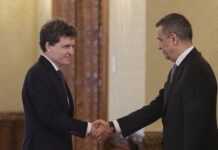
- The preparation, which is in full swing, to co-opt the extremists into the project of forming a new government and therefore the long-term “normalization” of AUR, was consummated on Tuesday, when Nicușor Dan announced that he was only interested in finding 233 MPs willing to vote for the Grindeanu Government, Whoever they are, wherever they come from.
- The unscrupulous use of the instruments of justice in settling political accounts – from satisfying at any cost the president’s obsession with getting rid of possible competitors in the future presidential elections to satisfying at any cost the president’s obsession with non-transparently installing a PSD minority government, on PSD’s terms.
This is the Nicusor Dan’s “Honest Romania”, a country of extraordinary potential, but also a country that, regardless of the era, has influential people at the top of the state hierarchy who revert to the most rotten habits of the country’s past.
In just two days, Romania took a few steps backwards in a way that could jeopardize or even cancel life-saving political progress, hard-won over many years thanks to adherence to the more civilized world of democratic values in the European Union.
- Nicușor Dan addressed the nation on Tuesday in a manner that made him suddenly resemble former PM Adrian Năstase from a quarter of a century ago.
- Sorin Grindeanu exposed, the next day, his vision for the future course of the country, with a courage that suggested he was certain that the support offered by President Dan remains unwavering.
- And on Wednesday, probably strongly stimulated by the signal given the day before by Nicușor Dan, the Bucharest Tribunal made an undemocratic and intrusive ruling on the internal affairs of the National Liberal Party (headed by Bolojan).
When much of the political class shows its ugly face while a smaller part is inhibited precisely because it is trying to transform itself into a better version of itself, the only road to salvation is a corresponding reaction by civil society.
And how could it be any other way when things are crystal clear on the other side?
- The most important man in the state has nothing left to offer.
- The largest party in Parliament offers the same moral-political sides that it has done so for over three decades.
- The largest party in the polls looks toward Russia and the Ceausescu-style nationalism.
- And the two parties that at least offer some hope, where there are some fragments of political will for reforms, are being attacked from all sides, with all the instruments the state can throw at them.
Israeli President Isaac Herzog attends Holocaust pogrom memorial in Romania
