




In today’s news-packed episode of Critical Conditions, Claire and I wrestled with events in Venezuela and Iran — two crises separated by culture and geography but linked by questions of power, legitimacy, and what the world is willing to tolerate from regimes that have overstayed anything resembling a welcome (but also what the world will tolerate from Trump without concluding that America is a menace).
We began from a place of moral clarity: Nicolas Maduro presided over a disastrous, corrupt, and repressive system that immiserated his people, sent millions fleeing, and destroyed one of the richest nations in Latin America. In that sense, the instinctive reaction — good riddance — is understandable. Even justified.
But the moment one moves beyond that instinct, the ground becomes unstable. The problem is not simply Maduro but the Chavista system that preceded and may outlast him – an entire apparatus of corrupt patronage and brutal coercion. Toppling one man does not erase a regime, and even the apparent negotiations with figures like Delcy Rodriguez underscore that we may be talking about decapitation without transformation. Some will see a lesson learned from Iraq, where dismantling Saddam’s Baath system is now seen as a mistake — but we could also be witnessing a very dirty deal with dirty people.
And then there is the method. If Maduro’s fall is the result of actions that violate international norms and law, we confront that perennial dilemma: can desirable ends justify murky means? The legal picture, as always, is not tidy. American law offers the War Powers scaffolding, Claire noted; international law gestures toward Responsibility to Protect but is paralyzed by a Security Council that cannot realistically act. So law in this arena is often honored more in rhetoric than reality. Yet it still matters if we want any claim to a rules-based order.
And what was really disturbing was Trump’s confounding spectacle of a press conference in which he said the US needed “access” to Venezuela’s oil and would “run” the country, I argued. You couldn’t script this more disastrously if you were trying to prove America is no better than the Soviet Union was – and demoralize Americans who do not want to be a rogue on the world stage. You know, like disciples of Ronald Reagan – he of the “shining city on a hill.” I remember believing it when I heard him say that. “Rancid hovel drowning in a festering, shitty swamp” would have had a completely different effect.
No less important is ushering in the legitimate opposition that actually won an election in 2024. Instead Trump is trying to undermine opposition figure Maria Corina Machado. He says she doesn’t have “respect.” I suspect he’s upset that she accepted the Nobel Peace Prize he coveted instead. Is he above that? If you believe such a thing, I have a used car for you.
Marco Rubio’s role is a subplot worth watching. God knows what he’s thinking about the whole Trump shitshow, but he seems to be not a fool. Is this his play to define a post-Trump foreign policy — muscular and not isolationist — in a post-Trump runoff with the increasingly erratic and isolationist JD Vance (who has been strangely silent on Maduro)? Or is it just more Trump-lickspittling? Perhaps he wants to set up regime change in his parents’ native Cuba, another country run by criminals.
Indeed, the wider question is signalling and precedent. I noted Trump is now also threatening Colombia. Claire wondered about the scandalous saber-rattling toward Greenland (aka, Denmark). I’m concerned the intervention might embolden Russia and China. Perhaps – but Claire noted they already understood American capability; what they will now study is American coherence. Does it exist, beyond Trump’s ego? Is this really about oil? Or minerals? Is America actually returning to regime-change geopolitics, despite the MAGA isolationism, despite the traumas of Iraq and Afghanistan?
Critical Conditions is a co-production of Ask Questions later and Claire’s The Cosmopolitan Globalist. The CG is well worth checking out.
Which is where Iran comes in.
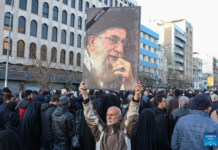
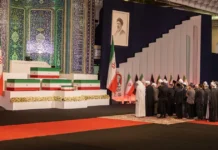
The regime faces economic collapse, currency free-fall, humiliation by Israel, resource shortages, and — perhaps most importantly — a young, educated population that increasingly sees clerical rule as a historical mistake rather than an inevitable fate. The protests are not simply about prices or morality police; they are about the accumulated exhaustion of decades of failure.
There is a nontrivial possibility that the traditional military — not the Revolutionary Guard, but the army that once stepped aside in 1979 — could again decide that the clerical experiment has run its course. Militaries have played this role before: Romania in 1989; Egypt in 2011. These are imperfect analogies, but they remind us that regimes fall not only from below, through protests, but from fissures above, when pillars of power decide they will no longer bear the weight.
Of course, such breaks are not clean. They risk civil conflict. They require bargains with entrenched, corrupt interests. They demand more subtlety than the United States showed in Iraq. But they also open the door to change in a country whose youth no longer accepts the mythology of perpetual revolutionary virtue.
So when Trump says America is “locked and loaded” to protect Iran’s protestors, and then within days abducts the leader of Venezuela, the leaders of Iran might take notice.
Claire noted also a frustration that cannot be ignored. The world’s loudest “anti-imperialists” – who are outraged by the US action, of course – seem far more animated by Western failings than by theocratic brutality in Tehran or socialist authoritarianism in Caracas. They march against democracies while averting their eyes from dungeons. They speak the language of justice while excusing regimes that have none. This hypocrisy corrodes public debate and, perversely, strengthens the populist right, whose outrages in turn also feel the far left right back. Opposites may not attract, but they are certainly in cahoots.
We will know more soon enough
