


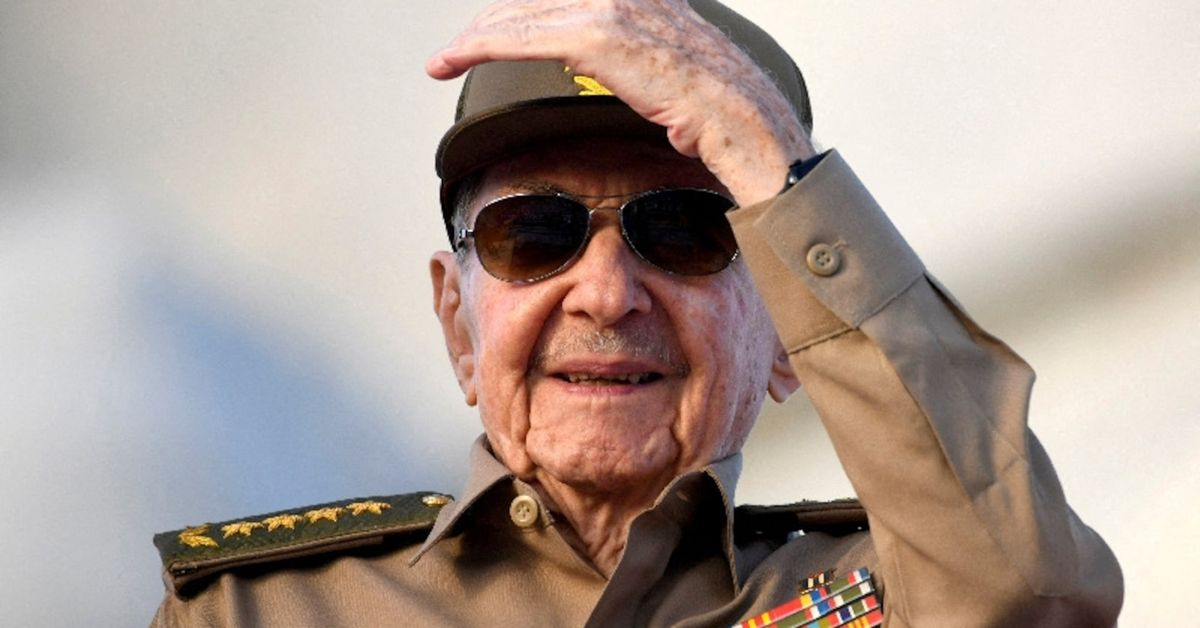
The United States has filed criminal charges against former communist Cuban leader Raúl Castro over the 1996 destruction of two civilian aircraft near the Florida Straits, accusing him of conspiring to murder American citizens.
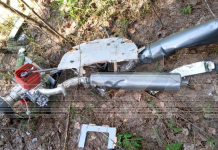
The indictment names Castro alongside five additional individuals in connection with the shooting down of planes operated by the Cuban-American humanitarian group Brothers to the Rescue. The incident killed four men, three of whom were US citizens.
At the time, Castro, who is now 94 years old, headed Cuba’s armed forces and faced widespread international outrage over the attack.
Current Cuban President Miguel Díaz-Canel dismissed the charges as politically motivated and lacking legal legitimacy, arguing that Washington was weaponizing the case as part of its broader pressure campaign against Cuba’s communist government.
Speaking at Miami’s Freedom Tower, however, Acting US Attorney General Todd Blanche said prosecutors would pursue charges including destruction of aircraft and four separate counts of murder relating to the deaths of Armando Alejandre Jr., Carlos Alberto Costa, Mario Manuel de la Peña, and Pablo Morales.
Todd Blanche declared that the United States would not forget the deaths of its citizens and stressed that the Trump administration intended to hold those responsible accountable.
Several of the charges could carry life sentences, while the murder counts are punishable by either life imprisonment or the death penalty under US law.
Although the case would need to proceed through the American court system, Castro is, rather obviously, not expected to voluntarily appear before a US court.
The indictment comes amid escalating tensions between Washington and Havana, as the United States intensifies sanctions and economic pressure on Cuba in an effort to force political and economic concessions.
This comes as the US has already imposed severe sanctions on Cuba and tightened restrictions on oil shipments to the island, contributing to chronic blackouts and worsening shortages of food and fuel.
Latin America expert William LeoGrande has suggested that the strategy appears designed to gradually increase pressure until the Cuban government is compelled to negotiate.
On the same day (Wednesday, 20 May) the indictment was announced, US Secretary of State Marco Rubio addressed the Cuban people in a message tied to the country’s independence celebrations, endorsing President Donald Trump as offering Cuba “a new path” in relations with Washington. At the Miami announcement ceremony, many Cuban-American exile activists celebrated the indictment as long-overdue justice. Surrounded by photographs of the four victims, attendees described the charges as a historic moment after decades of opposition to the Cuban government. In response, Cuban state media reacted furiously to the indictment, denouncing what they called fabricated accusations and reaffirming the government’s refusal to bow to American demands.
Rubio blamed the military-controlled conglomerate GAESA for Cuba’s economic misery. He argued that the GAESA dominates Cuba’s most profitable sectors (from ports and fuel distribution to luxury tourism) while ordinary Cubans suffer shortages and infrastructure collapse.
President Díaz-Canel immediately rejected those accusations, insisting that the United States was collectively punishing the Cuban population through sanctions and misinformation.
The president also defended Cuba’s actions in the 1996 incident as an act of legitimate self-defence carried out within Cuban territorial waters, accusing Washington of distorting the historical record.
When reporters questioned whether the US intended to physically capture Castro and bring him to trial, Todd Blanche confirmed that an arrest warrant existed but avoided directly outlining any operational plans. He stated only that Castro would eventually appear in the United States “by his own will or another way.”
The remarks inevitably drew comparisons to the January US operation targeting former Venezuelan president Nicolás Maduro after he was indicted by the US Justice Department. Analysts, however, cautioned that Cuba presents a very different geopolitical situation, especially given Castro’s advanced age and semi-retired status.
Although no longer formally in power, Raúl Castro, the younger brother of notorious late revolutionary leader Fidel Castro, remains a symbolic and influential figure in Cuba. During his presidency between 2008 and 2018, he oversaw a brief diplomatic thaw with the United States alongside former US president Barack Obama, though relations later deteriorated again.
