






“I’ve reported on more than 40 wars around the world during my career, which goes back to the 1960s. I watched the Cold War reach its height, then simply evaporate. But I’ve never seen a year quite as worrying as 2025 has been – not just because several major conflicts are raging but because it is becoming clear that one of them has geopolitical implications of unparalleled importance. Ukraine’s President Volodymyr Zelensky has warned that the current conflict in his country could escalate into a world war. After nearly 60 years of observing conflict, I’ve got a nasty feeling he’s right. ”
The above remarks belong to journalist John Simpson, the BBC’s editor for international affairs. I recommend reading his entire text (the original in English – HERE, and a version in Romanian – HERE).
The truth is that 2025 was a year that stood out. And from the perspective of the Russian-Ukrainian war, it stood out including in terms of the way it started and how it ended on the same note.
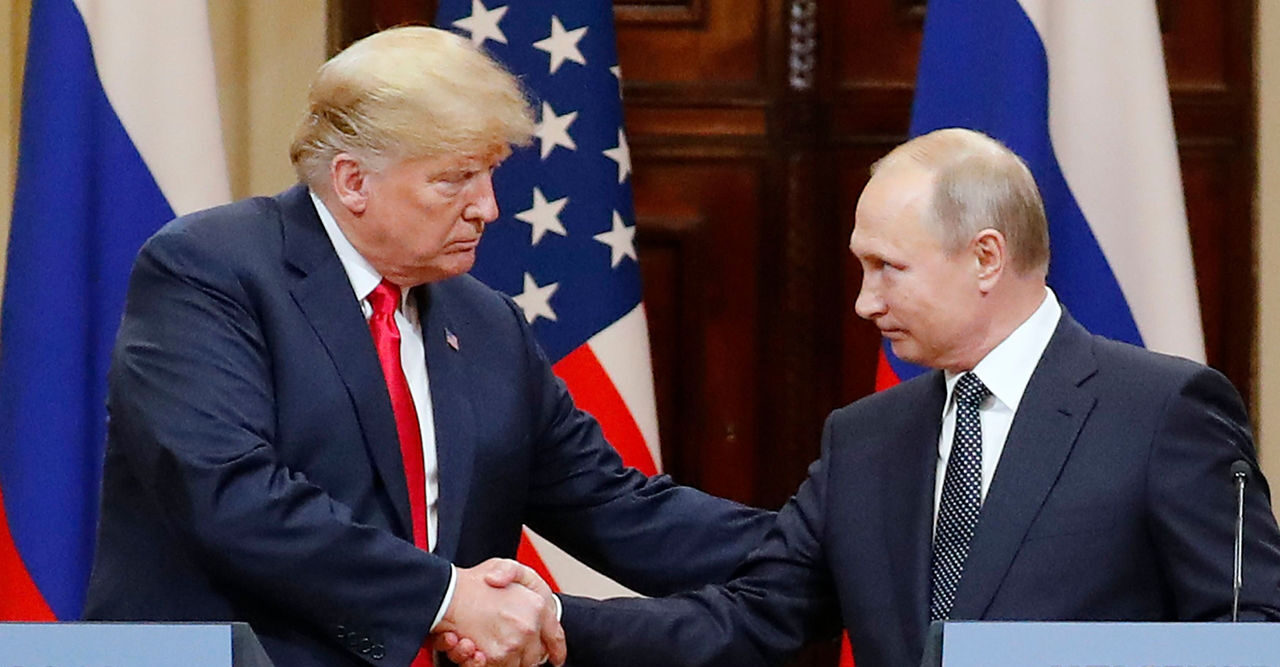
It began and ended under the sign of deception and lies, both officially uttered, from the highest level – from the White House to the Kremlin.
It started with Trump’s scam, which has gone around the world countless times: I will end the war in 24 hours.
A year has passed and the war continues.
It ended with Putin’s obscene lie, released on December 29, through an intermediary (Sergei Lavrov): Zelensky tried to kill me, sending dozens of drones to bomb my residence.
Two days passed and no evidence was forthcoming, only one day had passed and already the Russian authorities themselves (the Ministry of Foreign Affairs, respectively the Ministry of Defense) had begun to contradict each other – for example, on the number of drones.
Trump used his deception, the one with the ‘peace in the envelope,’ strictly for electoral reasons. Because nothing seemed too vile to him or too terrorist with logic not to be used if it served to inflate his public profile. This is how he came to offend the intelligence of any rational human being by telling them the story of peace descended in 24 hours.
Putin used the blatant lie in desperate search of a mammoth pretext meant to justify (once again) the dictator’s appetite for the continuation of the war.
It is not for nothing that the Russian lie about the attempt to liquidate the dictator appeared immediately after the end of the Trump-Zelensky meeting, at Mar-a-Lago, when it had already become clear that the American leader could not impose on his Ukrainian counterpart the maximalist terms demanded by the Russian dictator: a peace not only through huge compromises on the part of Ukraine, but through the surrender of this country.
In 2025, peace was not possible in Ukraine for two reasons: not because Ukrainians are still eager and able to defend themselves, nor because Europeans have remained by their side, but because Putin cannot afford to give up the war and because Trump has chosen to strongly support Putin.
It is said that a misfortune never comes alone, and this is also true for the subject discussed here.
Because yes, as the British journalist John Simpson said, 2025 was a deeply problematic year, but precisely because 2025 leaves this legacy, it is realistic to expect that 2026 will not be too different either – possibly it could even surpass it.
For the year that is ending is not only a conclusion, but also plants new premises for the one who begins – bad premises, how else?
It is in the nature of things that the risk of destabilizing the world order and stimulating new or/and old foci of conflict only increases, as long as a war of the magnitude of the Russian-Ukrainian one is underway; and above all, as long as the US leader does not put an end to the support he generously offers to the Russian dictator.
- PS: It would also be worth a last remark on the Putinist fairy tale about the so-called recent attempt of the Kiev strongman to cut off the head of the Moscow dragon.
- First of all, the Putin regime has itself legitimized, as early as February 24, 2022, a possible attempt by the Ukrainians to resolve the war by “solving” the dictator. Russia legitimately did this from the first day of the invasion through its own attempts (this time real, not imaginary) to liquidate Zelensky (and not only him). The Russians’ attempts, only from what is publicly known so far, have been numerous and even if they failed, the important thing is that they existed.
- Secondly, given Putin’s lack of appetite to accept any peace formula that does not fit into the tight corset of Ukraine’s capitulation, its liquidation becomes at least theoretically legitimate, and in certain contexts it will even impose itself as imperative.
- Thirdly, taking into account the architecture of Moscow’s power and the nature of the engine that set the war in motion, the liquidation of the Russian dictator (no matter who the perpetrator is, because he can also be one from within, not just from the outside) represents the shortest and most effective way to achieve peace.
- Fourthly, precisely because the eventual liquidation of Putin is an eminently question of efficiency, such attempts will only occur when it is clear that their chances of success are maximum and when it is clear that what can be achieved is achieved first.
- This is more convenient than what could be lost by this. And if we were to apply this theory to the case of Ukraine, it would mean that an eventual liquidation of Putin will not be talked about in terms of attempt, but of success. If the Ukrainians ever try to attempt on the life of the Kremlin killer, it is more likely that we will witness a decisive blow, with an irreversible result. The situation in which it finds itself now does not only allow Ukraine to try, but directly forces it to succeed. But for this it is necessary calculations of astronomical precision and draconian preparations, as well as ultra-scrupulousness in choosing the moment. This was not the case in 2025 and we do not know if it will be in 2026, because everything depends on developments that have not yet been consummated or, perhaps, of which we are not yet aware.
Romanian war veteran decorated by president for ‘defending freedom’ dies at 107
