








First letters were replaced by emails. Then came the soul-crushing, interaction-cheapening social media storm. Now ChatGPT is writing them!
There is something poignant about the last time for things. With this in mind, and amid news that ChatGPT is writing letters, I have rummaged through old files and uncovered the last time I produced one myself. It was in the form of an email, and so the date and time have been preserved: May 29th, 2007, at 1:08 AM in London, where I then lived. It coincides with my arrival to Facebook; perhaps not a coincidence.
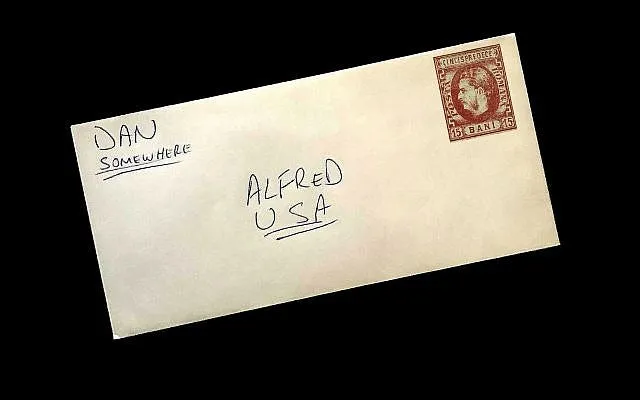
For readers under 40, I’ll clarify that a “letter” was a personal note for maintaining social contact that was not trivial in length. In the Before Times it was sent by mail, which involved pieces of paper being folded, an “envelope,” and generally a “stamp” representing payment for people and airplanes delivering it to the recipient.
Though by the mid-1990s they were increasingly sent my email, in my book, obviously, that still counts. But business emails are not letters for our purposes, and texts and social media interactions are most definitely disqualified. Indeed, though social media has helped people stay in touch, on balance, not only because of the killing of letters, it may qualify as a scourge (which actually reads like an understatement).
Does anyone still produce letters? When will the last letter be written (by a human)? Will future generations even know that they existed?
My old letters, I now realize, served a dual purpose: beyond maintaining friendships they amounted to a diary. When I had something to say, I would choose a volunteer to receive it and start composing. With some care, as I might do these days for an article on Substack. I would print out two copies, not thinking much back then about the planet or the trees. Before the emails, one was sent off while the other was furtively added to a binder; after, a single printout was required.
Because of the nature of emails I also began to send them to multiple recipients at once. With hindsight, I know this shift was the start the decline — the innocent-seeming harbinger of a society-distorting, interaction-cheapening digital typhoon.
I noticed the multiple-addressee policy sometimes caused offence, yielding snarky and even hostile replies. I see the long-gone upside of that now: People at least actually wanted their own letters! That seems quaint today, when some would rather stick needles in their eyes than have to read something longer than a Tweet.
The binders still exist, though the pre-laser printer ink is fading. They form a record of my memories: the different societies I lived in as a foreign correspondent, the birth of my first daughter and the amazing thoughts and feelings that begat, little philosophies and grand designs. I consult these documents still, sometimes — late at night, when no one else can see.
In the 2000s, the letters gradually peter out to their whimpering end. I can hardly bear to look at the last one, which actually described an absurd encounter with the Queen and her sodden consort. It is a little like remembering a loved one who has left out mortal coil. I loved those letters though. I enjoyed writing them and even more so receiving replies, from those who bothered, until reciprocity died out as well.
The world is a paradox, here in 2023. It may literally actually be the best of times and the worst of times. So I sat down to figure out the dispiriting death of letters. Here’s what I came up with:
- The kinds of people who might write a letter are mostly busy all the time. Quite often they are busy spinning their wheels at 24/7 jobs. Or they have screechily demanding families (a phenomenon that has strangely increased). Or they have lost their minds, the true pandemic of our times. So we feel we have to be efficient. An audience of one is inefficient.
- Put another way, we are living in a multilateral time. A letter is a bilateral construct. The gig economy somehow attaches to this: we are now promiscuous, whereas a letter is somehow chaste.
- The digital epoch is the era of scale. Take your great idea to venture capitalists and they will instantly inquire: Does it scale? A letter does not scale. Content sent to one person generates no traffic. Are you a Luddite? If so, you’ll write a letter.
- An audience of one is also private. It does not serve our personal brand, at least not efficiently, at scale. This is the era of the personal brand. We must build it, nurture it, preserve it. Some do it with images of dinner plates, but at least they have a brand.
- So on the occasions that we have thoughts, be they trivial or grand, they go on social media. To then also send them to a friend bilaterally is to repeat oneself, for surely the friend is on social media as well.
- But will the friend see it in the feed? Not clear. We look for clues in the likes — which feels pitiful and needy and adds to no one’s self-esteem. We soon identify those friends who don’t react, and this might render them, unofficially, somewhat lesser friends. And what of real-world friends who avoid Facebook? These are heroes, yet it feels like a micro-aggression all the same.
- And if you dare to send a letter? The recipient will calculate the time needed to read it (Over 900 words? A four-minute read!) and curse the obligation to reply. Does the friend even have any thoughts of their own? They certainly have no time.
- Ah, but that’s not half as bad as the unplanned phone call — the inappropriate cold call not set up in advance and confirmed on digital calendars. That’s a macro-aggression right there.
Might the whole thing somehow net positive?
Could this be a terrible thing that somehow serves a necessary thing, like the IRS? I don’t rule this out. Maybe a backlash is coming in which people become more literate, not less.
And where does all this leave the love letter? I honestly do not know.
Arcade Fire, one of the few contemporary acts that might be remembered beyond our lifetimes, put it this way in a great song from their “album” called The Suburbs:
I used to write
I used to write letters
I used to sign my name
I used to sleep at night
Before the flashing lights settled deep in my brain.
