







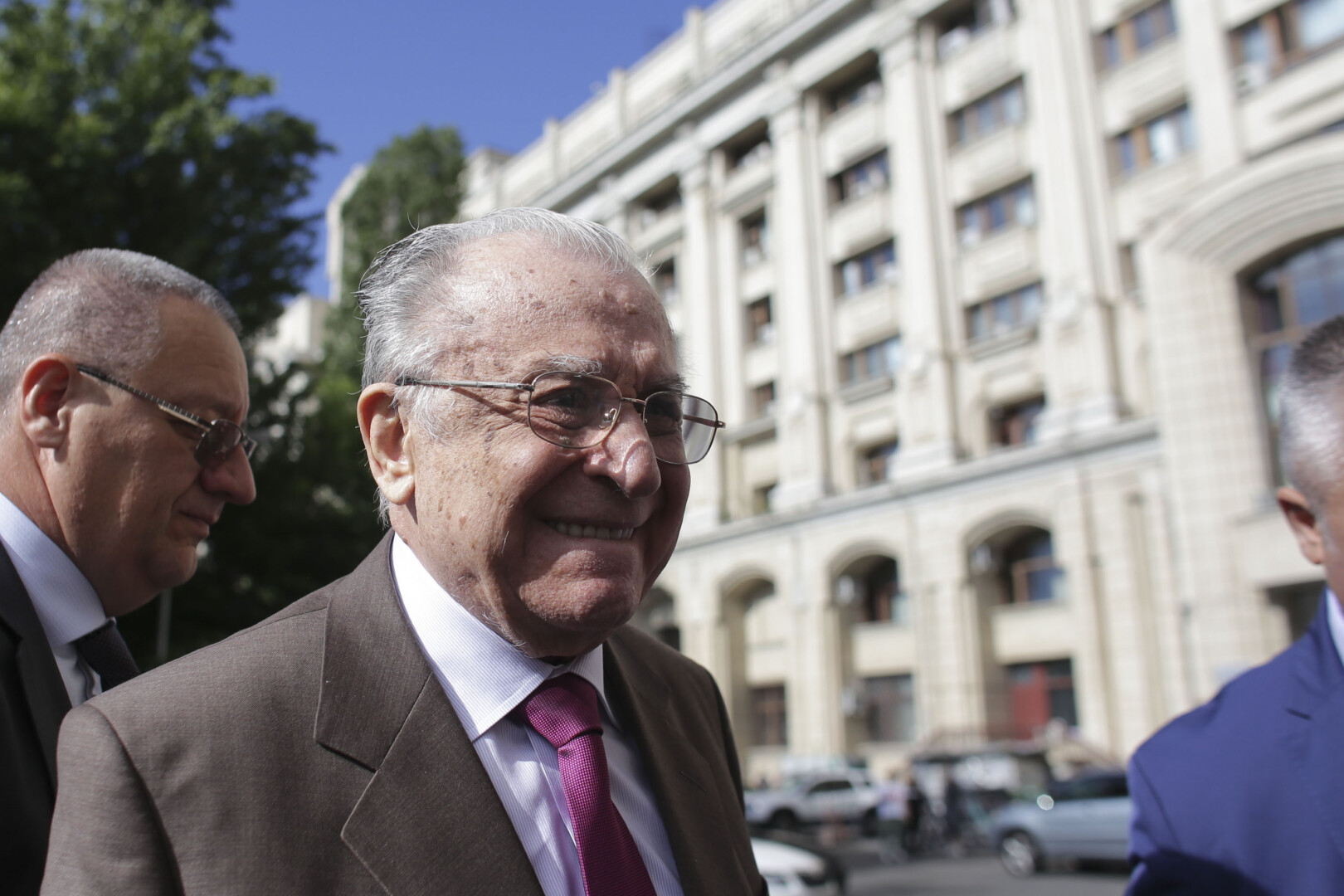
Romania’s government has declared August 7 a day of national mourning for President Ion Iliescu, the three-times president who helped bring his country into the family of Western nations but died facing charges of crimes against humanity for his role in the revolution and violent crushing of democracy protests.
Iliescu, 95, had been admitted to hospital in Bucharest with lung cancer in early June and died on Tuesday. The government says he will receive a state funeral on Thursday.
News of his death divided Romanians. Some praised him for leading the nation toward NATO and the EU while others expressed anger that he had never been properly held accountable for some 850 deaths during the revolution and for protecting second-rank communists who came to power in 1989 and influence the country’s tortuous tranistion. There was never any real appetite to investigate the 1989 revolution, Europe’s bloodiest.
A divisive figure, the former communist party apparatchik went from a rising member of the Communist Party to a leader of the bloody December 1989 revolution – which toppled dictator Nicolae Ceausescu and led to his summary execution on Christmas Day.
Ceausescu sidelined Iliescu in the 1980s fearing his popularity in the party ranks and leadership skills.
Popular among rural Romanians, people chanted “The sun shines, Iliescu appears” but an equally common refrain was “Jos Iliescu!” or “Down with Iliescu!”
Aged 60, he took power during the revolt and easily won the first presidential elections of May 1990. But when student protests against him broke out in the capital Bucharest a month later, he called on coal miners, who forcefully crushed the protest leaving at least four dead and hundreds injured.
Romania’s justice system was loath to investigate the revolution as so many figures who were part of it still held influential roles.
Finally, when he was charged with crimes against humanity for his role in the revolution and miners’ rampage. He denied wrongdoing, never expressed remorse and was never convicted.
The violence of the miners’ riots of 1990 and 1991 hindered Romania’s transition to a market economy and discouraged foreign investment for years.
However, the adaptable Iliescu unified all of Romania’s political parties to agree to support Romania’s path to EU and NATO membership in the 1995 Snagov Treaty. It joined the NATO alliance in 2004 and the EU in 2007.
The Social Democrat Party he founded, built from the remnant of the defunct Communist Party is still Romania’s largest party.
