













Romania’s Ambassador to Austria has been tipped as the country’s next foreign minister as the country pushes forward with the formation of a new pro-European government to put an end to weeks of political chaos after a key election was cancelled over Russian interference.
The presumed nomination of Emil Hurezeanu, a respected diplomat and former journalist of Radio Free Europe during the communist era, is designed to reassure Romanians and its foreign partners that the country remains committed to the European Union and NATO.
Mr. Hurezeanu, 69, was formerly Romania’s Ambassador to Germany and is credited as a polished and effective diplomat, with honed negotiating skills and an ability to communicate with people from different camps. He’s appreciated for his fine intellect and wit.
Another appointment that should send positive signals is Daniel David, rector of Babeș-Bolyai University in Cluj to the education portfolio.
Many of the nominations, reported in the Romanian media, remain the same as the previous government though_ offering a level of stability but also risking inflaming nationalists and reformists ahead of a key presidential election. The government appears to be the best solution politicians can offer for now.
Romania plunged into political turmoil after the Constitutional Court canceled the presidential elections two days before the runoff after declassified Romanian intelligence files revealed interference by a ‘foreign state actor’ later confirmed as Russia. Russia’s manipulation of the election was to favor a radical NATO and EU skeptic who improbably won the first round. Russia has denied involvement.
Romania is expected to hold new presidential elections in the Spring, a date to be set by the new government.
President Klaus Iohannis who is remaining in his role until a new president is sworn in, appealed to parties to recognize the precarious situation amid political bickering over the new government.
“Romania is in a very complicated situation with a war at its border. We have hybrid attacks on Romania which led to the annulment of presidential elections; an unprecedented situation. We have a very complicated situation in the European Union where states which were the engines of the Union are facing domestic problems. The last thing Romania needs is an extended governmental and parliamentary crisis.”
Romania’s next government will inherit a government deficit forecast to reach 8% of GDP in 2024 according to the European Commission. The deficit reflects very fast growth in government spending, mostly due to large increases in public sector wages, expenditure in goods and services and social transfers, including pensions.
It also reflects slightly slower revenue growth due to weaker-than-predicted economic activity.
Fitch Ratings signaled it may cut Romania’s credit grade last week, citing high political uncertainty. It lowered the outlook on Romania’s BBB- rating, the lowest investment level, to negative from stable, a warning to pro-European parties.
Lower credit ratings mean higher costs for government borrowing.
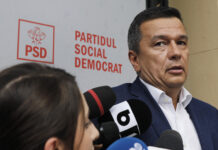
The new Government will have 16 ministries, eight from the Social Democratic Party, the PSD, six from the Liberal Party or PNL and 2 from the UDMR Hungarian minority group according to the press reports.
