











In the last decade or for even longer I have been critical of the over-the-top taste of the Romanian Orthodox Church in its monuments, pomp, luxury, and politically questionable relations with less than innocent politicians and businessmen with their earthly and human failings on full display.
It wasn’t the only thing I wrote about, but above all my criticism was in the context of the church’s pharaonic project, now called the National Cathedral, formerly known as the Cathedral of the Redemption of the Nation. Sometimes, my criticism was met with official, public counter-criticism which came directly from the highest level, the communication department of the Romanian Patriarchy.
In the spirit of freedom of expression, the right to a diversity of opinions, both sides had all the legitimacy and authority to say what they believe, to argue and counter-argue what is in their minds. And in the spirit of the right to information, the audience had the opportunity to be exposed to a variety of views, while society and had the freedom to meditate, judge and form their own point of view.
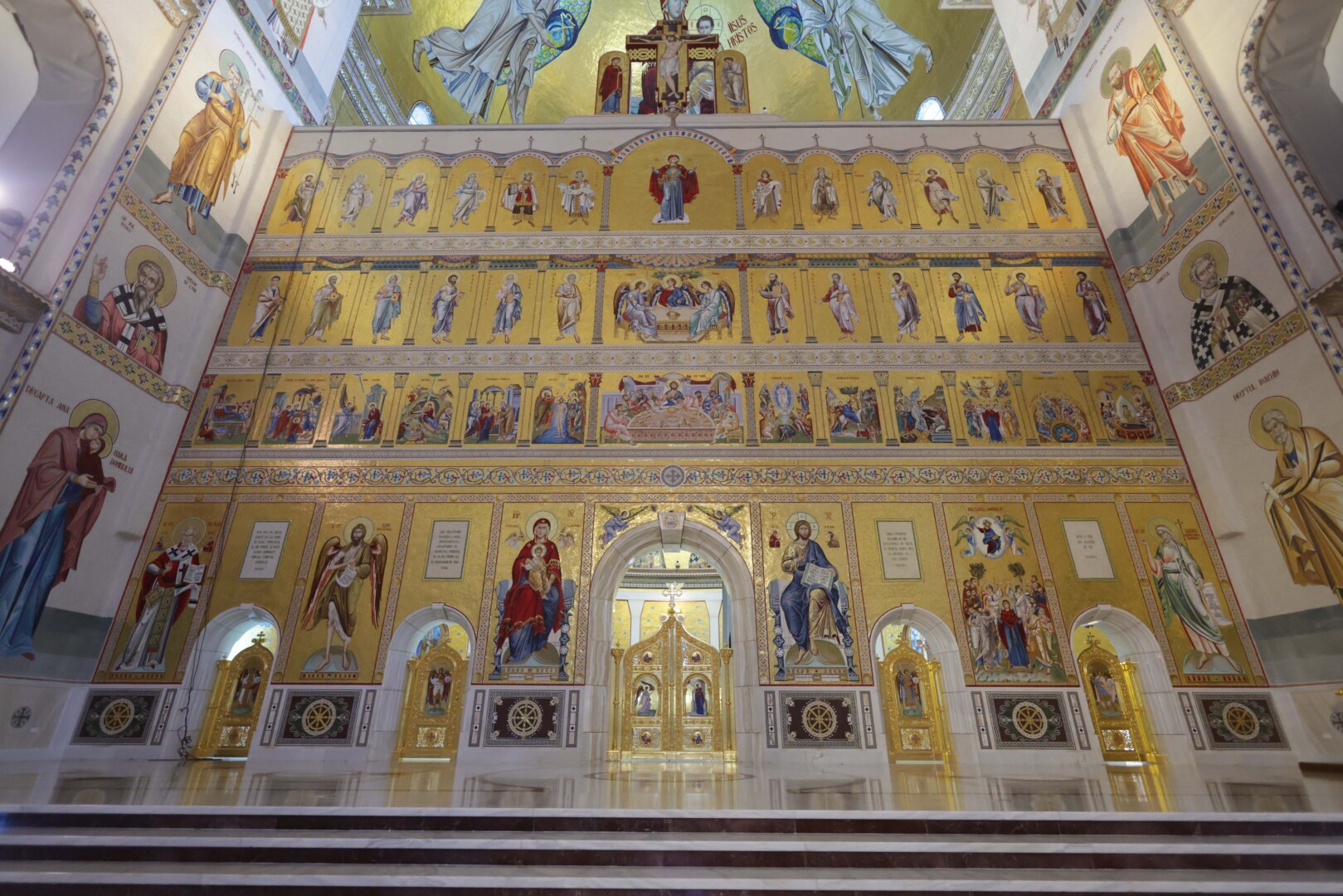
I will not repeat here the arguments that more than 10 years ago made me write about the building of this sad and inappropriate colossus. In a bitter irony of history – the colossus was erected right next to another colossus which had not only a sad memory, but was built in times of infinite national misfortune. The National Cathedral is built very close to the Palace of Parliament, the former People’s House.
To its consolation, today, finally, the Romanian Orthodox Church has what it ardently wanted: all the superlatives it desired, the tallest, the most sprawling and the most spacious building in the entire Orthodox universe.
Since, however, the inevitable could not be avoided, and the edifice now stands towering in the heart of Bucharest, I consider it appropriate to make a small gesture of personal goodwill – that of wishing those who made this building happen, as well as those parishioners, who sincerely rejoice that the cathedral was built, to be happy with the result and to worship there a lot, well and judiciously.
This does not mean that the subject can be buried, that the debate fueled by the numerous and enormous controversies deserves to be cancelled. The building was raised, but the shadows that accompanied it, instead of disappearing, become thicker, wider and permanent.
- In the name of the spirit, a lot of money has been injected (hundreds of millions of euros), and the spending showed a striking lack of transparency, although mainly public money was involved.
- In the name of humility, numerous egos inflated to Heavenly heights were thus satisfied.
- In the name of the endurance and eternity of the nation, a lot of ’combinations’ were made, driven by petty and immediate interests.
- In the name of purifying the nation’s soul, all kinds of impure characters from the lay and ecclesiastical worlds have struck deals. .
One thing is certain: these shadows will never be chased away.
But the feeling is that even after this imposing cathedral was built, Romania hasn’t chosen a shorter road to salvation, or even clarified its troubled waters. Rather it has been reinforced that an engineering marvel can never have the necessary power to remove impurity of soul and dubious morality.
- Before it rushed to build the most famous cathedral in the Orthodox world, the Romanian Orthodox Church should have brought a real service to the country by honestly and fully taking responsibility for the collusion of church leaders with the communist regime.
- It should have removed from it ranks the dry priests who continued to officiate and advance hierarchically after December ’89.
- It should have placed people who were sufficiently cultured and moreover honest in their relationship to the national history in churches and monasteries; people who were capable and at the same time open to critically approaching the most condemnable episodes in the church’s history, from anti-Semitism to communism to collaboration with the Securitate secret police.
- Before building a gargantuan cathedral, the Romanian Orthodox Church should have undertaken great and long work on an area that is probably the most difficult, the fact that the church played a decisive role in inhibiting, discouraging, slowing down and undermining the emancipation of the people, the modernization of the country at the grassroots.
- The Romanian Orthodox Church has always feared everything it perceived as a danger to its chances of remaining anchored, however fragile that may be, to the political power of the moment (an aspect that can be clearly seen both before and after 1989).
It is all the more painful that the consecration of the Nation’s Cathedral will coincide with a period in which the Romanian nation is once again being severely tested. It will coincide with a period in which there is a geopolitical danger, in this case (and again) from the East.
The consecration of the ornate painting of the ornate -cathedral is a massive propaganda opportunity for local voices of influence that the criminal Puti regime cultivated in Bucharest.
Of course, it is out of line to accuse the Romanian Orthodox Church, that after a decade of building the National Cathedral it will offer, in a week of consecration, a propaganda platform to a Russia which is engaged in a classic war with Ukraine and a hybrid one with Romania and the West. Because how could the Orthodox Church know in the 2010s that there would be such a war in the 2020s?
But even so, it is honest to remember that in the intervening period, the Orthodox Church has unforgivably tolerated the internal rise of some premium vectors of Russian propaganda, tolerated the propagation of narratives internally that delight and serve Russian propaganda. And even after the war in Ukraine broke out, the Orthodox Church did not remove from its ranks either the lower level priests, or the great hierarchs, or the monks who allied themselves with pro-Russian politicians or who even continued to praise the virtues of Vladimir Putin (Teodosie is merely the most famous voice).
Today, when the National Cathedral sees the consecration of its interior paintings, the overall image of the church is that of a universe that facilitates the propagation of Russia’s voice rather than the propagation of Romania’s voice and interests.
There will be a big celebration on October 26, 2025 – but not everywhere and not for everyone and certainly not for peace in Romania.
