


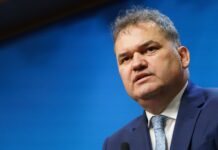
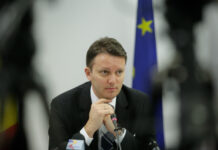

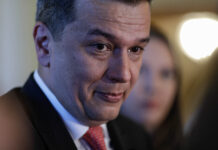






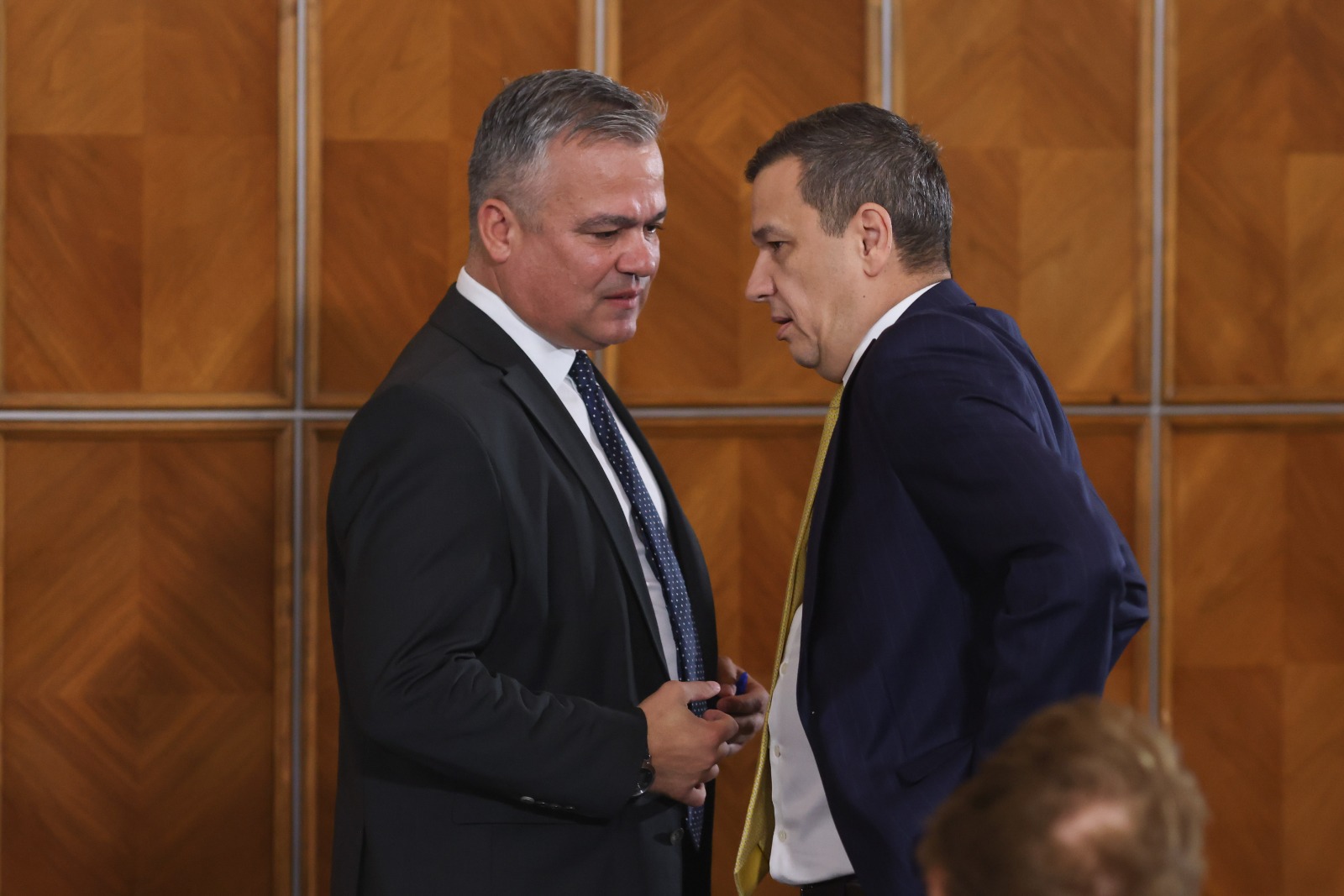
Romania’s prime minister-designate Adrian Vestea on Monday will try to secure a majority of votes in Parliament to invest his government, but needs votes from the opposition far right for his government to pass, and it is unclear whether he will get them.
President Nicusor Dan nominated Liberal Party member Vestea last week without consulting the party, in what analysts said was an attempt to rebuild a pro-European government to tackle the largest budget deficit in the European Union but also of trying to sabotage party leader Ilie Bolojan, the outgoing prime minister.
The hearings of proposed ministers will take place starting at midday Monday and the vote is expected to begin in the late evening. Vestea needs 233 votes to pass.
The four-party pro-European coalition government collapsed on May 5 when the biggest partner, the center-left Social Democrats, joined forces with the opposition far right to oust it in a no-confidence vote.
Since then, the Liberals have said they would no longer join a ruling coalition with the Social Democrats and have voted to exclude Vestea and any party member who chooses to support or join his government.
The Social Democrats (PSD), say they will join the same pro-European coalition but without Bolojan. On Sunday, they decided to back Vestea’s government, which includes nine PSD ministers
Other junior coalition partners, the centrist Save Romania Union and the ethnic Hungarian UDMR party have also said they will not support Vestea’s cabinet, meaning he needs votes from independents and the far right opposition.
AUR, a hard-right party is topping opinion polls and is the second biggest party in Parliament. It is unclear how individual party members will vote.
The six-week political crisis could block access to billions of EU funds and raise borrowing costs. Romania’s next parliamentary elections are for 2028.
Vestea governing plan
SAFE (Security Action for Europe) program: The allocation of 16.68 billion euros for the endowment of the Army, revitalization of the defense industry and dual-use infrastructure;
Joining the Organization for Economic Co-operation and Development (OECD): Aligning with developed economies’ standards to increase investor confidence and improve country ratings;
Completion of the PNRR: Strict fulfillment of the remaining milestones in order to fully attract the non-reimbursable component;
Absorption of European funds: Acceleration of regional and cohesion programs, given that the current absorption rate is only 31.49%.
Nicuşor Dan needs to get rid of the Social Democrat leader if he is to survive politically
