












Germany appears to be losing its role as the central hub of US European operations.
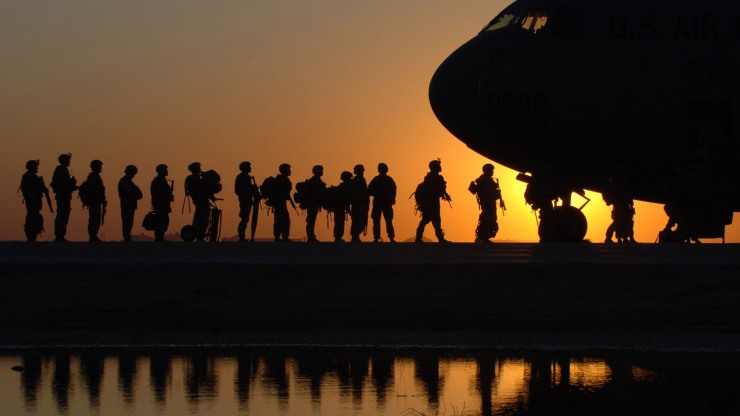
The United States has begun reducing its military footprint in Germany, a move that reflects both immediate political frictions and a longer-term strategic recalibration rather than a single triggering incident.
Some figures says that 5000 troops will be removed, other sources claim that more are to come.
Political tensions between Washington and key European allies have further intensified. Contextually speaking, under Donald Trump’s current mandate, the United States has repeatedly criticized European NATO members and Germany in particular for failing to meet defence spending targets. Berlin’s reluctance to rapidly increase military expenditure, combined with disagreements over energy policy and relations with Russia, has fed a narrative in Washington that the US is disproportionately underwriting European security.
Meanwhile, the US push for a more aggressive posture in the Middle East has not been matched by Germany. As a result, the Pentagon has been shifting its focus toward great-power competition, especially with China, while forces long stationed in Europe—many of them legacy deployments from the Cold War—are increasingly viewed as misaligned with future priorities. Redeployments have therefore been framed as part of a broader “global posture review,” reallocating resources toward the Indo-Pacific or back to the US.
From the American perspective, there is an operational argument: US planners have emphasised flexibility (rotational deployments) over permanent basing, which is the case of the static troops in Germany. Some troops are being brought back to the US, while others are repositioned to Eastern Europe, closer to NATO’s frontline states bordering Russia.
Critics have pushed back by saying that this move “sends a wrong message to Russia” as fewer US troops in Germany could be read in Moscow as a weakening of Western cohesion. American strategists retaliate that this instead suggests that future crises in Europe would be met with rapid reinforcement rather than relying solely on troops already stationed there.
While NATO expresses its movements to “understand the details” of the move (against the backdrop of Trump’s America repeatedly threatening to drop out of NATO entirely), Germany admits that it anticipated this outcome and was not taken by surprise.
Nota bene, Republican themselves in the House and Senate expressed disapproval of the President’s decision.
Beyond military strategy, the intensification of a strain transatlantic relations is very obvious.
