












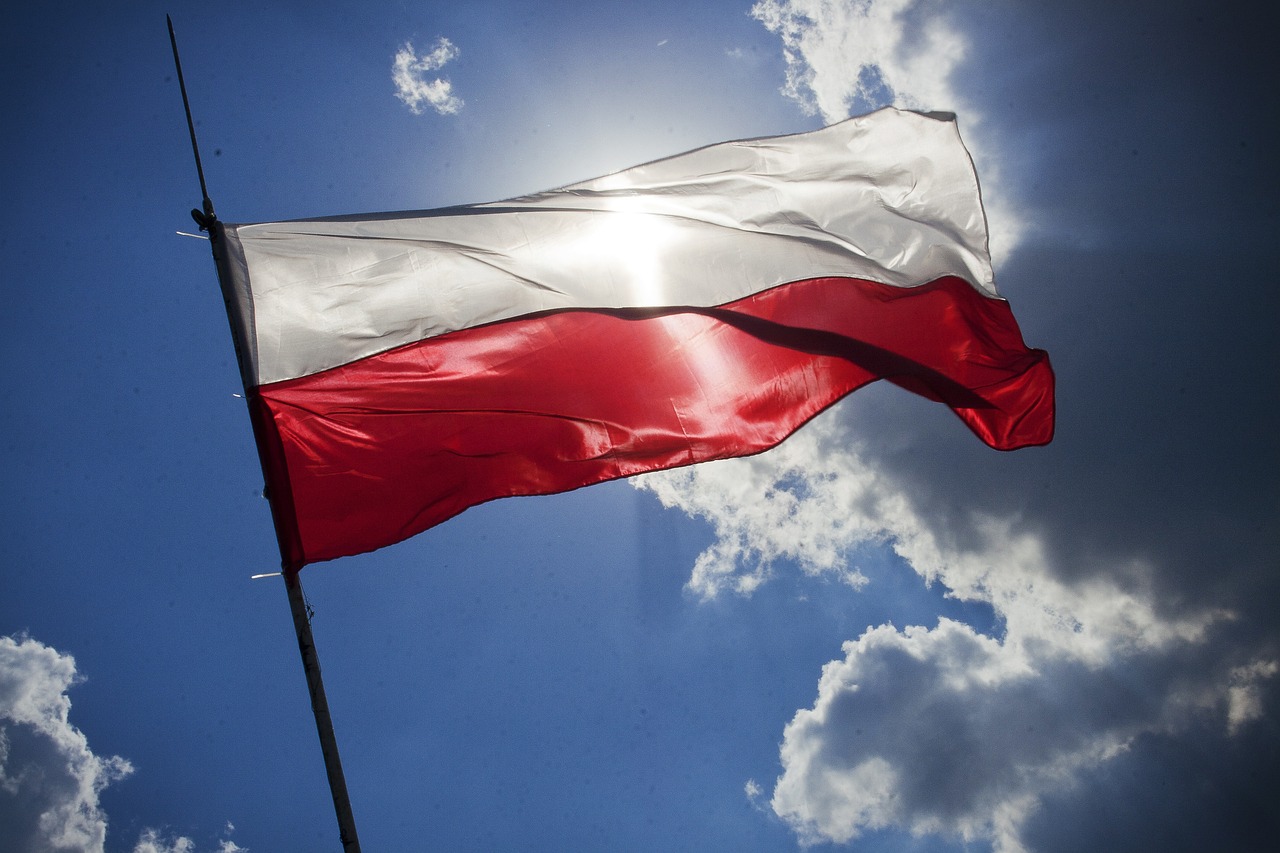
Poland has reached its highest position to date in a key indicator of household living standards across the European Union, surpassing four member states over the past year.
New figures published by Eurostat, which is the EU’s statistical office, demonstrate that Poland has also become the leading performer among the eastern European countries that joined the bloc since 2004.
The ranking is based on Actual Individual Consumption (AIC), a measure that reflects the total value of goods and services consumed by households.
Unlike GDP per capita, which gauges the overall size and strength of an economy, AIC focuses on what individuals actually consume. It includes not only privately purchased goods and services but also those provided by governments and non-profit organizations, such as healthcare and education.
According to Eurostat’s latest data, which adjust for differences in price levels through purchasing power parity (PPP), Poland’s AIC reached 88% of the EU average in 2025, up from 85% the previous year.
The improvement allowed Poland to move ahead of Portugal, Romania and Slovenia, each of which now stands at 86% of the EU average, as well as Lithuania at 87%.
Poland now shares 14th place among EU member states with Malta, both recording 88%, and trails Spain by only four percentage points.
The scale of Poland’s progress becomes even more apparent when viewed over the long term: because when Eurostat first began compiling comparable data in 1995, Poland’s AIC amounted to just 45% of the EU average. The latest figures highlight the significant rise in living standards and consumer prosperity achieved over the last three decades.
For the first time, Poland now ranks ahead of all ten eastern EU member states that joined the bloc after 2004, including Bulgaria, Croatia, the Czech Republic, Estonia, Hungary, Latvia, Lithuania, Romania, Slovakia and Slovenia.
At the opposite end of the ranking, Luxembourg maintained its position at the top with AIC equal to 145% of the EU average, followed by Germany at 120% and the Netherlands at 119%. The lowest levels were recorded in Hungary and Latvia, both at 73%, and Estonia at 74%.
Poland also posted one of the strongest annual improvements in the EU. Its three-percentage-point increase was second only to Bulgaria’s four-point gain. The country also continued closing the gap with Spain, reducing the difference from six percentage points in 2024 to four in 2025.
The broader trend points to a continuing convergence between eastern and western European economies. Over the last decade, the largest increases in AIC relative to the EU average were recorded in Romania, which gained 27 percentage points, Bulgaria with 22 points, and Croatia with 16 points.
Among the countries that entered the EU in 2004, Poland has achieved the strongest improvement since 2015, increasing its AIC by 11 percentage points relative to the EU average. Latvia and Slovenia followed with gains of 10 points each.
Since the collapse of communism in 1989 and the country’s transition to a market-based economy, Poland has consistently ranked among the world’s fastest-growing economies. IMF data show that GDP per capita rose from approximately $2,700 in 1994 to $25,060 in 2024.
The country’s economic expansion is expected to continue. Forecasts suggest that by 2028 Poland could surpass Switzerland to become the world’s 20th-largest economy.
Rising prosperity is also reflected in public sentiment. According to long-running surveys conducted by the state research agency CBOS, a record 39% of Poles now describe themselves as financially comfortable, compared with just 3% in the early 1990s.
At the same time, wealth at the top end of society has expanded rapidly. Real estate consultancy Knight Frank reports that the number of ultra-high-net-worth individuals in Poland has more than doubled in the last five years, representing the fastest growth rate globally. Meanwhile, severe material deprivation has fallen to a record low of just 2%.
