














The local elections on December 7 stood out in terms of how crowded the races were and a remarkable level of absenteeism.
Probably sufficiently large numbers of citizens considered the electoral offer to be disappointing enough, which meant they opted for other Sunday activities rather than going to vote.
Another contributor is the fact that local elections in Romania are held in a single round.
A single round favors the ‘useful vote’ from the start, and those who have the right to vote are sufficient (generally the majority) who are tired of voting ‘usefully” especially if they have to do it from the very beginning.
So, although the voter may have a favorite in the local elections, they will consider it a waste of time and nerves to go to the polls once they are convinced that favorite has no chances anyway (being a relative unknown, an independent or simply coming from a small party).
In addition to this, the single-round election does not cultivate the impression of either genuine competitiveness or polemical attractiveness.
And polarization (in this case it is a constructive one), especially nowadays, is an essential additive in any race of this type. But polarization becomes queen as soon as there is a “big final”, so a second round.
However, the local elections are deprived of a “big final” and, theoretically, it is completely incomprehensible why this happens, since the presidential elections, which most closely resemble the mayoral elections, involve two rounds.
From a practical point of view, of course, there is an explanation. For this discrimination between local elections and presidential elections, it is not the voter who is to blame, but the political class – more precisely, a part of the political class. And even more precisely, first of all the three oldest parties, the Social Democrats (PSD), the Liberal Party (PNL) and the Hungarian UDMR.
A single round is the framework that favors both the big and old parties (the case of PSD and PNL), or the parties with a loyal electorate based on the rare “insoluble” criteria, for example ethnic criteria (the case of the UDMR), even if they are smaller parties.
The three parties have in common a long existence (three decades) on the political scene, during which they were able to arrange solid and numerous fiefdoms (in the case of the PSD and PNL) or fewer but indestructible fiefdoms (in the case of the UDMR).
For these parties, the main stake naturally becomes completely different from the revitalization of democracy through changes that would make voter turnout more attractive and meaningful.
For these parties, the main stake lies in preserving and then expanding their networks of influence and power. It also resides in the preservation of at least the mayoralties they control, because huge sums flow to them from the center, often through mechanisms and on less transparent and objective, but much more political, criteria.
And if this is the main stake, then their reflex, of the parties reluctant to having two rounds of voting, becomes clear: they prevent any reform that could increase competitiveness and competition, they inhibit any possibility of being challenged “from the outside” their status and the ground they occupy. And not only do they want to, but they can too.
However, one thing is increasingly certain: the more the “heavyweights” protect their group interests, including by rejecting the return to two rounds in the local elections, the more the citizens’ adherence to democracy, in its letter and spirit, will be eroded.
This will not in any way mean that people will infinitely accept this kind of defiance, with their arms folded, as a few parties who benefit from the current system continue to accumulate and greedily count their eggs in the basket.
On the contrary, at some point there will also be a reaction, but it will be rather an “insurgent” one, from which everyone will surely lose – both those who are too advantaged today and those who are too wronged.
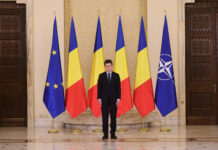
Romania’s Prime Minister Ilie Bolojan, the net winner of Bucharest’s mayoral race
