









- “We are going to run Venezuela until a “safe, proper and judicious transition” can be ensured.
- “We’re going to have our very large United States oil companies – the biggest anywhere in the world – go in, spend billions of dollars, fix the badly broken infrastructure and start making money for the country,”
These are the two main elements from President Donald Trump’s initial statement, made on Saturday after the US military operation to capture Venezuelan dictator Nicolas Maduro.
The third element that cannot be overlooked is also implied by Trump’s tone and by the fact that he ordered this bold operation: the national security strategy, published by the Trump administration at the end of last year, was quickly put into action – under the auspices of both the “Monroe Doctrine” and the “Trump Corollary” (both being central points in that strategy).
As a nation that has struggled for half a century under a communist dictatorship, Romanians cannot help but look with understanding and a sincerely shared joy at the chance of the Venezuelan people to see an autocrat fall from power.
The looting of the national wealth, the extreme impoverishment of the population, the isolation of the country, the terrorization of the people, the imprisonment and liquidation of opponents, the rigging of elections as a national sport, the alliance of Venezuela with the most horrible dictatorships on the planet (Russia, Iran, Cuba, China) – this is the balance sheet of Maduro and his predecessor, the late Hugo Chavez.
Between what Chavez and Maduro promised the population and what they offered them is from day to night, something you can only find in Putin’s Russia, in the Cuba of the Castro brothers and in the Iran of the Mafia theocracy.
And yet, that’s just the surface of the problem. Ordinary Venezuelans are still far from having guarantees that their future will be a bright one, as they hope and as we should hope with them, or as Donald Trump presents it, under his temporary exaltation.
Because yes, the US military operation was a real success, but the political operation is only just starting and nothing guarantees its success.
The U.S. struck two decades ago in Iraq, quickly crushing Saddam’s army and capturing the dictator in Baghdad swiftly.
After the initial invasion, Washington decided to temporarily rule Iraq (what a premium analogy with the next step just announced by Trump in the case of Venezuela!). In Iraq, the U.S. then appointed a governor, set up an entire institutional structure for transition under occupation, and awarded contracts to U.S. companies.
Unfortunately, the political result obtained in Iraq was the opposite of the military one in the initial phase.
Anyone of good faith can only hope that Venezuela in 2020-2030 will not follow the path of Iraq in 2000-2010.
But hopes can be, as we well know, pleasant but also deceptive and woefully inadequate.
Those that criticize Trump’s critics can invoke, in defense of the American president, the fact that there are major differences between Iraq and Venezuela – regional, political, and religious. And they are right.
But it is equally true that post-Maduro Venezuela may be worse, and not better, than post-Saddam Iraq.
Only the future will tell, no matter how triumphalist Donald Trump portrays the present.
On another level, the most general of the Trump administration’s foreign policy philosophy, the problem posed by the U.S. military intervention in Venezuela is a truly dramatic one: the spheres of influence of the nineteenth century are now being resurrected as concretely as possible by the U.S., not just by Russia.
This inclination of today’s White House had already become visible from President Trump’s approach in 2025 to the Russian-Ukrainian war. But starting January 3, 2026, we are no longer talking only about a tendency, but also about state policy formalized and implemented at the military level.
International law, the authentic sovereignty of states, the inviolability of national borders – have all have been blown up by Trump’s America in his action in Venezuela.
As an aside: the current situation is in no way comparable to the US invasion of Afghanistan (the US had just been attacked by jihadists hiding out in Afghanistan; the initial surgical attack was not wrong, but it was America’s subsequent attempt to transform Afghanistan, as a state, society and culture, in its image and likeness that failed).
At this time, Putin’s Russia, which is just waging a war of conquest in Ukraine, and Xi’s China, which is preparing for a similar confrontation in Taiwan, suddenly find themselves at with an advantage thanks to Trump.
The predictable refrain that Putin and Xi will be able to repeat ad nauseam is: “We are doing in Ukraine and we will do in Taiwan exactly what Trump did in Venezuela” to support their own military operations.
Moreover, given Trump’s lack of scruples in his repeated attempts to negotiate the fate of Ukraine in order to boost Washington’s relationship with Moscow, we can no longer totally remove the suspicion of a prior secret Trump-Putin agreement on the Maduro issue as well. The idea being that the Americans will ignore what the Russians are doing in Ukraine and Europe, while the Russians will ignore what the Americans are doing in Venezuela, possibly elsewhere in Latin America as well.
For the Russians, it is a well-known fact that they were well established in Venezuela, and the American operation went, also from this point of view, suspiciously smoothly. In any case, nothing Trump has done so far in relation to Russia is likely to exclude such a scenario.
It is worth adding to this the fact that the more America focuses its attention and resources on the Caribbean-Latin America area, the more this puts Russia in Europe and China in Asia, because America is a superpower, but it does not have unlimited powers – neither in terms of focusing attention, nor in terms of deploying resources.
Last but not least, among the many potential benefits that Russia and China can take advantage of from Trump’s operation in Venezuela, there is also a cold shower for Moscow and Beijing regarding the kidnapping of Maduro from Caracas.
Putin loses another key ally in the space of just over a year: Assad in Syria and Maduro in Venezuela. And over the longer term, we can also add Yanukovych in Ukraine.
For the ‘father of all dictators’ Putin seems increasingly incapable of effectively exercising his ‘parental’ function. At a certain point, he could no longer do anything for Yanukovych and Assad, and their regimes fell. But at least he was able to bring them alive to Russia.
From a certain point, Putin was unable to do anything for Maduro, but the latter did not manage to escape to Russia.
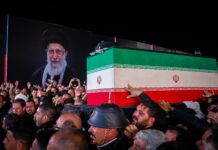
And in Iran, the regime and the ayatollah are not feeling too well either, as the onset of 2026 is marked by violent protests, after the middle of 2025 was marked by unprecedented US-Israeli bombings.
It would not be surprising to witness a growing distrust towards the Kremlin and other dictators protected by the Russians.
Let’s not forget that Africa is full of such specimens, and there the collapse of Wagner and the liquidation of the chief mercenary, Yevgeny Prigozhin, after his attempted coup against Putin, probably destabilized Putin’s protective aura quite significantly.
He will be interested in what echoes the anti-Maduro operation will add on this level as well.
China, on the other hand, risks losing an interesting economic and political footprint at least in a certain part of the Latin American backyard of the United States.
Certainly, Xi will react, but that does not mean that he will do it tomorrow, nor that he will do it in the area where Trump now operates.
Beijing is increasingly capable of surprises and increasingly interested in producing them. But at the same time, the difference between Xi and Trump is that the former knows not to act impulsively, while the latter does not know how to act otherwise than impulsively.
The kidnapping of Maduro is only in the first act. But as spectacular as the kidnapping was, it is very possible that it will not be the most interesting or relevant act.
