














Israel’s attorney-general, a thorn in the side of Netanyahu’s authoritarian overhaul, faces an explosive dismissal effort. For Women’s History Month, we look at a woman making history in her way.
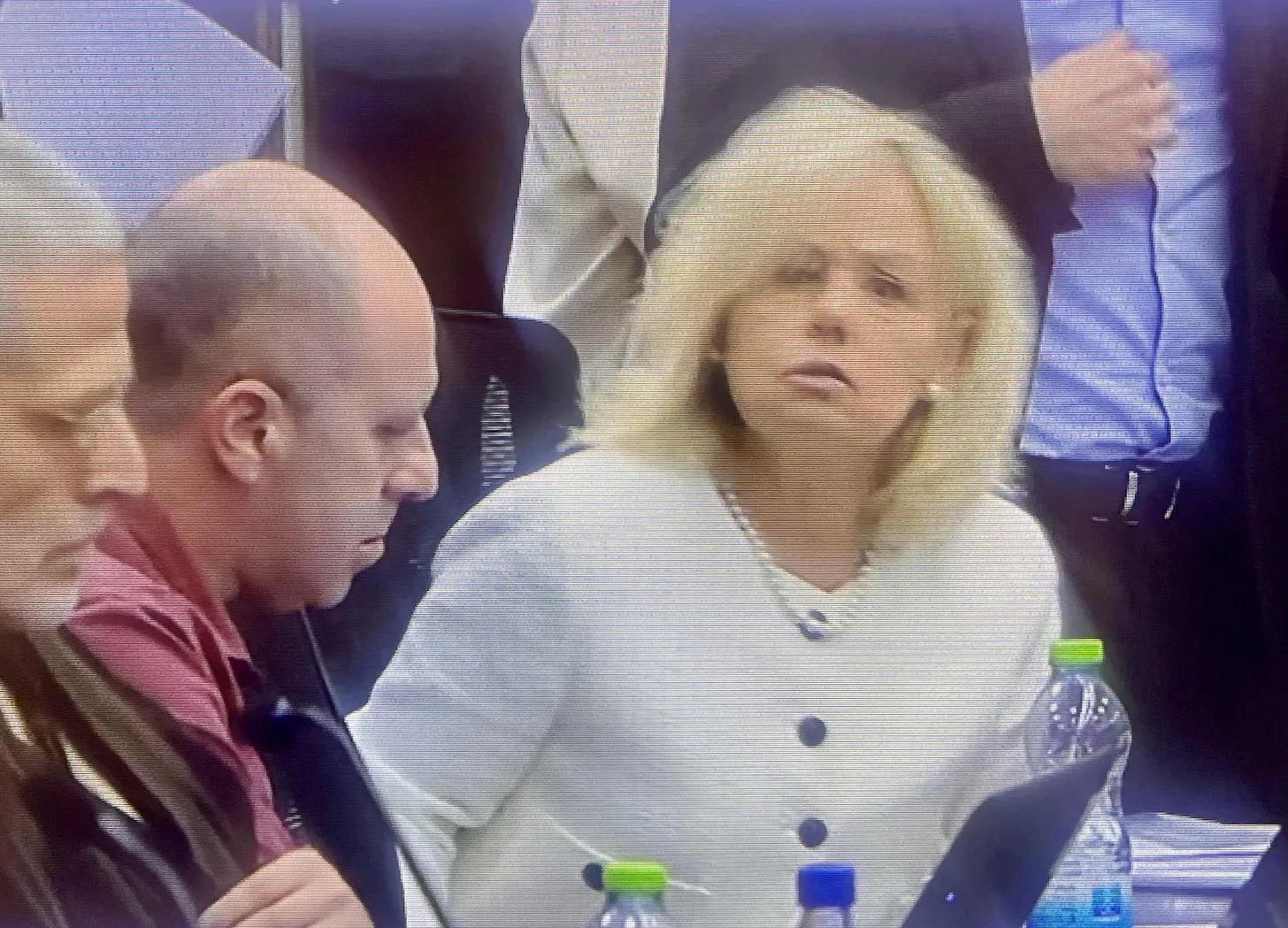
Israel’s independent-minded Attorney General Gali Baharav-Miara finds herself at the epicenter of a political firestorm rocking Benjamin Netanyahu’s government. On Sunday Cabinet ministers met to commence an unprecedented procedure to fire her amid growing protests in the streets, cementing her status as a symbol of Israel’s fragile and besieged democracy.
Netanyahu did not attend the meeting — which he convened — because he is in a conflict of interest due to his ongoing bribery trial, and believes you can fool enough of the people enough of the time. Baharav-Miara herself stayed away as well because, as she wrote to the ministers, the discussion has “no legal validity.” In a scathing letter that elevates this fracas above local politics and into a chapter of the global populist drama actually led by Donald Trump, she wrote that Israel’s “government wants to be above the law” and is trying to promote “not governance, but unlimited authoritarian power.”
In Israel’s corner of the global drama, the government is trying to reboot Netanyahu’s stalled authoritarian overhaul project under the long shadow of national trauma following the October 7 Hamas massacre. To enable this reboot, it is trying to replace both the head of the Shin Bet security agency and Baharav-Miara with compliant loyalists. So as Women’s History Month winds down, we devote this article to a women making a mark on history.
Always such governments claim to represent “the will of the people,” since they were elected at some point; once unchecked power is achieved (say, by Erdogan) then subsequent elections can be “engineered” (last week Erdogan arrested his main political opponent). Even though all polls show he has lost the support of most Israelis, Netanyahu makes this claim all the time and his project fits squarely within the global pattern; the plan, for anyone wondering, is to ban Arab political parties.
In the specific case before us, the attorney general in Israel does hold an authority unmatched in most democracies. Unlike in the United States or many European countries, where attorneys general serve as political appointees under the executive branch, Israel’s version, established in the early years of the state, wields broad independent authority. The position is a hybrid: Not only is the attorney general the chief legal advisor to the government, but they also oversee criminal prosecutions and act as a legal check on executive overreach. This independence is critical given Israel’s unique vulnerabilities—a nation without a formal constitution, a fragile separation of powers, and an ongoing occupation in the West Bank where legal ambiguities enable widespread abuses. In a system where political leaders may attempt to manipulate judicial mechanisms for personal or ideological gain, the attorney general functions as a crucial safeguard.
That tension was on full display in recent days, as Netanyahu announced he would fire Shin Bet Chief Ronen Bar because he has “lost faith” in him—even as the Shin Bet investigates claims of illicit ties to Qatar by officials in his inner circle. Bar fired back saying he would fight for his job and suggesting the PM sought personal loyalty and not fidelity to the laws of the state. Baharav-Miara fired off a letter to Netanyahu saying she would need to first review the reasons for the dismissal and explicitly citing “concerns about illegality and conflict of interest.”
A survey of other government efforts by Baharav-Miara illustrates the same pattern clearly:
- In the ongoing effort to formally exempt Haredim from military service, a key demand of Netanyahu’s coalition partners, she has refused to defend the government before the courts.
- She has opposed a plea deal that would spare Netanyahu from a public confession of guilt in his corruption trial while keeping him in power. She supports expediting Netanyahu’s corruption trial, rejects his attempts to stall it with mediation, and insists that any plea deal must include an admission of guilt.
- She has criticized the government’s blocking of a state commission of inquiry into the October 7 failures, which would likely hold Netanyahu accountable—which was de rigueur in previous such cases and is demanded by an overwhelming majority of the public.
- She has impeded efforts to politicize the Judicial Selection Committee, which chooses Supreme Court justices, and to appoint unqualified loyalists to key positions in government and security agencies.
- She has opposed legislation aimed at neutering the Supreme Court, warning of its dangers to democratic governance. And she has refused to endorse the appointment to high government offices of legally compromised politicians, including Shas leader Aryeh Deri.
- So the proceedings to dismiss Baharav-Miara are no surprise. But achieving this is no simple feat. Even after Sunday’s Cabinet vote to fire her, the move requires the approval of the selection committee that appointed her, which is divided. Trying to replace her without that approval will certainly be struck down by the Supreme Court. Government figures have hinted that they may try anyway. Even if the dismissal efforts falter, the attempt itself serves a purpose. By framing the attorney general and the Supreme Court as obstacles to right-wing governance, Netanyahu fires up his base.Polls show most Israelis oppose her dismissal, though perhaps a third support it; in the broader sense, large majorities oppose the authoritarian overhaul. The presidents of Israel’s eight research universities have warned that their institutions will initiate a strike if she is dismissed, saying such a dismissal would pose an “unprecedented danger to the rule of law” in Israel. Leading former diplomats issued a stern warning against it. The Association for Civil Rights in Israel (ACRI) also voiced strong opposition to the proposed dismissal.As in the United States, some of the greatest outrage at all this comes from former senior conservative who never signed up for a revolutionary trashing of everything except for the authoritarian personality cult. Consider the words Sunday of Dan Meridor, a former justice, finance and deputy prime minister under Netanyahu: “I’ve never seen such a government that all the time tries to test and exceed the limits of the law. This is a government that calls for anarchy (and) ending to the democratic system. Anyone committed to democracy must ask themselves what they did to stop this catastrophe.”As the icing on top, let’s take the sexist overtones in the depth of the fury against Baharav-Miara. In what Haaretz called “the toxic manosphere” of Netanyahu’s coalition, controlled by Orthodox religious parties and overwhelmingly dominated by men, she is a lightning rod — an infuriating reminder of a previous, socialist Israel more typified by gender equality.
The 65-year-old Baharav-Miara shows no sign of bending, making her a formidable adversary. Her professional journey includes more than three decades within the Justice Ministry, culminating in her leadership of the Tel Aviv Civil Division from 2006 to 2015. She then transitioned to the private sector before assuming her current position in the eye of a sudden storm.
Baharav-Miara is not the first attorney general to stand in the way of a prime minister’s agenda. In 2019, Avichai Mandelblit infamously indicted Netanyahu for bribery and fraud, turning against the man who had appointed him. Yitzhak Zamir, in the 1980s, caused an uproar by insisting on investigating Shin Bet’s role in the 300 Bus Affair in which the perpetrators of a foiled bus hijacking were killed upon capture. Elyakim Rubinstein and Meni Mazuz both clashed with governments over corruption cases.
But Netanyahu is the first to try to fire one. By resisting, Baharav-Miara has become a symbol of the struggle for Israel’s soul. And as the first woman attorney general, she reflects another struggle: whether strong, independent women will be able to hold power. The answer must be a resounding yes.
Why did the Gaza ceasefire collapse? Netanyahu’s survival politics and Trump’s volatility
