












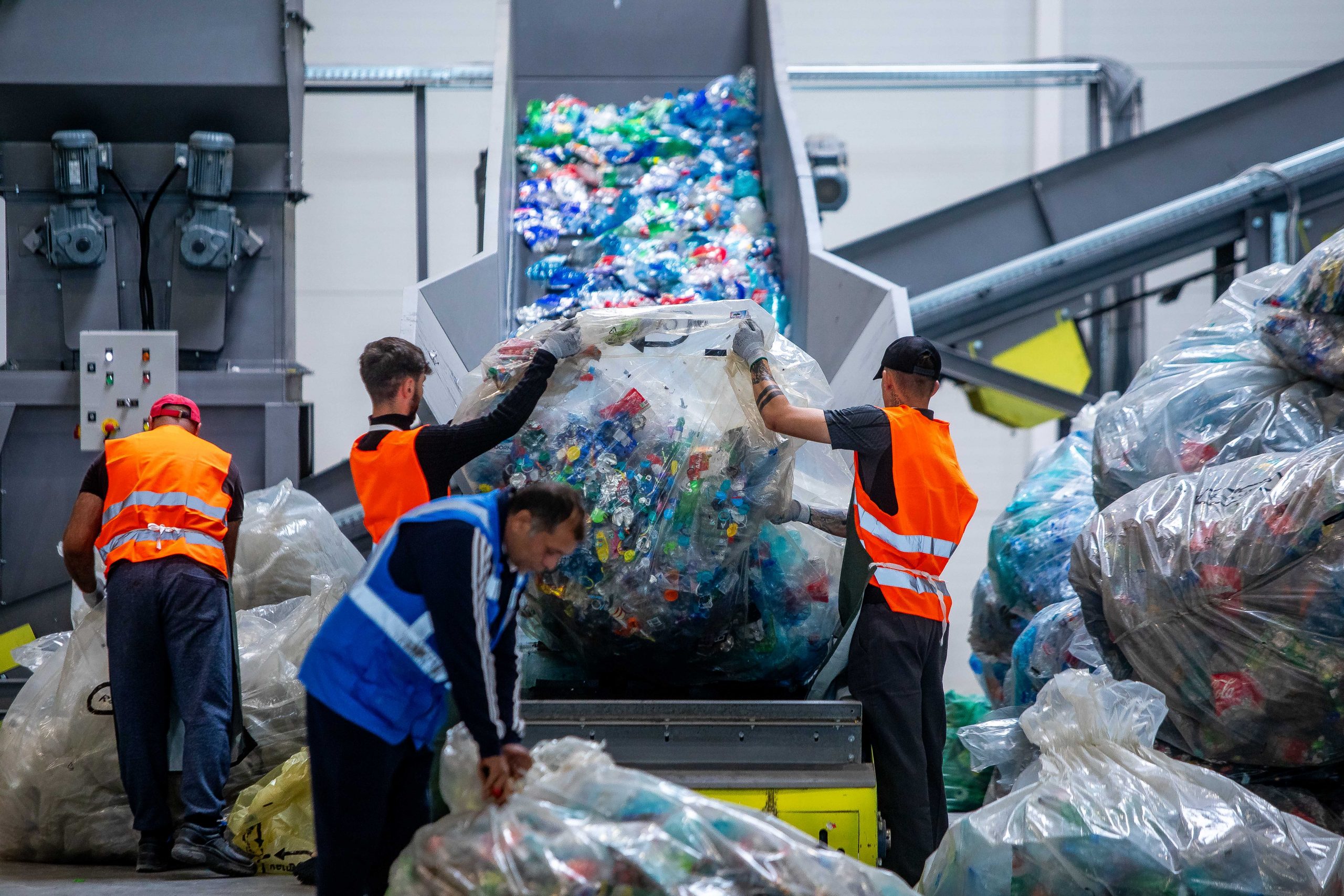
- Romania’s recycling program, RetuRO, has successfully increased the country’s recycling rate from 12% to 94% in two years, while in January the return rate was 106%
- RetuRO works by charging a small deposit (0.50 leu) on bottled and canned drinks, which is refunded when the empty container is returned.
- The success of Romania’s recycling program has significantly reduced waste and also improved the environment, but has also added over $346 million to the country’s GDP and created more than 2,000 new jobs, reported.
Romania used to be Europe’s worst recycler with some three-quarters of the country’s waste ending up int landfills, or tossed into rivers, forests and roadsides which were clogged with dumped plastic.
The secret to Romania’s success wasn’t complicated: cash for trash.
RetuRO came up with the solution which has been applied nationwide in retailers and supermarkets. It works like this: when you buy a bottled or canned drink in Romania, you pay an extra deposit of .50 Romanian leu, about 10 eurocents.
If you bring the empty container back to the store, you get your money back. Most people return to supermarkets sackloads of containers which are dumped in a machine that scans the container, crushes it and gives a credit on the spot.
The program accepts plastic, aluminum, and glass. Almost 9 million containers have been returned since the scheme was launched in November 2023 as a partnership between the Romanian government, beverage producers, and retailers, giving everyone a stake in the game.
Within months the recycling numbers soared and there was a shift in people’s mentalities and containers began to be treated as cash.
In January 2026, the return topped 108%, as Romanians returned more containers than were sold that month, as people rummaged around for old bottles.
Currently, six out of ten people do it every week.
You no longer see a bottle anywhere: on the streets, you can often see people rummaging through public rubbish bins in search of dumped recyclables.
