














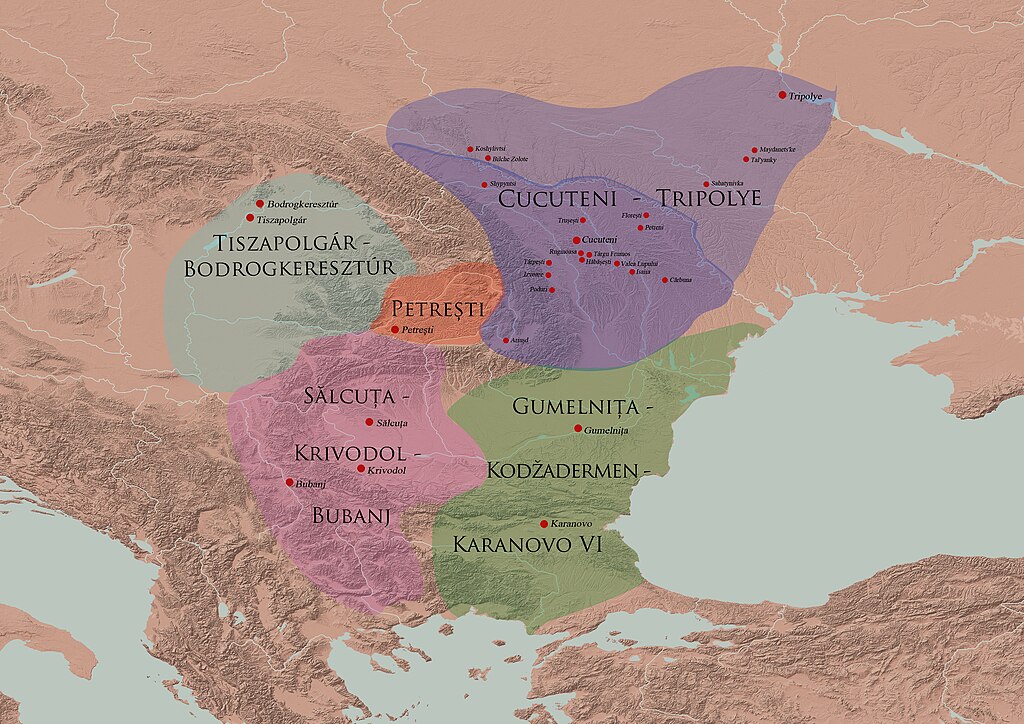
Ukraine, Moldova and Romania are preparing to propose the Trypillia culture for inclusion on the UNESCO World Heritage List, the Ukrainian Ministry of Culture and Strategic Communications said on September 18.
The three countries formalized their commitment in a memorandum signed in the Moldovan capital, Chișinău. The proposed heritage object will be titled “The Cultural Complex Precucuteni–Ariuşd–Cucuteni–Trypillia: Architectural Heritage.”
“This is our shared heritage and a true treasure of humanity. This culture, which flourished more than 6,000 years ago, offers a unique understanding of early urbanism, culture, and the spiritual life of our ancestors,” said acting Minister of Culture and Strategic Communications, Tetiana Berezhna, according to United24media.
Ukraine currently has eight UNESCO World Heritage sites, including Saint Sophia Cathedral and Kyiv-Pechersk Lavra in Kyiv, the historic centers of Odesa and Lviv, the ancient beech forests of the Carpathians, the Residence of Bukovinian and Dalmatian Metropolitans in Cernauti, and the ancient city of Chersonesus, in Crimea.
The Trypillia also known as Cucuteni culture was a Neolithic and Eneolithic archaeological culture that existed between roughly 5400–2700 BCE across present-day Ukraine, Moldova, and Romania.
It takes its name from the village of Trypillia near Kyiv, where archaeologist Vikentiy Khvoika discovered a settlement in the late 19th century. In Romania, it is known as the Cucuteni culture after the village where it was found
The origins of the Trypillia people are not fully established, though many archaeologists link them to the Balkans.
Their economy was based on growing wheat, barley, millet, peas, and flax as well as rearing cattle, sheep, goats, and pigs. Their houses were built of wood and clay.
Some ornate ceramics and terracotta figurines have survived, providing clues to the social and spiritual life of the culture.
https://universul.net/ancient-skeletons-unearthed-from-beneath-iasi-hospital/
