












The wide range of possibilities include Trump declaring there’s been enough of a regime change already and resuming talks – unless the protests resume
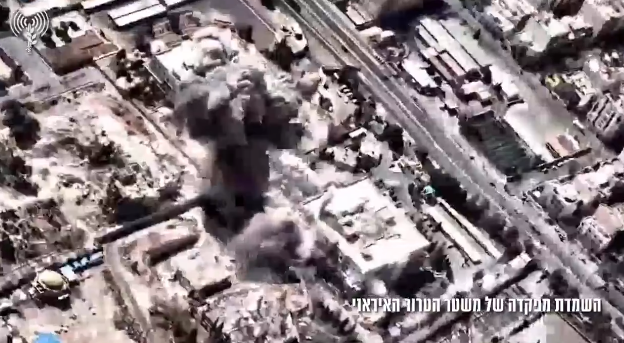
The opening phase of the joint US–Israeli campaign against Iran’s leadership has been, by any military measure, spectacular. In a matter of hours, the upper spine of the Islamic Republic was shattered. The Supreme Leader is dead. Scores of senior military, Revolutionary Guard and political leaders are gone. Israeli aircraft again operate over Iranian skies with near impunity. Washington and Jerusalem have demonstrated not only capability but coordination.
But the regime — decapitated though it may be — continues to fire back. Missiles still strike toward Israel, where 10 people were killed this weekend. Drones still target US allies and bases in the Gulf. Tehran is signaling that it will not collapse simply because its most senior figures have been eliminated. Could be a bluff, or wishful thinking, or good strategy, or a total lie.
Either way, the Islamic Republic was built precisely to survive the loss of individuals. It is a system, not merely a personality cult. With 90 million citizens, deep ideological infrastructure, layered security organs and a ruthless willingness to massacre challengers it can regenerate leadership cadres, even if they are less experienced and more brittle than their predecessors.
So what happens now? The range of possible outcomes is very wide, and contains some truly fascinating possibilities, with implications spanning the globe (hint: there is a China element as well).
At one extreme lies the ideal scenario: the regime fractures. The Revolutionary Guard wavers. The army refuses to suppress mass protests. A transitional authority emerges that seeks reintegration with the West, signs peace agreements with Israel and others, abandons nuclear ambitions, ends ballistic missile expansion, and cuts ties with proxy militias such as Hezbollah and Hamas. Iran reorients itself as a normal regional power — no longer exporting revolution, no longer menacing its neighbors, no longer underwriting destabilizing militias.
It is not impossible. History offers moments when authoritarian systems collapsed quickly once fear shifted sides. The fall of the Soviet Union was one such case – the collapse was total, and the reorientation stunning, internally and externally (until Vladimir Putin came along in Russia, badly shifting the narrative).
One way to bring this about is for Israel and the United States to declare with clarity that they control the skies over Iran – which, by Sunday, appears to be the case – and to call for a revolution openly. Stranger things may have happened, but I am not sure I remember. Yet these are strange times.
At the other extreme lies the nightmare: the regime doubles down. It absorbs losses, promotes harder men, and frames survival itself as victory – no matter the cost. It continues missile and drone attacks, broadens the theater, and counts on ideological zeal to outlast Western political attention spans (and Donald Trump’s patience for politically unhelpful entanglements of dubious legality).
The war drags on for weeks or months. Civilian casualties mount across the region. Energy markets convulse. The United States, initially seeking decisive coercion, finds itself pulled into a grinding and open-ended confrontation. No meaningful internal rebellion materializes. The security apparatus holds. The Middle East edges toward general conflagration.
That too is possible—but unlikely.
The most plausible path lies somewhere in between.
The Islamic Republic’s hardliners have an overriding incentive: survival. The system is designed to endure the departure — even violent removal — of individual leaders. It has historically shown tactical flexibility when cornered. At critical junctures, it has elevated so-called moderates, softened rhetoric, or adjusted policy without relinquishing ultimate ideological control.
That, indeed, is why the now departed Ayatollah Ali Khamenei agreed to pause the nuclear weapons program in favor of a deal with President Obama and other Western powers in 2015.
This may be another such moment.
One should assume that Tehran’s strategy now includes waiting out Trump. It just might work, because already, Washington and Jerusalem can plausibly claim enormous success: the destruction of the majority of senior leadership, degradation of missile systems, reassertion of air dominance, and the precedent of overt US–Israeli joint action that the region has — at least for now — absorbed.
It is fair to say that there are few (if any) precedents in modern history to what we have seen this weekend. From Trump’s perspective, there is a conceivable off-ramp. He could declare the elimination of Iran’s top leadership constitutes a form of regime change in itself. Its most defiant architects are gone. If Tehran signals interest in new talks, the US may test whether the shock has produced flexibility. Whether Iran has “learned its lesson.”
It is difficult to imagine Iran conceding everything: abandoning all significant uranium enrichment, dismantling ballistic missile capabilities, and terminating support for its regional proxies in one stroke. More likely, Iranian negotiators would probe for partial relief, incremental concessions, and room to maneuver — testing whether Trump can be engaged, flattered, or divided from Israel.
But for Trump, the calculus is relatively low-cost. If negotiations stall or Tehran reverts to defiance, military pressure can resume. The infrastructure for renewed strikes would already be in place.
For Israel, too, a halt now would constitute a strategic watershed. Not only did it manifest an unbelievable scale of penetration into Iran’s leadership and command structure, but it again dominated Iran’s skies, dismantled of key military assets, and – critically – normalized overt joint warfare with the United States. It is no exaggeration to assert that all of this reshapes deterrence across the region.
The message is unmistakable: the alliance can reach anywhere, and the world will not intervene to stop it. Despite criticism here and there, it was clear that much of Europe and the Arab world is relieved to have Khamenei gone. This, even though the protagonists are the problematic Trump and Netanyahu, and even though there was no green light from the US Security Council or even Congress.
What about Iran, then?
A chastened regime may calculate that mere survival is sufficient, enabling it to claim victory by enduring. It may attempt to portray the loss of senior figures as martyrdom while emphasizing that the state still stands. It’s nonsense, of course – but that, certainly, is not without precedent. They, for the new-old regime, will be presenting the outcome domestically as proof that resistance is futile.
The cynical, utilitarian Trump might not care. There is an analogy to the abduction of Venezuela’s Nicolas Maduro in the fall – which resulted not just in the restoration of democracy but in the domestication of the Chavista mafia – with Trump as the capo di tutti capi.
A collapse of the regime, meanwhile, could have unintended implications.
For one thing, it could cause dangerous fragmentation. Kurdish factions have already signaled autonomy ambitions. Iran’s 90 million population may include more ethnic Azeris – up to 20 million – that neighboring Azerbaijan itself. Instability from contested zones could spill over Iran’s borders.
Hovering above all this is a larger strategic layer. China buys over 80 percent of Iran’s oil exports, at deep discounts, keeping the Islamic Republic afloat. Iran has been a structural asset in Beijing’s strategy, keep the West distracted. If the Islamic Republic fractures or reorients, the implications are vast: for example, if war erupts over Taiwan, harming China’s oil flows in the area, it will need Iran more than ever. Except China to do all it can to rescue the regime.
Much, right now, depends on the Iranian public. In one scenario, the United States (and Israel) announce that they totally control the skies, and invite the masses to take over the streets and government, and annouce that they will hit any forces challenging them from the air. Such a thing would be extraordinary and extraordinarily dangerous — but these are not normal times.
Either way, if mass protests erupt now, Trump will struggle to abandon the Iranian people even if that is his instinct. He surely knows that bringing down the Islamic Republic, if it’s there for the taking, is his chance for a level of historical impact that he could truly brag about — for once without looking ridiculous.
Israel and US launch strikes on Iran as Trump confirms ‘major combat operations’
