











It would be a huge benefit for Iranians, the region and the world – but too bad that Trump and Netanyahu are so compromised at a moment when credibility is needed
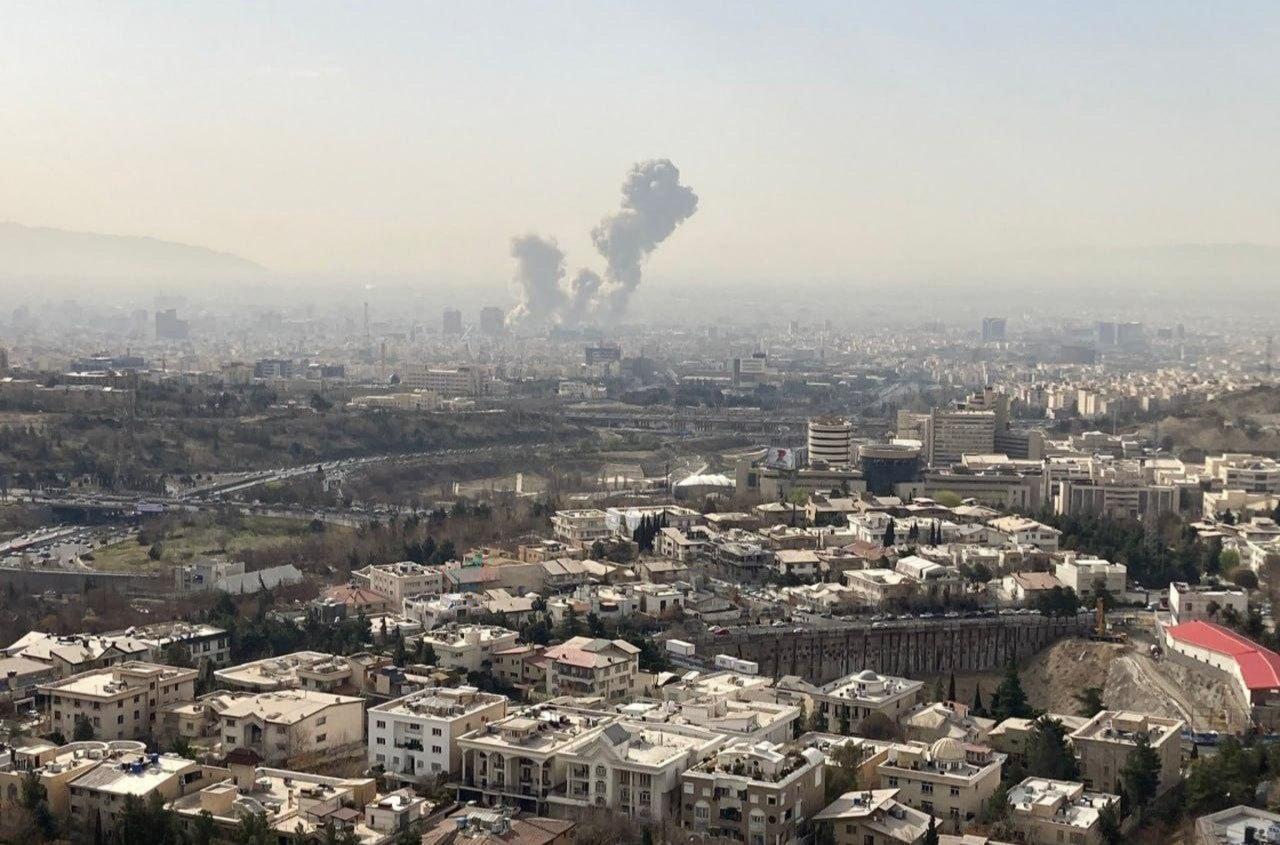
We were awoken just after 8 a.m. by a siren, followed within minutes by the notification that there were in fact no incoming missiles. It appeared the Israeli government had decided to use the alert system as a kind of national alarm clock, to let the country know that the war had begun. For the second time in nine months, Israel had attacked Iran. This time it was in coordination with the United States. And the goal, remarkably, appears to be regime change.
Within the hour we had already been sent to the shelter by an actual missile alert. By midday, we would make that trip five times. It has continued all day, and there is a siren going off right now. The country, as far as one can tell from the stairwells and the WhatsApp groups, is stoic. Irritated, tired, but stoic. This is absurd, people say, but they lace up their shoes and head downstairs anyway. Or to the reinforced safe rooms that the lucky few have.
UPGRADE TO ASK QUESTIONS LATER HERE
The arguments initially presented for this round are not, on the surface, overwhelming. After the 12-day war in June, Benjamin Netanyahu declared that Iran’s nuclear and ballistic missile programs had been set back many years, that the major threat to Israel’s existence had been removed “for generations.” Eight month is a generation perhaps for hedgehogs. Donald Trump, after American B-2 bombers joined on the final day, spoke repeatedly of the nuclear threat being “obliterated” at Fordo, Natanz and Isfahan. He bristled at intelligence assessments suggesting otherwise.
Trump, meanwhile, demanded that Iran forswear nuclear weapons; but Tehran has long said it does not seek them, even as it enriched uranium to levels with no civilian justification. No one believes them. But they have been saying it. And there has been little public evidence that Iran rebuilt that threat in the interim. Netanyahu said around midday in a recorded radio address that new capabilities were being placed underground. Maybe, but hardly new.
In the shelter, I had time to contemplate all this with the same cast of neighbors I got to know rather well in June. The divorced lawyer and her boyfriend. The mathematics divorcee with her enormous dog, which takes up the space of two folding chairs. The sweet elderly couple who sit holding hands, as if the room were a train platform and they might be separated. The religious French family from upstairs preparing to celebrate a son’s eighteenth birthday; the mother, improbably, in her finest dress at nine in the morning. Everyone bleary-eyed. Everyone attempting humor. Some trepidation, but not much.
At one point a commotion erupted. Someone had noticed that a shop in the building had installed an air-conditioning unit in such a way that it partially blocked the emergency exit from the underground shelter. The prospect of being herded underground because of missiles while potentially trapped was not exactly welcome. My wife calmly announced she would deal with the management company first thing Sunday morning. I know her. She will.
So why now? If the programs were crippled in June, what changed? One possible answer lies not in centrifuges but in politics. It is, basically, all about the protests that erupted in January, and the claims that Iran killed 32,000 people to stamp them out. In his State of the Union speech last week, Trump embraced that figure.
Trump had boxed himself in last month when he told Iranian protesters that “help is on it way.” After many thousands were then reportedly massacred, Trump rightly took heat for having encouraged and then abandoned them. He was made to look ridiculous, and – to paraphrase The Godfather — a man in his position cannot afford to look ridiculous.
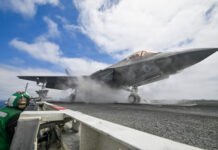
In the interim, the United States steadily built up an armada in the region. Ships and planes accumulated in a way that was slow, but deliberate and ultimately overwhelming. It began to look like the kind of force that is not likely to go unused.
Still, such a war is bound to be risky. Iran has already fired not only at Isreal but several Gulf nations and has apparently blocked the Strait of Hormuz — through which perhaps a fifth of the world’s oil transits. At this point, the only reasonable argument for assuming such risks – casualties, disruption in the oil markets, escalation and so on – is regime change.
That idea has a grim history. It rarely works as intended. It is unpredictable, destabilizing, morally fraught. The record in the Middle East is not encouraging. The legal right to do it is debatable at best. But there are exceptions, and the Islamic Republic, in its 47 years, has made a compelling case for being one.
First, because its internal repression is ferocious. Protesters are shot or imprisoned in numbers that make gradual reform a fantasy. Short of a palace coup, the Iranian people have little chance of dislodging their rulers on their own.
Second, because Iran has destabilized the region for decades through proxy militias trying to spread jihadism: Hezbollah in Lebanon, the Houthis in Yemen, Shiite militias in Iraq, Palestinian Islamic Jihad and Hamas. Hezbollah helped prop up Bashar al-Assad’s regime in Syria. Hamas’s October 7 attack ignited a war that left tens of thousands dead in Gaza and over a thousand murdered in Israel. Not every evil in the region can be laid at Iran’s door, but a significant share can, and much of it has victimized fellow Muslims.
There is a wide consensus in Israel that the Iranian regime is a menace. Many Israelis believe that if it fell, it would be good for Israel and good for the Iranian people. They harbor a romantic notion that a democratic Iran would become a partner, even an ally, and that ordinary Iranians would thank Israel for helping to bring about that outcome. Whether that is naive is another matter, but the distinction between regime and people is real in the Israeli mind.
And in what was perhaps the only surprise of the day – for the attack itself was widely telegraphed – Trump seemed to set regime change as the true aim of the operation in his comments announcing the operation. In his characteristic rambling, self-congratulatory style, he urged Iranians to take over their government – and catalogued the crimes of the regime, going all the way back to the 1979-80 hostage crisis at the US Embassy.
This from a man whose National Security Strategy, released in December. downplayed democracy promotion and who has shown little affection for liberal norms at home or abroad. Many assumed he wanted only some agreement he could spin as a win – yet he instead seems intent on transforming Iran.
Netanyahu also called on the Iranians to seize the moment.
Might regime change actually work? Without a ground invasion — which is neither contemplated nor remotely plausible — the odds seem low. Authoritarian systems are designed precisely to absorb shocks. But if enough of the regime would have to be symbolically and practically shattered — key figures eliminated, command centers wrecked, the aura of invulnerability broken — that mass protests resume at a scale the authorities cannot contain.
Throughout the day, there have been unconfirmed reported of a series of major Iranian military and political figures eliminated — including, tantalizingly, the Supreme leader, Ali Khamenei.
It is odd to be discussing the state assassinations of leaders, as I told Claire Berlinski in a special edition of our podcast, Critical Conditions.
On the other hand, she noted, it’s also hard to think of a person who caused more material damage in the world in recent decades, other than Putin. Trump, who we complain about quite a bit, really cannot hold a candle to either. Maybe Xi.
Either way, the calculation appears to be that sustained external pressure, combined with visible regime weakness, could tip internal dynamics. A military already stretched by external attack might find itself unable, or unwilling, to suppress millions in the streets. What follows would not be a popular revolution in the romantic sense but something closer to a palace coup: factions within the system deciding survival requires abandoning the clerical leadership.
Trump’s rhetoric suggested precisely this. His call for the Revolutionary Guard to stand down, coupled with promises of amnesty, is an attempt to split the regime from within, to persuade those with guns that their future lies in defecting rather than fighting. It could work – because that is how hated the regime actually is.
It would have been better for any such action to have gotten the green light from the United Nations Security Council. But – even beyond Trump’s disrespect for the organization – that body is paralyzed by the veto power of Russia, Iran’s sometimes ally.
Moreover, all of this would be easier to deal with if the leaderships in Israel and the United States were trusted at anywhere near a normal level. But we are dealing with Trump and Netanyahu.
Trump, it need hardly even be said, has made dishonesty a kind of performance art. He is the most determined dissembler to hold the American presidency, as far as I can tell. It has become something of a joke, in America and across the world. In a moment like this, it is not a joke. So in a crisis that could reshape the region, there is no reliable way to know if his claims are true. Moreover, he is knee deep in poor poll numbers, unpopular policies and one massive Epstein scandal.
Something even worse can be said of Netanyahu, who is on trial for bribery and trailing badly in the polls ahead of elections that must be held by October and could come sooner. It is axiomatic for many Israelis that he would do anything to cling to power, including starting another war.
So these two men, each viewed by large portions of their publics as self-interested and manipulative, now preside over a conflict that could be ruinous.
And yet there is another astonishing layer. Trump, who has damaged America’s standing, abandoned Ukraine, expressed admiration for Vladimir Putin and rattled NATO with talk of seizing Greenland from Denmark, may be on the verge of a historic achievement. If the Iranian regime were to fall with American assistance, it would rank among the most consequential geopolitical events of the past half-century, perhaps second only to the collapse of Soviet communism. Oddly, I am old enough to have witnessed that as well, as a your correspondent for the Associated Press.
Back in the shelter, there is a massive improvement relative to June: wifi has been installed, thanks to my tireless wife. The dog is still panting, the elderly couple still holds hands, the air-conditioning unit still blocking the exit, the French mother is now checking her phone between sirens.
It is possible to feel two contradictory things at once. This might be a reckless, perhaps even insane action launched by unworthy leaders. And it might, just possibly, change everything for the better.
