



Portugal celebrated its national day on Thursday at Romania’s National Art Museum with fado music and Portuguese cuisine in an evening to mark 40 years since Lisbon signed the European Union Accession Treaty.
On June 12, 1985, “Portugal took a decisive step towards consolidating its hard-earned and then infant democracy; towards economic stability, sustainability, and prosperity; towards the Rule of Law and freedom for all,” said Ambassador Paulo Cunha Alves in a speech, adding his country “consciously left behind a past marked by obscurantism, censorship, and fascism.”
“Today’s challenges are numerous. The rise of extreme right forces all around Europe and in the so-called West is putting a strain on the hard-fought liberties, rights, and responsibilities that we have become accustomed to, and that define our way of life,” he warned.
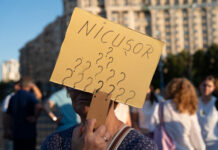
His words, less than a month after the victory of pro-European Nicusor Dan to the Romania presidency, resonated with many. Dan, 55, scored a stunning and decisive upset against nationalist frontrunner George Simion in the May 18 runoff, as voters seemed poised to reject EU integration.
Ambassador Cunha Alves went on to underscore the benefits of EU membership that began when Lisbon signed the Accession Treaty in a speech to some 300 guests who included diplomats, government and military officials, members of Romania’s royal household, local Portuguese nationals and friends of Portugal.
“Notwithstanding the many challenges that the EU integration process brought, the last four decades have been instrumental in the transformation of Portuguese society, marked by economic growth, social and cultural development, and educational accomplishments, among many other benefits of EU membership.”
His speech also addressed international conflicts in Ukraine and Gaza.
“Russia’s brutal, illegal, and unprovoked war of aggression against Ukraine continues and remains a direct threat to the collective European security architecture,” he said, reflecting NATO and EU’s position on the conflict.
He also called for a cease-fire in Gaza and the resumption of humanitarian aid to the stricken population.
“The ongoing humanitarian catastrophe that ravages the population of Gaza is likewise an enormous challenge for the international community. We have been united in repeatedly calling for the need for humanitarian aid to be resumed and delivered at scale. Furthermore, only a cease-fire and a return to negotiations may allow for the implementation of the two-state solution principle,” he said.
After the speech, guests were serenaded with fado music by Senza, a Portuguese band who invited guests to dance and clap to the live music.
Guests then sampled Portuguese delicacies including the famous bacalhau com natas_ a dish of cod fish with potato, cream and pasteis de nata, sweet egg custard tarts and brigadeiro chocolate cake.
The National Day celebration, known as the Camões, marked 51 years since the Atlantic nation got rid of a military dictatorship.
Portugal Day marks the day of the death of national poet Luis de Camões on June 10, 1580. A year after the Carnation Revolution on April 25, 1974 which overthrew a right-wing regime, the holiday became known as the Day of Portugal, Camões.
Ambassador Paulo Cunha Alves’s speech in full:
Welcome to the celebration of the Day of Portugal, Camões, and the Portuguese Communities. National Days are always special due to their significance to our national identity. In the case of Portugal, our National Day marks the passing away of the most celebrated Portuguese poet, Luís de Camões.
However, today is also a very special day for Portugal for another landmark reason. Precisely 40 years ago, on the 12th of June 1985, Portugal signed the Treaty of Accession to the then European Economic Community, now the EU.
On that day, Portugal took a decisive step towards consolidating its hard-earned and then infant democracy; towards economic stability, sustainability, and prosperity; towards the Rule of Law and freedom for all. Portugal took a step towards modernity, consciously leaving behind a past marked by obscurantism, censorship, and fascism.
Notwithstanding the many challenges that the EU integration process brought, the last four decades have been instrumental in the transformation of Portuguese society, marked by economic growth, social and cultural development, and educational accomplishments, among many other benefits of EU membership.
This step also helped consolidate Portugal’s place within the European family, as part of a collective which, through the revolutionary concept of shared sovereignty, seeks to assert its place in the world through the promotion of democratic values, presenting itself as an indispensable force to address the challenges that we face today.
And today’s challenges are numerous. The rise of extreme right forces all around Europe and in the so-called West is putting a strain on the hard-fought liberties, rights, and responsibilities that we have become accustomed to, and that define our way of life.
War ravages too many parts of the world. Russia’s brutal, illegal, and unprovoked war of aggression against Ukraine continues and remains a direct threat to the collective European security architecture. We fully condemn Russia’s actions and stand wholeheartedly with Ukraine.
The ongoing humanitarian catastrophe that ravages the population of Gaza is likewise an enormous challenge for the international community. We have been united in repeatedly calling for the need for humanitarian aid to be resumed and delivered at scale. Furthermore, only a cease-fire and a return to negotiations may allow for the implementation of the two-state solution principle.
Multilateralism is at the core of Portugal’s foreign policy. We have a longstanding tradition of striving to strengthen the rules-based international order, underpinned by the UN Charter. The stability and consistency of this position make us a reliable partner that privileges dialogue with all States on equal terms.
For this, among other reasons, Portugal is running for a seat as a non-permanent member at the United Nations Security Council for the 2027-2028 mandate. Under the motto “Prevent, Partner, Protect”, we will strive to strengthen mediation and preventive diplomacy efforts; to promote further normative work around the climate-peace-security nexus; advance crucial agendas such as Women & Youth, Peace and Security, and Children and Armed Conflict; advocate for greater attention to new and emerging challenges; and to call for a more representative, inclusive and effective Security Council.
Naturally, to advance and advocate for these causes, we also need to rely on our partners, Allies, and friends. Portugal is happy to be able to count on Romania as one of its closest partners and friends.
I’m confident to say that, at this moment, the bilateral relationship between Portugal and Romania is experiencing a golden era. Over the last 12 months, Portugal and Romania have witnessed an intensification of the already excellent bilateral links that we have been experiencing over the past decade.
On the economic side, we are bearing witness to a continued and sustained increase in the presence of Portuguese companies in Romania, where they have found a market of opportunities to do business. To the already established companies in the construction and agricultural sectors, as in the renewable energy field, we are now seeing increased investments in the IT, banking, and aviation sectors. I am happy to note that more and more Portuguese businesses, and consequently, more Portuguese people, are finding a home in Romania. The Embassy of Portugal, through its AICEP Office, stands ready to solidify these efforts.
I am also happy to highlight that the first Portuguese community association in Romania – the Academia do Bacalhau de Bucareste – was established last April. Truly, this is a sign of a thriving and solid community.
On the political level, the intensification of the regular high-level meetings and contacts between the Romanian and Portuguese authorities and government continues, both here in Bucharest and Lisbon. I highlight the visit of the Portuguese Minister of Defence to Bucharest last October, where the mutual deep trust, understanding, and appreciation between our countries were on full display.
ENDS
Portugal’s bilateral relationship with Romania has particularly flourished in the defence field. This is evident in the establishment of the Defence Attaché Office within our Embassy, demonstrating our commitment to Romania.
Portugal has its strongest military presence outside of its borders in Romania. That presence has been reinforced over the last few months. It is part of our commitment to Romania, to NATO, and the European security architecture. I salute the Portuguese military commanders here present, as well as their Romanian counterparts, who have gone above and beyond in how they have received our soldiers.
These are all very important, but the relationship between states must be supported by a strong connection among their peoples. As the Ambassador of Portugal to Romania, I have made fostering people-to-people contacts a cornerstone of Portuguese Romanian relations. This year, the Portuguese Embassy, with Camões Institute, has sought to bring this about by designing and implementing an ambitious cultural programme to bring together Romanian and Portuguese citizens and promoting an increased intercultural exchange and knowledge sharing.
We’ve launched a Portuguese Language Learning Centre in Iasi, and we’re well on track to open another such Centre in Brasov. We have established Portuguese language learning in two more high schools in the capital, while also setting up Portuguese language learning opportunities for children in the diaspora. As such, we continuously expand our network of Portuguese language learning, encompassing all age groups.
Together with the Embassy of Brazil, we organised, in Timisoara, the first ever Portuguese Language Film Festival, where movies from Angola, Mozambique, Brazil, and Portugal were shown to the Romanian public to celebrate the World Day of Portuguese Language.
Furthermore, we were invited by the Romanian Editors Association to be the guest of honour country for this year’s edition of the International Book Festival of Romania. Over 5 days, more than 100,000 people descended upon our stand in Rom Expo to experience the best in Portuguese literature.
It was a resounding success, with Portuguese books, translated into Romanian, occupying 4 spots in the top ten books sold at Bookfest. The interest was genuine and overwhelming, and I was heartened by the level of participation by a Romanian audience that was so deeply interested in the Portuguese language and literature.
And that brings us to tonight, where we offer you, dear guests, a musical concert developed by Senza, a Portuguese band that blends sounds from the Lusophone world, who tonight will also pay a homage to Carlos Paredes, whose centenary we celebrate this year.
Carlos Paredes, a legendary artist of the Portuguese Guitar, is a household name in Portugal, not only for his role in the resistance against the fascist regime, but, most importantly, for his compositions, which were the soundtrack to the first democratically held elections in Portugal. Given this legacy and the relevance of this symbol for today’s challenges, we chose to present this homage.
As a final note, please allow me to address my fellow citizens in our native language, for without them and the wider Portuguese community in Romania, we would not have been able to accomplish what we have achieved this year.
Caros compatriotas e amigos na comunidade portuguesa: neste dia tão especial, todos devemos sentir orgulho em ser portugueses, independentemente do local onde nos encontramos, daquilo que fazemos profissionalmente ou da posição que ocupamos na estrutura social.
Nesta ocasião festiva, em que celebramos também o nosso grande poeta Luís de Camões, precisamos de lembrar os nossos heróis e aqueles que, ao longo dos tempos, têm levado o bom nome de Portugal até longe da Pátria, nas mais diversas atividades e profissões.
Por essa razão, quero agradecer à comunidade portuguesa na Roménia pelo contributo que presta à sociedade romena e pelo apoio constante às atividades desenvolvidas pela Embaixada de Portugal. Feliz Dia de Portugal.
Before concluding, I would like to thank all our sponsors, my team at the Embassy, and Nicholas, for all their support in preparing this National Day.
ENDS
Israel strikes Iran nuclear sites and military leadership; Middle East braces for retaliation
