













There must be a better way
On Monday morning this week, Israelis awoke once more to sirens, confusion and suspended normal life. Flights were canceled. Schools were shut. Businesses across parts of the country closed their doors. Millions found themselves hovering between routine and emergency, unsure whether they were witnessing another contained flare-up or the beginning of a much larger regional war.
It turned out to be the former – except for communities in northern Israel, which continue to face sporadic rocket fire, as they have for almost three years.
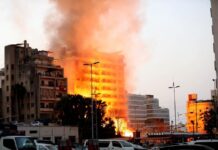
The immediate trigger was a new Israeli strike in Beirut’s Dahiyeh district, Hezbollah’s stronghold, despite an already fragile Israel-Lebanon ceasefire. Iran retaliated with strikes against Israel. Israel then struck Iran. For tense hours, fears spread that the region was sliding toward a direct and uncontrolled Israel-Iran-Hezbollah confrontation. Only after Trump publicly warned both sides to step back did the situation appear to stabilize.
It raised a fundamental question: What exactly had been accomplished? Had the strike fundamentally changed the strategic balance with Hezbollah, one could at least argue there was a harsh military logic behind the risk. Had it prevented a major attack, crippled Hezbollah’s operational capabilities or significantly altered the battlefield, perhaps the escalation could have been justified.
But to many observers it appeared to achieve very little strategically while risking a great deal politically and diplomatically. “I understand neither the strategy nor the tactics,” Nir Dvori, Channel 12’s leading military analyst, remarked afterward.
increasingly fear the country is trapped in a perpetual cycle of tactical military actions without a coherent long-term political strategy. Hezbollah remains deeply entrenched. Iran remains committed to sustaining its regional proxies. And every strike that harms Lebanese civilians risks reviving Hezbollah’s preferred narrative: that it alone protects Lebanon from Israeli aggression.
At precisely the moment when a broad swath of Lebanese society had begun viewing Hezbollah as a disaster for Lebanon itself, Israel risked inadvertently strengthening the organization’s domestic legitimacy again.
.
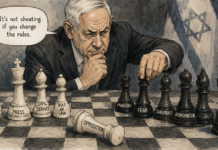
Compounding the anxiety is a growing perception that Washington and Jerusalem may no longer share the same immediate interests. Trump increasingly appears desperate for regional stability amid mounting domestic political pressures and economic concerns. Netanyahu, facing dismal polling and deep public distrust at home, is seen by many Israelis as politically benefiting from prolonged emergency conditions and perpetual crisis.
Perhaps the bleakest aspect of Israeli political life in 2026 is not simply the wars themselves, but the erosion of public trust — the fact that millions of Israelis no longer dismiss the possibility that national security decisions may also be shaped by Netanyahu’s political survival. This is not normal.
The roots of this crisis stretch back more than four decades. The story begins in 1982, when Israel invaded Lebanon to expel the Palestine Liberation Organization after years of cross-border attacks. The PLO was ultimately pushed out of Beirut, but the vacuum it left behind gave birth to something far more formidable: Hezbollah, a jihadist Shiite militia backed, armed and financed by the newly established theocracy in Iran. What began as a guerrilla force fighting Israel’s presence in southern Lebanon gradually transformed into Tehran’s most powerful regional proxy (of many) and the mightiest non-state military in the world.
After withdrawing from Beirut and much of Lebanon, Israel maintained a narrow “security zone” in the south, arguing it was necessary to protect northern Israeli communities from infiltration and rocket fire. But the occupation became deeply unpopular inside Israel. Hezbollah waged a relentless war of attrition, using roadside bombs, ambushes and rocket attacks against Israeli troops and their Lebanese allies. By the late 1990s, Israel was losing roughly two dozen soldiers a year in what many Israelis viewed as a grinding, unwinnable conflict.
In 2000, Prime Minister Ehud Barak finally ordered a unilateral withdrawal from Lebanon. Israel hoped the pullout would end the conflict and deprive Hezbollah of its justification for armed struggle. Instead, Hezbollah declared victory, entrenched itself along the border and continued periodic provocations and incursions.
Then came 2006. After a Hezbollah cross-border raid killed and kidnapped Israeli soldiers, Israel launched a massive invasion and air campaign in Lebanon. The 34-day war devastated Lebanese infrastructure, killed more than 1,000 Lebanese — many of them civilians — and left parts of northern Israel under constant rocket fire. Hezbollah demonstrated a level of military sophistication that shocked Israeli planners, surviving the assault while continuing to fire thousands of rockets deep into Israel.
The war ended with UN Security Council Resolution 1701, reinforcing earlier resolutions calling for Hezbollah’s disarmament and for the Lebanese state to assert sovereignty over the south. For a brief moment, some in Israel believed Hezbollah had been deterred.
But the quiet was deceptive. Over the next two decades, Hezbollah grew exponentially stronger, aided by Iran and battle-hardened in Syria’s civil war. It amassed an enormous missile arsenal and evolved into what many analysts consider the most powerful non-state military actor in the world.
Then came October 7, 2023. Within days of Hamas’s attack on Israel, Hezbollah opened a second front from Lebanon, launching rockets, drones and anti-tank missiles into northern Israel. What followed was a long war of attrition that emptied border communities on both sides and steadily escalated into one of the gravest regional crises in decades.
And now the central dilemma remains unresolved.
Lebanon’s new leadership — including President Joseph Aoun and Prime Minister Nawaf Salam — increasingly recognizes that Hezbollah has become a catastrophic burden on the Lebanese state. But the Lebanese Armed Forces remain too weak to confront the organization directly. Israel insists that long-ignored UN resolutions are unimplemented. Critics abroad accuse Israel – infuriatingly – of aggression, while others argue the real tragedy is that Lebanon has effectively been held hostage by an Iranian proxy militia for decades.
So what now? Can Hezbollah actually be dismantled without another endless war? Can Lebanon reclaim sovereignty? Can foreign forces help stabilize the country? Or is Israel doomed to yet another cycle of “mowing the lawn” — periodic military operations without strategic resolution?
