











In late autumn 2025, the Trump administration withdrew some 1,000 troops early from Romania.
But in the spring of 2026, the Trump administration changed its mind and asked Bucharest for permission to move several hundred soldiers, tankers, surveillance drones and other equipment to Romania. The war in Iran had recently started and Minister of War, Pete Hegseth, had been ‘persuaded’ that without an advanced presence in Europe, “Epic Fury” risked being only “rage”.
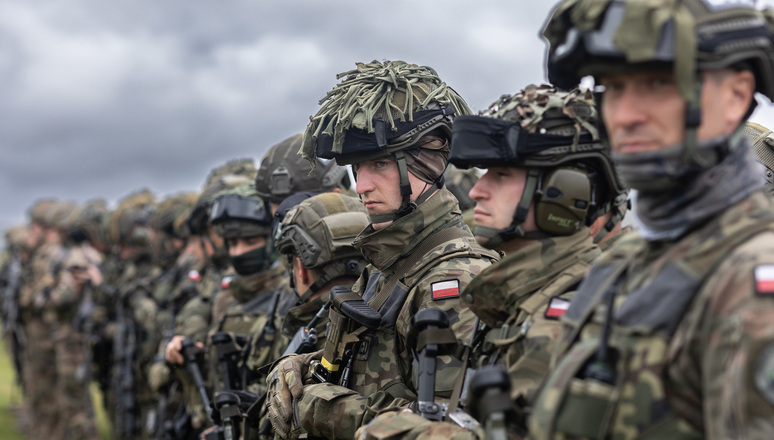
This week out of the blue, 4,000 US soldiers stationed in Texas have halted their routine deployment in Poland.
Washington’s decision, formalized by the same Pentagon chief of staff, was more than just just a surprise: it stunned.
It shocked European, not just Poles, it shocked even Americans in the military structures, and there must have been shockwaves sent to Asia, at least South Korea and Japan, which host the largest American bases in the region.
Trump move regarding Poland was all the more spectacular as some troops were already on their way or had even reached their destination.
According to international press reports, the official explanation was a joke: the White House redirected questions to the Pentagon, and the Pentagon led by Hegseth’s answer was a contradiction. He claimed it was a long-thought-out decision, but that was hardly true as some troops had already been deployed).
The Polish case is enlightening at a NATO level; Warsaw is a model example of good practices in terms of military spending, generously buys combat equipment from the US, hosts US troops at the Europe’s most sensitive border of Europe (the one with the front in Ukraine), and as a nation the Poles are also the most ardent European supporters of the presence of US military on national territory.
Not to mention that President Donald Trump himself considers Poland a model ally, and there’s no sign he’s changed his mind on this.
So for Romania and Poland, there are two simple questions about Washington’s change of face.
- Is there still a lucid brain in the White House, since the White House began to reduce US military presence in Romania precisely when the Iranian adventure was on its radar? In the event of a battle order given by the American president, Romania would be supportive was reconfirmed from the first days of the conflict – the rapid movement of troops and equipment to Romania, operated in March.
- To what extent can America’s allies in Europe and Asia rely on U.S. commitments and seriousness, since even a “model ally” like Warsaw ends up being treated in this way (weakened, but also humiliated)?
Since returning to power, the Trump administration has claimed a wide range of victims (from the global misfortune left behind by the dissolution of USAID, to the misfortune produced globally by the attack on Iran).
The reduced credibility the United States now has risks unleashing a boomerang effect.
The latest Polish episode could become turning point not only as it damages the allies’ perception of America (already bad), but also in terms of the actual functioning of the alliances.
Until the pulling back of the troops on a routine mission in Poland, the narrative in Europe in the first half of 2026 was the following: most European states (generally the Western ones) were clearly being circumspect towards the US and the White House; while a handful of European states (Eastern ones including Romania and Poland) decided to cling to Washington, closing their eyes to many things, even humiliating themselves (such as Romania’s president’s president, in the inaugural session of the Board of Peace), thus risking irritating Western European allies.
After the cold shower received by Romania in the autumn and then the ice bath Trump gave Poland in the spring, things are getting complicated for everyone.
- For Western Europeans already irritated by Washington – as they see the prospect of a major decoupling, operated by the US, and it could be closer and deeper than they had imagined.
- For the significantly more tolerant Eastern Europeans, such as Romania and Poland – because they are now faced with an even more perverse reality: like the Westerners, the Easterners also have to consider the prospect of decoupling; and at the same time calmly conclude that, despite their efforts, Washington does not value them. And last but not least, the Easterners such as the Romanians and the Poles now have the opportunity to ask themselves whether they can really come out trumps by courting Trump almost to the point of compromise, while, by doing so, they risk alienating their Western allies. In other words, by reducing troops in Poland, just 6 month after they did in Romania, Bucharest and Warsaw have bery few cards in their relationships with Western capitals.
Finally, a parable regarding the credibility of Donald Trump and implicitly of America under his mandate:
- For the past two days, President Donald Trump has been in China.
- It is not yet fully clear what resulted from the talks between the Americans and the Chinese, but one detail is worth noting from the Trump-Xi summit: the US leader triumphantly announced the purchase by the Chinese of 200 Boeing planes,
- After this announcement, Boeing shares fell by more than 4%.
- The most likely explanation lies in the contrast between the advertisement made for the purchase of Boeing planes, before the summit, and the actual result of the negotiations held at the summit.
The fact that Donald Trump considers you a “model ally” – the case of Poland – no longer exempts you from the treatment reserved for a rebel ally.
