







Is it a grand bargain over Hamas? Either way, he executive order granting NATO-style protections deepens the enigma of whether Netanyahu really defied the US in striking at Doha
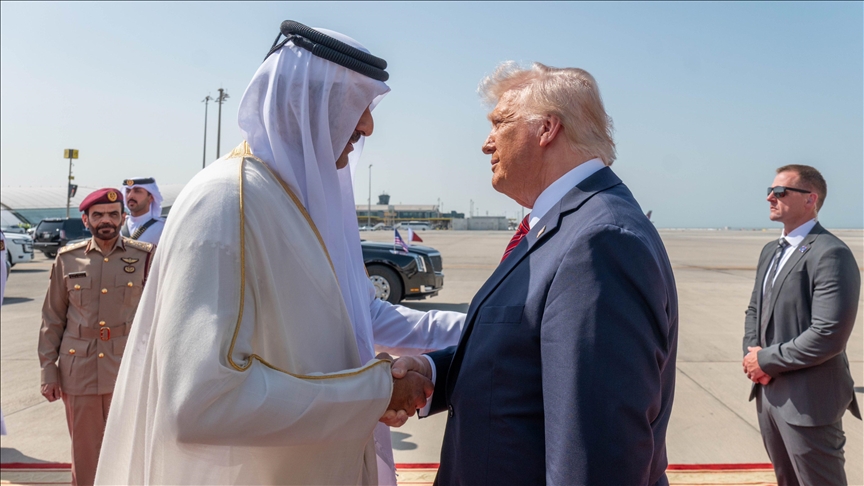
President Trump’s latest executive order was overshadowed by the seemingly shinier proposal this week to end the war in Gaza, but its implications are seismic: The United States has extended NATO-style protections to Qatar — a tiny emirate of 300,000 citizens now enjoying a security umbrella once reserved for Europe, Japan, South Korea, and, de facto, Israel. No Arab country has ever received such status. And the question is why.
As we look for answers, consider the context. The world now awaits Hamas’s answer to the proposal announced Monday at the White House, with the backing of both Israel and the Arab League: Hand over the hostages, disarm, and surrender control of Gaza to Palestinian technocrats backed by regional states and the West — to spare Gazans further annihilation and open the way to reconstruction. Expect Hamas to try to equivocate: buying time, softening language, and insisting on impossible guarantees while preserving levers of power. The Qataris’ leverage — financial, diplomatic and logistical — could force the choice if they choose to deploy it.
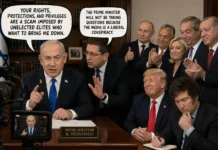
Moreover, the timing could not have been more loaded: weeks after an Israeli missile strike aimed at Hamas leaders gathering in Doha, under its protection. The official story is that Prime Minister Benjamin Netanyahu acted recklessly, blindsiding Washington and infuriating his indispensable patron. Trump then forced Netanyahu into an apology to the Qatari premier in a call from the White House on Monday — and then, astonishingly, rewarded Doha with a pledge that the U.S. would treat any attack on Qatar as an attack on itself. It would look as if Israel was punished and Qatar elevated.
But this account beggars belief. Are we really to believe that Israel — utterly dependent on U.S. arms, financing, and diplomatic cover — would strike inside Qatar, America’s closest Gulf partner, without notice? Not just any territory, but airspace that the U.S. effectively controls, given its sprawling presence at Al Udeid Air Base. The Pentagon calls Al Udeid its forward headquarters for Central Command; it houses thousands of American troops, long-range bombers, drones, refueling aircraft, and the nerve center for operations stretching from Afghanistan to Syria. The U.S. Navy, too, relies on Qatar for part of its Gulf footprint, alongside Bahrain. To imagine Israel blindsiding Washington in this most sensitive theater strains credulity.
If Netanyahu really went rogue, it would amount to the most reckless gamble in Israeli history. In my experience as someone who has interviewed Netanyahu numerous times, he is not quite this stupid.

Moreover, Washington’s response, if it truly were blindsided, was curiously muted: no real public rebuke, no pause in arms transfers, no congressional hearings or suspension of intelligence sharing. Rather, an agreement this week to corral the Arab world behind an ultimatum to Hamas that amounts to surrender on Israel’s terms (which are reasonable, but which Hamas has resisted for two years).
The only other plausible explanation is that everything – the strike, the semi-apology, the elevation of Qatar and the proposal to end the war on Israel’s terms – are part of an elaborate choreography in which everyone eats just a bit of humble pie: Trump looks like Netanyahu blind-sided him, Netanyahu is then forced to apologize, and Qatar restores Israel to its lukewarm graces. And maybe, just maybe, forces Hamas to surrender in Gaza.
Either way, Qatar has vaulted into the front rank of U.S. allies. The Sept. 29 executive order, titled “Assuring the Security of the State of Qatar,” declares that the United States will regard any armed attack on Qatari territory, sovereignty, or critical infrastructure “as a threat to the peace and security of the United States” and respond with “all lawful and appropriate measures — including diplomatic, economic, and, if necessary, military” action. The implication, incredibly, is military action against Israel, if Netanyahu were to attack again. Normally, such a sweeping security guarantee would require the approval of Congress through a formal treaty – which in the Trump era is, of course, a fantasy.
For decades, Washington’s security guarantees in the Middle East were left deliberately ambiguous. Israel enjoyed unmatched backing but never a NATO-style pledge. The Gulf monarchies were protected in practice but never in codified manner. Egypt and Jordan received aid, not umbrellas. Now Qatar — a state that shelters Hamas leaders, bankrolls Muslim Brotherhood offshoots, and influence operations the world over — enjoys the protection of an American guarantee. For Doha, this is the jackpot.
It is worth pausing on Qatar’s history of double play. The emirate has long presented itself as a modernizing, cosmopolitan outpost while simultaneously funding Islamist movements across the region – enraging the moderate Sunni states, from which it was estranged for a few years until recently. At the same time, it cultivated America assiduously, hosting the Al Udeid Air Base, investing hundreds of billions in U.S. real estate and corporations, and opening channels to Israel in commerce and dialogue. Qatar played all sides, sometimes infuriatingly, but with undeniable skill.
At this moment, maximal pressure is needed on Hamas. Few actors have more leverage over the group than Qatar, which has funded its governance in Gaza (at times at Netanyahu’s unwise request) and hosted its leaders in exile for years. If the implicit bargain of Trump’s executive order is that Qatar severs those ties at last, and leaves Hamas in complete isolation, then the price may not only be defensible but strategically shrewd.
Viewed in this light, the American guarantee could, paradoxically, be the mechanism that forces Doha to choose once and for all: West over Islamists, pragmatism over double games. If that is indeed the deal, the optics of Trump’s move look less like folly and more like calculated risk. Indeed, though Trump’s Qatar guarantee circumvented Congress, probably illegally, therein too lies leverage over the emirate: it can be taken away just as fast.
And yet, because this is Trump, many simply cannot believe it is only about strategy. Qatar recently gifted Trump a Boeing 747-8, a jet valued at hundreds of millions, intended to serve as a future Air Force One. For a president whose foreign policy has often blurred into personal business, the coincidence is too rich to ignore. To many, the executive order does not merely look like a radical departure in alliance structure; it carries the whiff of barter: NATO-like protections in exchange for a used plane.
The deeper story is about how America now conducts foreign policy. Once, major security guarantees required treaties, debate, and Senate consent — that was the constitutional design. Presidents were not meant to unilaterally commit the nation to war, or the risk of war, without Congress. Yet Trump has pushed this erosion to its extreme: issuing sweeping guarantees by executive fiat, waging tariff wars on dubious legal grounds, sending federal agents into American cities, and launching military operations abroad without meaningful oversight. In all this, Congress has been reduced to a bystander, while Trump counts on a largely sympathetic Supreme Court to indulge his expansion of presidential power.
So what really happened? Did Netanyahu blunder into the most dangerous rupture in U.S.–Israel relations since Eisenhower forced Israel out of Sinai? Or did he collude in a drama staged to elevate Qatar in exchange for pressure on Hamas to surrender. The hall of mirrors may never clear. But the outcome is beyond doubt: Qatar is the winner, and America has once again demonstrated that its foreign policy under Trump is a matter of presidential whim and fiat.
The autonomous region of Denmark has options. Financial options
