





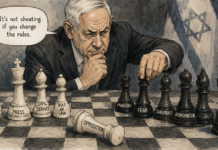
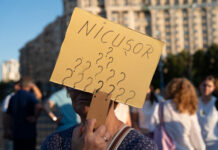




We don’t know whether the no-confidence vote will pass, but its initiators, the PSD and should already be worried. It’s their fault alone that the leu has fallen to a historic low, (5.1417 RON / 1 EUR – the official National Bank rate).
Romania has had major political crises before now but we’ve never seen a drop in the currency like this even when Basescu was impeached, nor when there was an assault on the rule of law in the PSD-Dragnea era, or even last year when presidential elections were canceled amid the Moscow-aided rise of pro-Russian and extremist Calin Georgescu.
As proven many times in critical moments, Romanians are neither naïve, blind, deaf, forgetful, nor as insensitive to objective reality Sorin Grindeanu, George Simion and the their ecosystem of interest groups seem to consider them.
“The markets have said what they had to say,” National Bank of Romania spokesman Dan Suciu said Thursday, commenting on the weakening of the leu.
It could be added that the exchange rate is one of the few benchmarks in the national economy that Romanians watch keenly. So it’s likely that PSD and AUR will be blamed for hitting Romanians in the pocket for a very long time.
At the same time, the fact that just submitting a motion of censure had this kind of impact on the cost of living is bad news for PSD and AUR, not just one bad news item but a record increase in the price of money.
Because if Bolojan Government’s doesn’t survive the May 5 no confidence, the political crisis will get bigger and under these conditions, the political fallout will further affect the the leu-euro exchange rate. To protect the national currency, the central bank will probably have to take out a lot of lei from its reserves.
Political parties are not abstract notions, but made up of real people, who will need to account for their actions even if they did them as party members.
Therefore, PSD and AUR lawmakers would help themselves by paying extra attention to the broader context and not just Tuesday’s vote.
For lawmakers of smaller parliamentary groups, the personal political risks inevitably become greater – because, by voting to topple Bolojan’s Government, they expose themselves to public opprobrium due to the toxic effects that came afterward and unlike PSD and AUR they don’t really have political protection, nor any guarantees that they will enjoy the spoils of power afterwards. There’s a long line of opportunists and they are at the back.
The political crisis in Romania is already palpable in its economic costs and there’s only one way to fix it. It is the principled refusal of lawmakers to not be accomplices in further fueling the crisis in Tuesday’s vote.
It’s basic common sense, nothing partisan about it and easy to observe.
Of course, it wouldn’t hurt if the President of Romania had assumed his due role by sending the right political signals fitting for the moment and fitting for the spirit which won him votes that propelled him to the presidency. In short, worthy of the position he holds – which holds significantly more power and significance than an ordinary mediator.
But perhaps the very fact that he understood his mission and role in the most restrictive way possible, is an additional reason for lucid people from society, and on the day of the vote and even in parliament to self-mobilize.
Romania is too complex a country and deserves much more in the future to be brutally defined by the irresponsibility of two parties, by the wild opportunism of a few outsiders and by the amateurism or perhaps by the cynicism of a president.
Romania is, at the same time, too complex a country to depend absolutely on the survival in office of a single person, in this case the incumbent prime minister, even if his name is Ilie Bolojan.
But this time, given the internal and external context, this is the problem: the fall of Ilie Bolojan will not just be the simple removal of a prime minister from office, but a costly economic political derailment, with a destabilizing signal for foreign financiers and a victory for the lowest anti-reform forces.
Ilie Bolojan is neither the Messiah, nor the Savior, nor the panacea for Romania’s diseases.
But he has imposed itself as a sufficiently important cog in the current mechanism of the country’s political-economic functioning, so that, his enemies want to send it to the scrap heap and those that support it want him to keep doing his job.
Personally, Ilie Bolojan will benefit regardless of the result of the vote. Perhaps his eventual dismissal will help him even more, in the medium and long term, giving him the chance to capitalize.
But for Romania – starting with the common man and including even many parliamentarians – the premature eviction of Bolojan, done in the spirit of shock therapy, from a political point of view, will open a Pandora’s Box of demons.
Romanian leu hits record low ahead of no-confidence vote against government
