













In Ukraine, the advance of Russian forces remains slow, unsustainable and bankrupt, compared to the human and material losses. The political risks are constantly increasing for the Kremlin, with the intensification of the fuel crisis reaching its most sensitive point, at the pump (following the bombings of half of Russia’s refineries), and with the increase in VAT and other taxes, decided by the Kremlin in order to support the 2026 budget.
In reality, each new day of war narrows Putin’s room for maneuver, both in his relationship with his own people and in his relationship with the West’s chief negotiator, Donald Trump.
Regarding this last aspect, on the one hand, the leader of the White House is rapidly losing his patience, as Moscow has made a mockery of his ‘lightning’ peace plans. On the other hand, the leader of the White House speaks today basking in the maximum excitement caused by the success of the Israel-Gaza deal (a success that is still partial and still fragile, on the ground, but extremely glittery and resounding in the MAGA-Trump narrative).
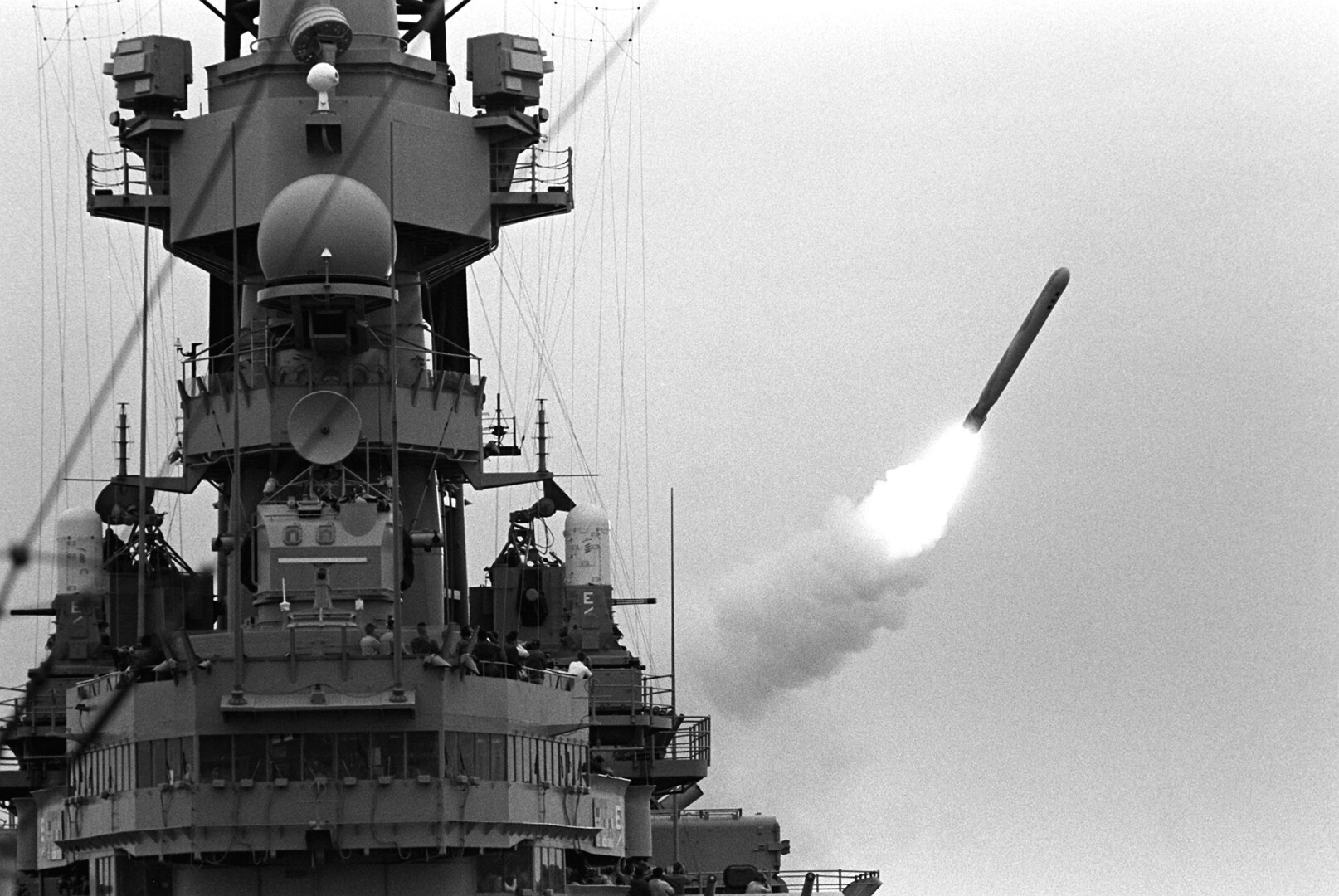
In this context, the discussion about possible deliveries of American Tomahawk missiles to the Ukrainian army is as interesting and, already, of some effect, as convoluted and inclined towards an outcome that could be surprising.
- It is interesting, as it marks a major inflection point in Trump’s rhetoric and perspective on the Russian-Ukrainian war, and this already by the simple fact that the American leader allowed the topic to appear in the public space and remain there.
- It has already had some effect, as it has even sensitized the Kremlin, a fact manifested also by the attention paid to it by Russian propaganda, and by the haste with which Putin has once again shown himself open to “constructive” discussions with the American side, after having just defiantly declared the death of the meeting in Alaska.
- Finally, it is inclined towards an outcome that may be surprising (for all sides involved in negotiating an end to the war), since as clear as it is why Kiev wants Tomahawk missiles and as clear as it is why Moscow doesn’t want them to end up in Kiev’s hands. It remains unclear what exactly Washington wants by touting the Tomahawk promise/threat. In other words, how far is Donald Trump willing to go with these missiles? Does he really envisage a military instrumentalization of them or, on the contrary, is he bluffing, just to try to create new spaces for “dialogue” with Putin? So far, at least from the statements of Trump and the head of the Pentagon, we know that the story is on the table, but in the last days and hours we have learned, from the last-minute nuance of the initial positions, that the story can very easily disappear from the table.
Regarding points 1 and 2, Moscow has no dilemmas, it is not in a fog. With regard to point 3, Moscow is clearly in an alert search for clues and additional information to finalize its analysis.
In fact, for Putin, the urgent stake is precisely this: to decipher the unknown related to Trump’s true intentions regarding the type of instrumentalization of the Tomahawk envisaged.
If the Kremlin concludes that Trump has no intention of going all the way with the Tomahawk, we will soon find out from the evolution of the attitude of the Russian side regarding the new impetus that Trump is trying to give to the peace negotiations.
A new categorical rejection and new exercises of defiance on the part of Moscow will suggest that the eyes of the Kremlin have not seen and do not see the potential for transfer.
And as long as Moscow tries to mimic dialogue with Washington, it will be a sign that Moscow has either not yet fully clarified itself or, on the contrary, that it appreciates that there is still a sufficiently high risk that the transfer of such a missile will take place at some point.
At this moment, the Russians seem firmly oriented again towards playing for time in their relationship with the US; and at least obtain a buffer of a few weeks, because in two weeks, according to official statements, a new summit will take place. And after the summit, regardless of its results, Moscow could probably gain another few more weeks.
It is interesting, however, that Trump has accepted (if not proposed by himself) that the meeting with Putin takes place in Hungary.
Perhaps the place sounds natural to some, given the fact that Orban is Trump’s friend- and vassal. But perhaps it should sound even more natural to them that Orban is, first and foremost, Putin’s Trojan horse and Zelensky’s enemy. As such, Hungary will be, first of all, the “home” field for Russia, and then the “home” field for the US, and it will be a deeply hostile, “away” field for Ukraine.
In this context, Hungary’s option for the upcoming summit sounds rather daunting from the perspective of those who hoped that Trump was actually considering shipping the Tomahawk to Kyiv’s army.
To bring Putin back to talks, Trump forced things by venting the Tomahawk threat. But the fact that the talks will have them in Hungary rather suggests that Trump would be inclined not to dream too far with delivering them.
For the Russians it would be excellent news, but one way or another, they still have to dig down until they are convinced, beyond doubt, that this is really the way things are.
The President of Ukraine, Volodymyr Zelensky, traveled to Washington on Friday precisely in the midst of this nebulous and dynamic context. Traditionally, his mission has generally not been easy, but as far as the Tomahawk issue is concerned, it is even more difficult than it seems. And the Russians today have an attitude towards the Americans, which makes the mission impossible for the Ukrainians.
In fact, on the occasion of receiving the delegation led by Zelensky in Washington, in the segment open to the press, Donald Trump praised the virtues of the Tomahawk missiles – a message for Russia – but he also specified that America itself needs the Tomahawk – a message for Ukraine (just as Trump’s gesture of telling Zelensky to his face that Trump’s America kept him alive, because only the Javelin missiles, delivered by Trump, and not by Obama, stopped Putin’s tanks in the initial phase of the invasion).
Trump seemed at best cautious towards Zelensky and at least, non-caustic towards Putin.
A good reason for the Russians to postpone the opening of the bottle of vodka, but still to keep it on ice.
The moment meant that the Ukrainians do not rush to pop the champagne they are currently keeping cold, but also it is not clear to them how much they can dream at this moment of uncorking it.
Kyiv only has to strengthen its relationship with the Europeans in order to remain as relevant as possible in the relationship with the Americans and, thus, to face, further and for as long as necessary, the offensive waves of Moscow’s armies.
