

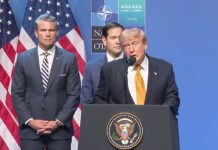



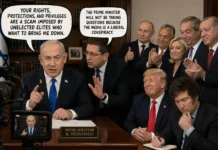
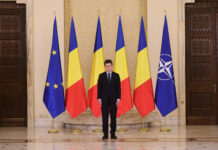




Countries around the world have recently woken up with a new hot potato from Donald Trump: the so-called Board of Peace.
Some heads of state quickly accepted the invitation (notably dictators, autocrats, illiberals or leaders crushed by their horrible neighborhoods – see the eloquent case of Armenia).
Others gave evasive answers : we’re looking, analyzing, not rejecting of course, but not in a hurry (Romania is in this Romania, as well as other European partners).
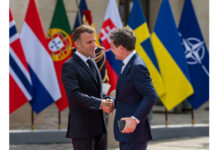
Finally, others issued a quick and quick NO, or a suggestive NOT YET (from France to Canada, Norway to Great Britain, Sweden to Spain, etc.).
Trump’s Board of Peace looks like it wants to be a poor replacement for the infinitely more elaborate, legitimate, established and historically relevant United Nations.
Formally, Russia and China have said they are waiting and analyzing. Informally, they are burning with irritation in Moscow and Beijing.
If the two capitals were to accept, it would be an embarrassing, as it would project the image of a Putin and a Xi dancing to Trump’s tune. But if Putin and Xi were to immediately refuse, that would add awkwardness to their complicated relationship with Trump. Xi will meet Trump in the spring for talks on sensitive issues for Beijing – from trade/tariffs, probably to Taiwan. Putin is currently negotiating a capitulation-type peace for Ukraine.
In the European Union, with the notable exceptions of Hungary and Bulgaria (who said yes), positions oscillate between “let’s see” and “let’s not”.
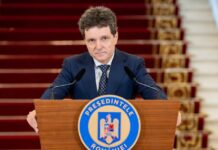
As I said, Romania is in the “let’s see” category, regards accepting the invitation for a free seat, which has a limited mandate. And its position is “let’s not”, regards an extended mandate which would involve a fee of one billion dollars that would inflate an already explosive deficit.
At this stage Bucharest is aligned with other EU states and it would be harmful and irresponsible not to remain so.
In the current geopolitical context, directed by the US president, the European shirt is closer to our skin than the American one. And given how traumatic the current context is, it will probably remain like this in the long term.
Of course, in our governing coalition there is a component that took the invitation seriously: the PSD, through its leader, Sorin Grindeanu, immediately started kissing up to the Trump administration demanding that Romania join the Board of Peace Council and calling for Bucharest to embrace the “Golden” version costing one billion.
Of course the POSD and Grindeanu won’t pay from their own pockets and their stomachs won’t be turned upside down, however indigestible what Trump serves up is,
The Board of Peace has many flaws.
At least five stand out like a full moon on a clear night (maybe Sorin Grindeanu will take two minutes at some point to reflect on them):
- The Peace Council is a construction that risks conflict by the participation of countries, including Romania, in an elaborate infrastructure of international organizations – especially the UN, but not limited to that.
- It is a construction that, in the current phase, provides insufficient information to assess the opportunity and implications of membership.
- It is a construction for which any country in Romania’s situation (NATO member and EU member) needs a scrupulous assessment of the decision in a broad geopolitical context and coordination with European partners.
- It is a construction that starts with a bewildering deficit of legitimacy and unclear potential. Why does it lack legitimacy? The Board of Peace Council is initiated by the US through its president, Donald Trump. He announced that international law no longer exists, and that the limits of his own action lie only in his morality. Where there is no morality, there are obviously no limits either. Why unclear potential? Because this Board, at least what has been publicly revealed so far will be essentially led by one man – Donald Trump. Under these conditions, it would hurt less to shoot yourself in the leg then to blindly join this new organism.
- Finally, the Board of Peace seems more like a tool for marketing personal interests. Donald Trump has been elected president twice, but he stopped evolving when he was a real estate shark and businessman in the casino world. In both these universes, selling a product depended more on the quality of marketing and promotion, than on the intrinsic qualities of the product. The Board of Peace seems to have emerged from the same place: ruthless marketing and massive promotion (conferred by the resources of the American government machine and the brutality to the point of blackmail of its sales chief, Donald Trump). In fact, there is reasonable suspicion that the invention of the Board corresponds to a modus operandi that Trump has resorted to on other occasions, as a businessman and as head of state. He has put an instrument on the market that will benefit him in all situations – if the invitation is accepted, or if it is refused. For an invitation to the Board of Peace seems hard to refuse, in the sense that refusal will come at a price, which will need to be paid. It has clear potential to serve Trump as a bargaining chip in other negotiations with states that don’t consider it a good deal. Don’t join, OK, but it will cost you in the case our interests collide. It’s pure transactionalism, a lever for blackmail on a huge scale of interaction between states. Of course, the Board of Peace is a perverse gimmick, admirable even if you look at it cynically. But at the same time, this does not automatically mean that it will prove functional. It all depends on how it will be greeted by those targeted, as well as how they articulate their responses. Trump, as seen even in the latest Greenland developments, is a professional cannon thrower, bluffs, and tests the limits to an irresponsible extent. But at the same time, Trump gives in – quickly even – when the response to his pressure is equal or greater. The Board of Peace is an initiative that, for the good of Europe, must be ‘helped’ from the outset stop before it starts.
Lastly, the following question arises: after Trump is no longer president, what future can this Board which is so deeply connected to Trump and a small circle of temporary close friends and collaborators have?
Given its structural flaws, its indigestible nature for many countries, the existence on the “market” of already established bodies and a network of norms, what future can it have?
How can we invest, as a country, in a personal marketing and transactional blackmail tool shaped by the self-aggrandizement of an individual who has become a real nightmare?
