






Romania’s political crisis is evolving into a democratic one
After the Liberal Party (PNL) and the Save Romania Party (USR) decided that they will not endorse the Tomac Government, and the ethnic Hungarian (UDMR)’s party leader Kelemen Hunor hinted Toma won’t be able to be count on their votes either, the PSD either goes along with them or approves a cabinet it won’t be part of but will be able to manipulate until it collapses.
However, if the Tomac Government is approved by Parliament without the support of PNL, USR and UDMR, this could save the PSD from assuming the liabilities involved the exercise of government.
But it would not fully satisfy the PSD’s desire to avoid responsibility.
Because, no matter how nonsense the PSD spouts to distance itself from the Tomac Government, the fact that it voted for it makes the Social Democrats responsible for how the cabinet performs. People are infinitely smarter than PSD leader Sorin Grindeanu & friends think.
Both options are not good for Grindeanu’s army, but there are even worse scenarios:
- If the president did an about-turn and finally asked the PSD to deliver a majority and assume the position of prime minister, it could not be done without an open alliance with AUR or backstage support. And that would mean goodbye to the appearances of a “pro-Western” government, and goodbye to the theatrics in which the PSD mimics its “Europeanness”.
- If the president were to invite the PNL to build a government, the PSD risks remaining on the outside, and the frustrations of the PSD barons could wreak havoc in the party. On Friday, when the USR announced that it would not vote for the Tomac Government, it proposed a minority government with the PNL, UDMR and the national minorities, or early elections. PM Ilie Bolojan also announced that the PNL can come up with a solution for government.
If we have snap elections, this scenario will harm the PSD and benefit AUR. It will not serve the PSD, both because of competition with AUR and the disastrous PSD strategy regarding the no-confidence vote. In just one month, it demolished a functional government and tried to run away from the blame, losing more electorally than its many years in government. It’s a counter-performance that should be taught to political science students.
In this great dance of political amateurism, the PSD has nothing left but the consolation that it is on the same wavelength as President Nicușor Dan. They both have have embraced the same illogical solutions and, broadly speaking, they are both in an impasse.
But the political crisis created and inflated by the PSD and Nicușor Dan not only questions the future of governance in Romania, but also what is happening in real time in the country.
And catastrophic things are happening:
- On the economic side – uncertainties have made life more expensive with the potential loss of important European funds, whose critical role in stabilizing the budget and fueling the country’s development needs no introduction.
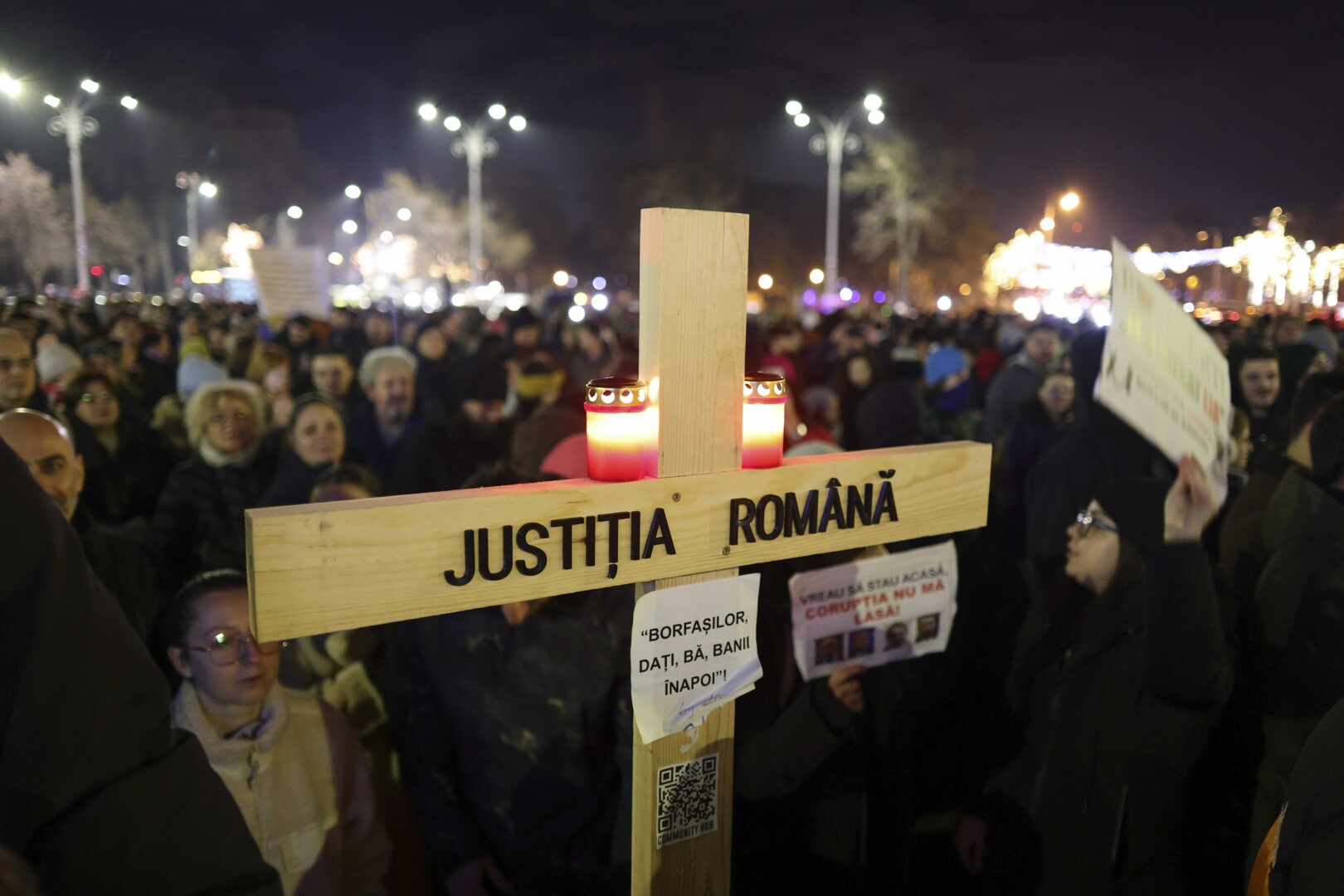
- On democracy and the rule of law, the captured justice system continues to target civil society. Encouraged by political chaos, the Supreme Council of Magistrates has drawn up a “blacklist” of journalists, politicians and NGOs, apparently seeking to suppress free expression and legitimate criticism of serious failures in the justice system. At the same time, the clique at the top of the judiciary is stepping up its effort to protect excessive privileges gained at the expense of millions of taxpayers. Meanwhile, the president appears more focused on devising inadequate solutions to a political crisis he did little to prevent than on safeguarding justice or responding to attacks on democracy and the rule of law. His reaction to the recent SCM statement, which smacked of illiberalism, left the impression that President Nicușor Dan is more outspoken in his sleep than while awake. Rarely has his silence been so loud. A president who calmly abandons his constitutional role as an institutional shield, together with a weak government lacking legitimacy and an interim cabinet stripped of real powers, creates the ideal conditions for abuse. And who understands that opportunity better than those at the top of the justice system?
The political crisis is becoming increasingly absurd and deeper and is evolving into a fundamentally democratic one.
At this rate, it could transform Romania, in the next few months, into something that would have been hard to believe could happen suddenly, just a few months ago.
Presidential calls for calm and hope sound more like jokes told at a vigil from day to day.
